 Guide On Map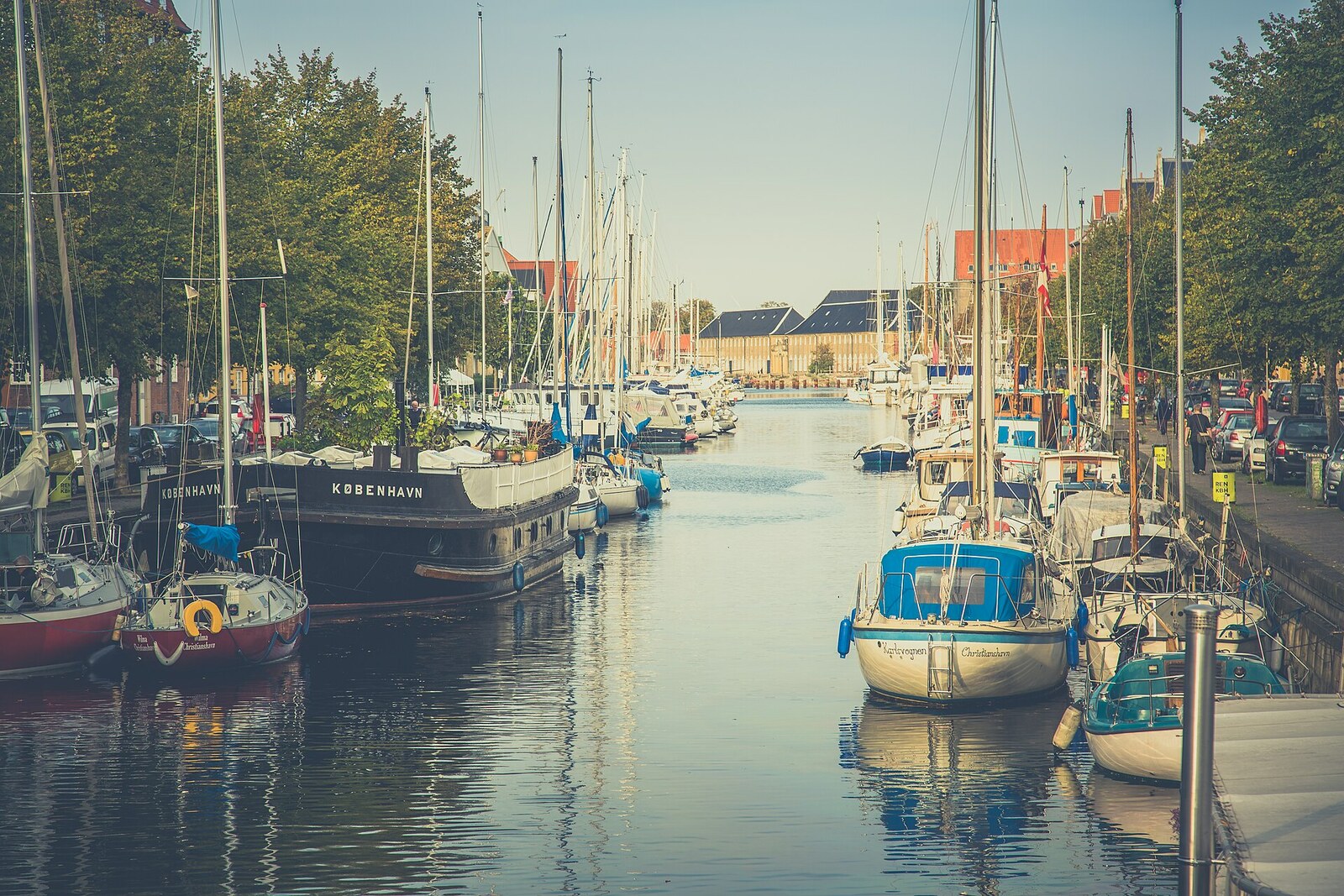
Look around first
What to notice
- The canal
- Overgaden waterfronts
- Facades of merchants' houses
- Berths by the houses
The story of the place
Christianshavns Kanal runs through the middle of the district, leaving two waterfronts and the facades of merchants' houses along its banks. It was laid out as an inland waterway: boats and barges came here from the harbor and moored at the owners' berths. Behind the residential facade began a long courtyard with warehouses, so cargo was unloaded from the vessel almost at the door itself. The shore on the Amager side is called the upper Overgaden, and the opposite shore the lower one: these names preserve the canal's division of the district.
In sixteen nineteen, the Danish king Christian IV offered wealthy Copenhagen merchants a deal: they would receive a plot in the new Christianshavn for free if they built a solid stone merchant's house on it. The king wanted the merchants to use their own money to turn the marshy shallows by the island of Amager into a fortified port town. In return for moving there, he promised twelve years without taxes and seven years without export duty.
Only the plot was free. The merchants had to fill in the land, drive hundreds of wooden piles beneath the house, build a road, and reinforce the shore. In winter, the water rose so high that the city judge was afraid to go out for bread and fresh water. There was neither a water supply nor a church. Even the tax breaks did not persuade people to invest a fortune in a district that could sink a new stone house into the mud.
Christian IV tasked the Dutch engineer Johan Semp with planning the town so that the investments would nevertheless pay off through trade. Semp ran a canal through the middle of the development. Boats and barges could enter from the harbor, moor in front of the merchants' plots, and deliver goods from the vessel into the courtyard and warehouse without carrying them across all of Copenhagen. The merchant lived behind the facade, stored cargo at the back of the plot, and had a private berth by the gate. That is why the long courtyards and warehouses here stretched from the houses to the water.
Christianshavn was settled slowly in its first years. Those who mainly dared to move here were royal officials and prosperous merchants who could afford the piles and land fill. But their houses gave the canal work: in time, merchants' courtyards appeared along it, and boats and barges began traveling to the warehouses. The king got a trading town, but it was built by people who agreed to take free land together with all the costs of creating the land itself.
This calculation survives in the street name. Overgaden means a shore or waterfront street; the word probably came from Dutch. The canal divided the new town into upper and lower parts. The shore on the Amager side was called Overgaden Oven Vandet—the waterfront street of the upper part—and the opposite shore, facing old Copenhagen, Overgaden Neden Vandet, the waterfront street of the lower part. Between them remains the very passage through which merchants' cargo was meant to reach the warehouse door directly.
Useful on site
The waterfront is open around the clock; the Overgaden Institute is open Tuesday–Sunday from 13:00 to 18:00 (until 20:00 on Thursdays); admission is free.
Checked: June 28, 2026. Check the official source before visiting.Do not enter private berths or passages leading to the houses. Facade details are easier to examine from the opposite shore.