 Guide On Map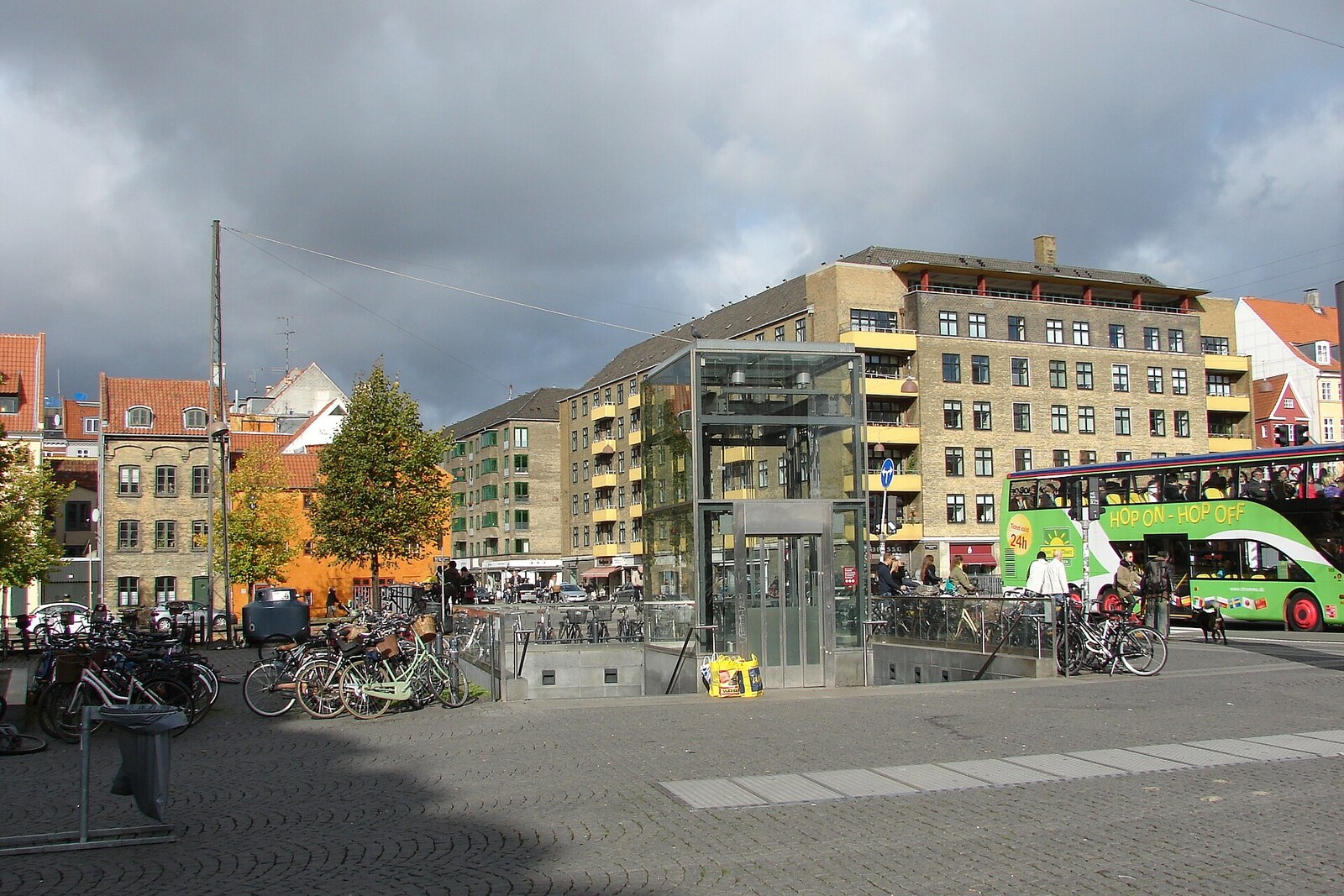
Look around first
What to notice
- The yellow-and-white façade of the Layer Cake House
- The façade's horizontal stripes
- The metro entrance
The story of the place
Today, the district's main street, the bridge across the canal, bus routes, and the metro entrance all meet here. People cross Christianshavns Torv on their way from one bank to the other. But the square's most conspicuous house appeared after a prison was removed from this site.
In sixteen sixty-two, King Frederick the Third ordered Børnehuset—a Children's House for homeless children and underage beggars—to be moved here. The children were to be fed, taught, and trained in a trade. The institution gave the square the name Børnehustorvet—the Children's House Square. Its present name means “the square of Christianshavn.”
The plan quickly changed. Adult beggars, vagrants, and convicted criminals began to be placed here alongside the children, and then the children were removed altogether. By the end of the eighteenth century, the institution was officially called Tugt-, Rasp- og Forbedringshuset. The word Rasp explained what the prisoners lived on: men manually ground dyewood into powder for red dye, while women and some of the men spun and wove. Red dust seeped into skin, hair, and clothing; the work damaged the lungs. In unheated dormitories, people shared beds, washed once a year, and could not correspond with their relatives.
On June twenty-fifth, eighteen seventeen, four hundred ninety-five inmates, including one hundred forty-three women, tried to break out. They threw furniture from the main building's windows directly onto the square. The guards ran there as well. In the confusion, about a dozen men got beyond the walls; the rest broke through the partition between the men's and women's sections, barricaded themselves, and set the building on fire.
Soldiers surrounded the complex with loaded rifles. The fire forced the inmates out into the yard, where they were bound. On the square itself, a military court issued the first seven death sentences within a few hours; soon afterward, another seven people were sentenced to death. All fourteen were beheaded in the courtyard of the naval hospital Søkvæsthuset, and the remaining prisoners were forced to watch the execution. Conditions were not improved after the revolt.
The fire-damaged buildings were repaired, and the prison continued to receive inmates. Later it was converted for women, and in nineteen twenty-eight it was demolished for good. A yellow-and-white residential building with horizontal stripes was erected on the front part of the prison site. Copenhageners nicknamed it the Layer Cake House. Its façade occupies the side of Christianshavns Torv onto which prison furniture flew from the windows two hundred years ago.
Useful on site
The square is open around the clock; shops and bakeries keep their own schedules.
Checked: June 28, 2026. Check the official source before visiting.Walk around the composition from every side: its individual figures are spread across the square and do not form a single frontal monument.