 Guide On Map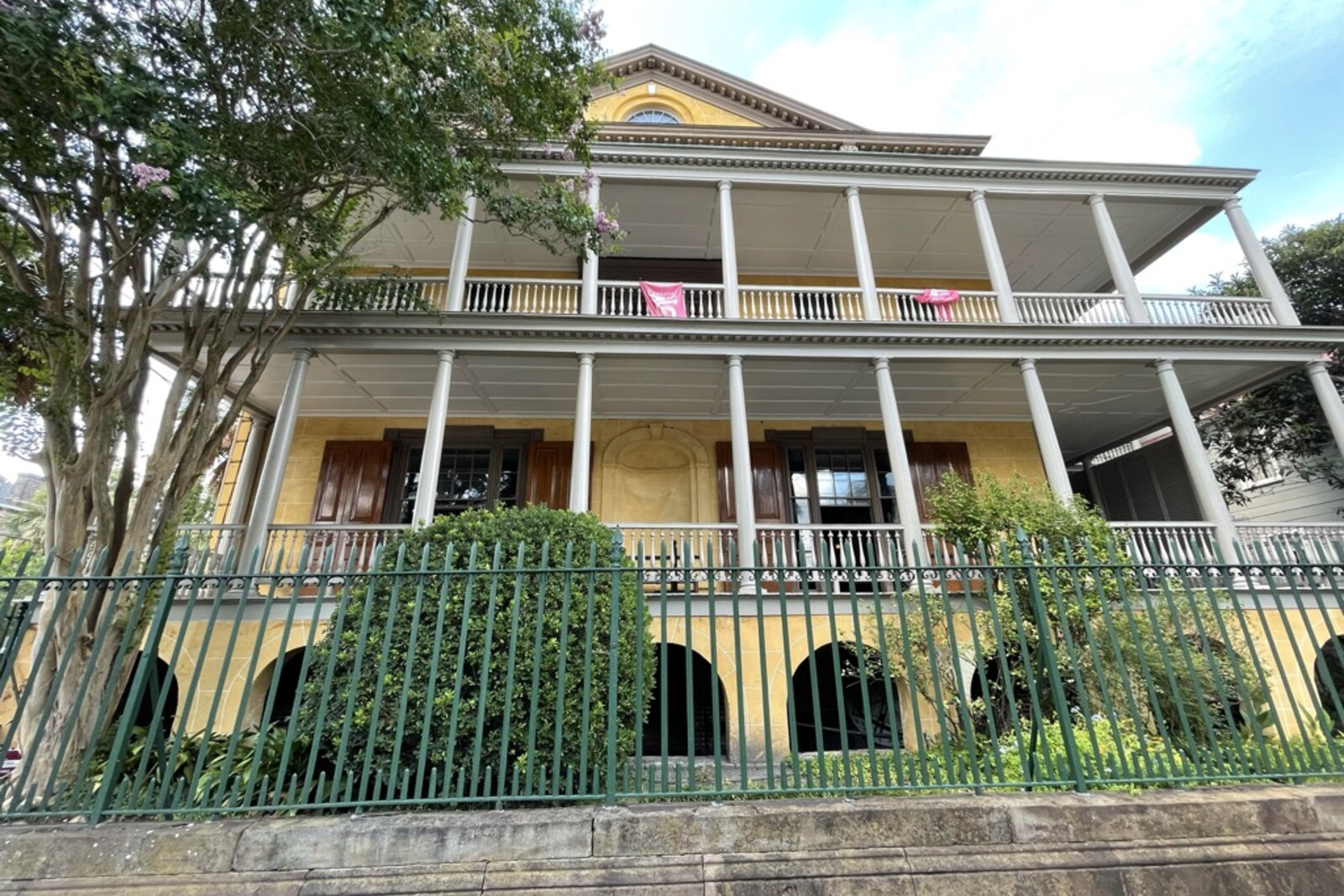
Look around first
What to notice
- Main house
- Kitchen building
- Laundry
- Old paint and floors
The story of the place
The formal house here is connected to an entire service yard: nearby, rooms for cooking, laundry, horses, and carriages have survived. The city estate served not only for receptions; its everyday life was sustained by people who lived and worked in the rear buildings. The museum did not restore the rooms to a polished appearance: old layers of paint and traces of change were left on the walls and floors. So the main facade and the service buildings behind it must be seen as one estate.
In the first document that allows Dorcas Richardson to be identified with confidence, she was listed among the property. It was a marriage contract from about eighteen thirty-one: Harriet Lowndes married the wealthy rice planter William Aiken, Jr., and the enslaved girl she owned passed to her husband along with the rest of the property. Dorcas was about ten years old. She could not choose which house to live in.
The newlyweds were establishing their principal city residence here. William and Harriet Aiken enlarged the main house, kitchen, laundry, stable, and living quarters above the service buildings. The Aiken surname in the name refers to this owner—the future governor of South Carolina, planter, and enslaver. The Rhett surname came later: the Aikens' only daughter to survive to adulthood, Henrietta Aiken, married Andrew Burnet Rhett and inherited the estate. Their descendants continued to live here.
A whole household served the formal rooms. Enslaved residents prepared food, did laundry, sewed, cared for horses, drove carriages, looked after children, and carried out all the work needed for the family's receptions. The documents do not say what particular work Dorcas was assigned. Another fact is known: she lived here for about thirty-four years, married, and gave birth to five children. A postwar list names the entire family among fourteen enslaved people connected with this house.
In eighteen sixty-five, slavery ended, and Dorcas was able for the first time to decide for herself where to live and how to support her family. Almost immediately, she began helping at the Shaw Colored Orphan Asylum—the first asylum for Black children in South Carolina. In time, Dorcas became the senior matron, meaning that she managed the institution's daily life and the care of its children. When money ran short, she organized a charity fair and bought vegetables for the children with her own money, later seeking reimbursement for those expenses.
It is unknown when Dorcas learned to read and write. Before emancipation, teaching enslaved people literacy was forbidden in South Carolina. But a bank record from eighteen seventy-two preserved her own signature on a document opening an account for her son Charles. After the asylum moved, Dorcas opened a shop on Meeting Street, where she sold fruit and firewood. A woman who first entered this house's papers as someone else's property now signed financial documents and lived on the income from her business.
The last representative of the Rhett family, Frances Dill Rhett, transferred the estate to The Charleston Museum in nineteen seventy-five for one dollar. Twenty years later, Historic Charleston Foundation bought it and declined to restore the rooms to a presumed original splendor. Staff preserve the building in the condition in which they received it: they reinforce the structure but leave the old paint, floors, and traces of alterations.
The Aiken and Rhett surnames remain on the museum sign. Behind the main house, the kitchen, laundry, and rooms where Dorcas's family lived still stand. Her name returned here from the marriage contract and the bank receipt; these rooms have not been covered over with fresh finishes.
Useful on site
Mon 13:00-16:00, Tue-Sun 10:00-16:00; visitors may remain until 17:00.
Checked: June 28, 2026. Check the official source before visiting.Do not expect the gleam of a restored mansion: signs of wear are part of the exhibition here. Entry is arranged as a self-guided visit.