 Guide On Map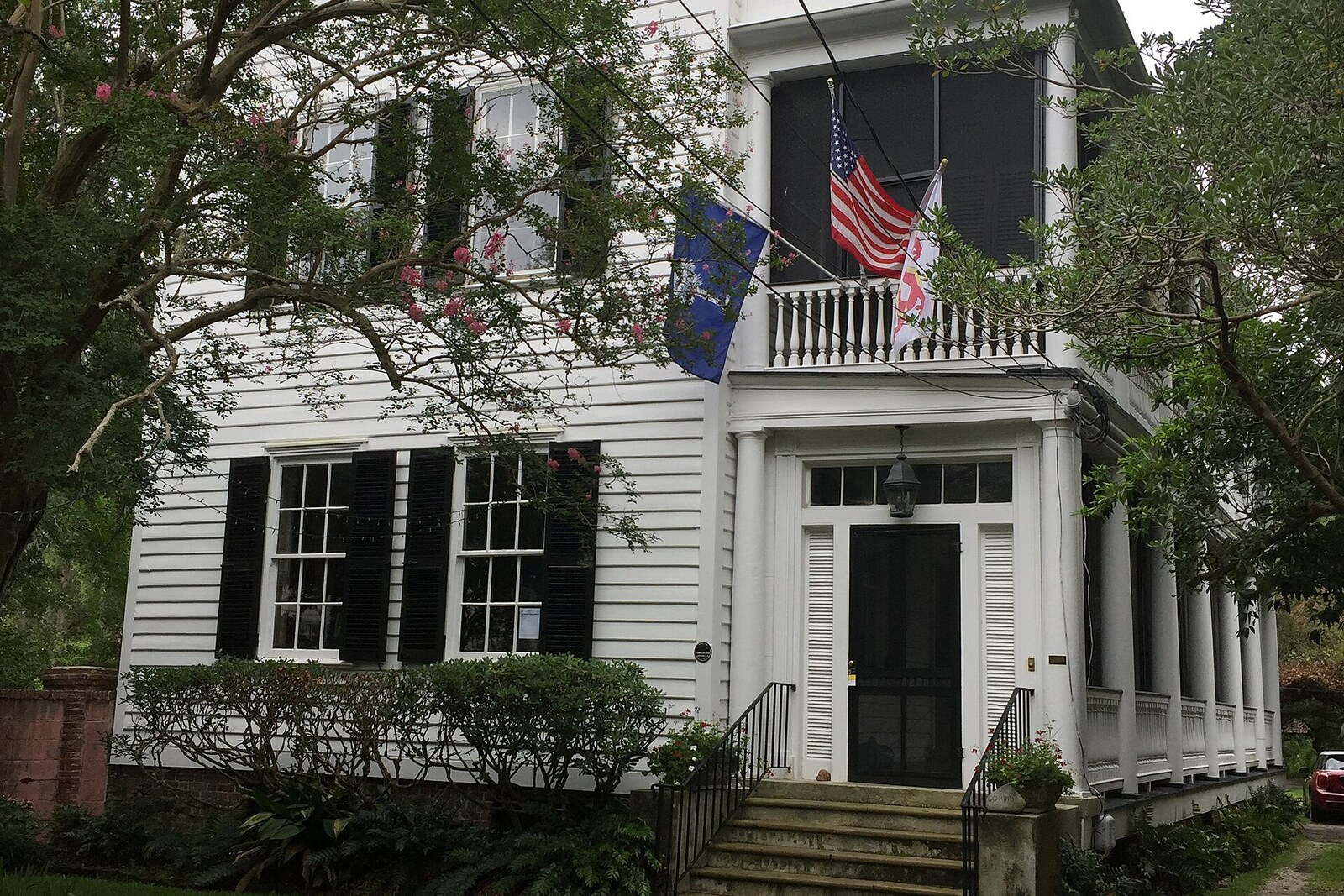
Look around first
What to notice
- Closed shutters
- Wooden carvings
- Brick facades
- Gates of private homes
The story of the place
Closed shutters on Tradd Street protect present-day private life. A hundred years ago, they enclosed a different city: Black tenants lived in many dilapidated houses, and workshops and small shops operated there. The quiet and uniformity of the facades came later—created by specific people, with different consequences for the former residents and for the houses themselves.
The street bears the surname of Robert Tradd. Old Charleston directories called him the first white child born in the colony and placed his family's house near what is now the intersection of Tradd Street and East Bay Street. Few documents about Robert himself survive; all that can be said with confidence is that the surname of early settlers became attached to one of the city's oldest streets.
At the beginning of the twentieth century, Susan Pringle Frost decided to restore the street to the appearance she knew from family stories. She came from an old Charleston family, but her father went bankrupt in the fertilizer business. Frost had to earn a living as a stenographer in federal court and help her relatives. She had no money for a large construction campaign.
In nineteen oh nine, Frost borrowed money and bought two houses on Tradd Street. The first was number sixty-one, once owned by her ancestor Jacob Mott. Frost wanted to buy rundown buildings, repair them, and transfer them to owners willing to preserve the old architecture. That made her Charleston's first female real estate agent—a profession that gave her access to houses that appeals alone could no longer save.
For the repairs, Frost found Thomas Mayhem Pinckney, a Black craftsman who began by making staircases, then opened his own contracting firm and trained other Black artisans. Frost found houses and buyers; Pinckney knew which woodwork could be restored, which detail had to be made anew, and how to make an addition indistinguishable from the old work. On Tradd Street, he repaired, among other things, houses number forty-eight and one hundred. Frost called him her right-hand man.
In time, she owned eleven buildings on this street. She sold some before the repairs were complete and rented out others to pay for the next purchases. The calculation rarely worked out: Frost accumulated debts to the city and later acknowledged that she lost a great deal on Tradd Street. The private campaign nevertheless grew. In nineteen twenty, Frost became one of the founders of the Society for the Preservation of Old Dwellings, and eleven years later Charleston established the country's first municipal district where changes to historic facades were subject to special review.
Preserving the houses meant changing their residents. Frost sought to return the street to the past she knew from stories told by her white family. After repair, the buildings were sold to wealthier white owners, and by the nineteen thirties many Black tenants had been displaced from this part of the peninsula. Pinckney and other Black craftsmen restored woodwork, staircases, and carvings in houses where there was ever less room for Black families.
During her lifetime, Frost received most of the praise. After Pinckney's death in nineteen fifty-two, she herself wrote to a newspaper that he deserved more credit: Charleston's old woodwork had been preserved by a true artist-restorer. His firm gave a trade to the next generation of craftsmen, and the details he made remained in houses that had long since changed owners.
Now all eleven buildings Frost saved on Tradd Street serve as private residences. At house number one hundred twenty-nine, a preservation agreement covers the exterior appearance and the undeveloped part of the lot. Owners may close the shutters every day; they can no longer freely alter or build on the facade and the space behind the gates.
Useful on site
Residential street; view from outside with respect for private homes.
Checked: June 28, 2026. Check the official source before visiting.This is a residential street with no single entry point: listen while walking or from an unobstructed edge of the sidewalk.