 Guide On Map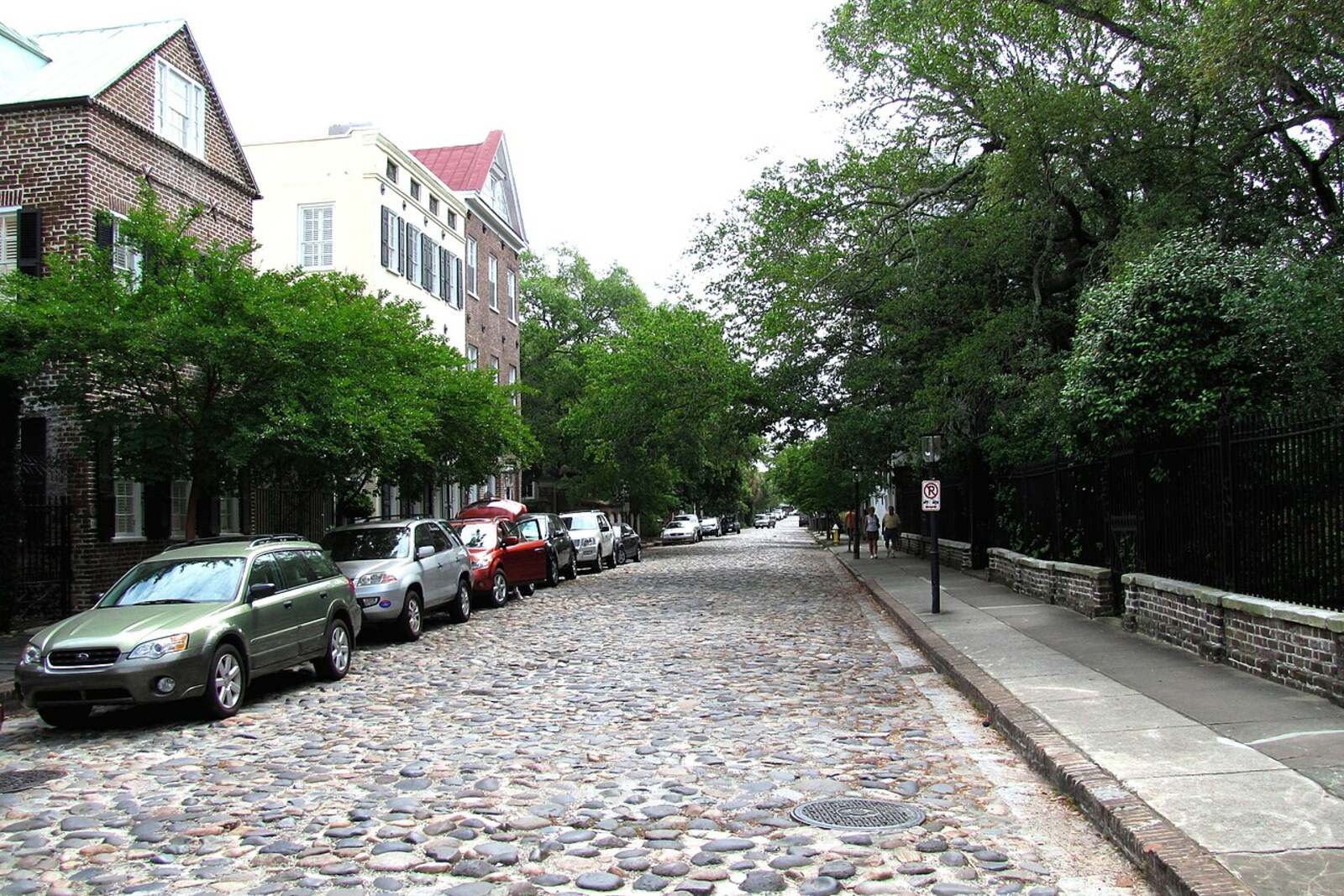
Look around first
What to notice
- Pink stone facade
- Cobblestone pavement
The story of the place
The Pink House was built around seventeen twelve, although historians dispute the exact date. Its pinkish hue came from stone brought from Bermuda; later paint only intensified its natural color. An inn operated here in the middle of the eighteenth century. The claim that the upper rooms housed a brothel survives as local tradition: there is no reliable record linking one specifically to this house.
The street was named for the Scottish physician Lionel Chalmers. He bought a plot here in seventeen fifty-seven, after which the former Union Alley came to be called Chalmers Alley. In his house on that alley, Chalmers recorded the weather and cases of illness for ten years, trying to understand why epidemics came to Charleston in particular seasons. Later, the entire street was named after him, combining Chalmers Alley with neighboring Beresford's Alley.
A few decades later, a man whose name appeared here in a very different way worked on this street. On March twenty-seventh, eighteen twenty-nine, the planter and shipbuilder Richard Fordham bought four enslaved people for one thousand eighty dollars. Among them was a boy recorded as Harry. Fordham gave him the official name Henry Fordham and sent him to learn the blacksmith's trade.
One of Fordham's businesses was a blacksmith shop on Chalmers Street. Henry spent nineteen years enslaved by him and became such a skilled blacksmith that he effectively ran his owner's day-to-day work. The trade supported Henry, but at the same time raised his sale price. On July tenth, eighteen forty-eight, Fordham sold him to Otis Mills's grain firm for two thousand dollars—almost three times the average price then paid for a field worker.
By that time Henry could read—according to family tradition, despite the ban on teaching enslaved people—and was saving money. Exactly how he arranged to buy his freedom is unknown: South Carolina laws had already nearly ruled out legal emancipation, so no separate document has survived. He is not yet listed in the city register of free Black people for eighteen fifty. In the following year's register, Henry Fordham is already recorded as free and paying a poll tax. By eighteen sixty-one, he owned two wooden houses in Charleston.
The exact site of the blacksmith shop is not named in the surviving description: it mentions only Chalmers Street. The blacksmith shop itself is gone. The Pink House was already standing here when Henry bent iron for someone else's business. The present cobblestones were laid in eighteen fifty-two—one year after the first document in which Henry Fordham is listed as a free man.
Useful on site
Open street; The Pink House and neighboring buildings can be viewed only from outside.
Checked: July 1, 2026. Check the official source before visiting.Watch your step and view the house from the street, without assuming there is free entry; keep the legend of Anne Bonny separate from confirmed history.