 Guide On Map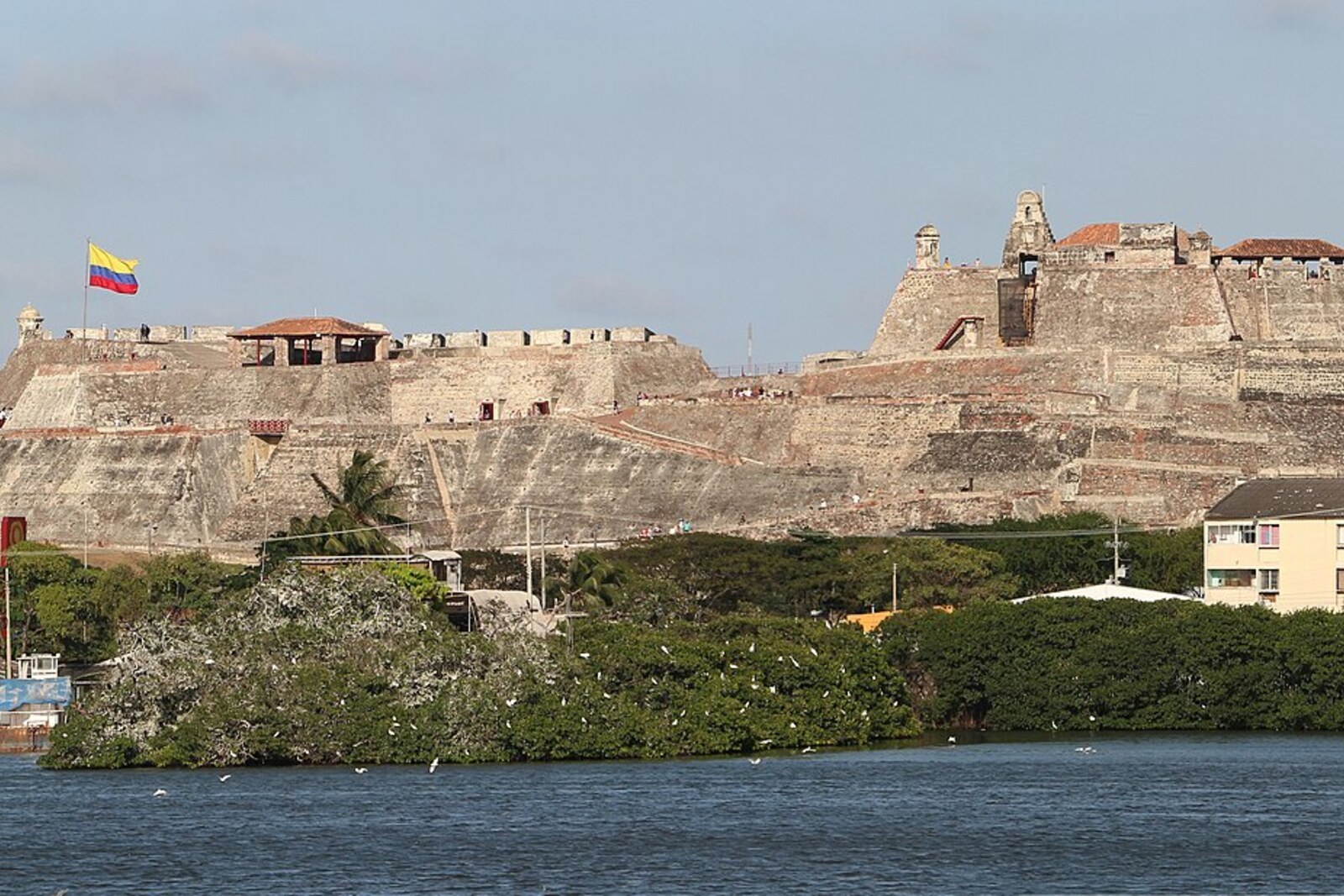
Look around first
What to notice
- The long ramp
- Sloping stone walls
- Tiers of batteries
- Stone facing
The story of the place
The ascent links San Lázaro Battery with platforms higher up the hill, so the garrison could move quickly between the tiers of defense. On both sides, the earth is held back by sloping stone facing: behind the masonry lies a thick embankment designed to take the impact of a cannonball. The slope was leveled with heavy rains in mind, directing water into hidden cisterns for a siege. Stone was hauled from nearby quarries by water and up the hill, and the royal accounts retained expenses for free workers, convicts, and enslaved people, but almost none of their names.
This long ramp appeared after alarming news from another Caribbean port. In the summer of seventeen sixty-two, the British army took Havana. Spanish military commanders expected an attack on Cartagena. Yet they understood that twenty years earlier, San Felipe had held out largely because Thomas Wentworth had led the infantry against the best-defended slope. Counting on a repeat of his mistake was dangerous.
The rebuilding was entrusted to Antonio de Arévalo, an officer of the Royal Corps of Engineers. At twenty-seven, he was sent from Cádiz to fortify Cartagena, and by the fall of Havana he had already served here for two decades. Arévalo lived on an officer's salary, drew up plans, justified every expense to his superiors, and was responsible for carrying out approved projects. Now he was required to close off the slopes by which the next enemy could approach the old upper redoubt from a more favorable direction.
Arévalo surrounded the summit with flanking batteries placed at different levels on the hill. In seventeen sixty-five, builders laid out a ramp to his design, linking San Lázaro Battery with the other positions. Between the new battery and the earlier fort, they leveled the ground so that rainwater would drain into underground cisterns. Along a single ascent, the garrison moved between the tiers, while water flowed to where it could be stored in case of a siege.
The sloping walls on either side of the ramp are stone facing for earthworks. The stone held back a thick mass of soil; a cannonball would have had to break through both the masonry and the embankment. At the foot of such a wall, attackers came under fire from neighboring batteries. Arévalo placed positions for sixty-three guns on the slopes: capturing one platform no longer gave control over the entire hill.
The stone was quarried nearby, brought by water, and hauled up San Lázaro by masons, carpenters, boatmen, and excavators. In the royal records, free day laborers living on their wages, enslaved people belonging to the crown, and convicts appear side by side. The first could leave when their employment ended; the convicts worked here under compulsion. The documents preserve their categories and the construction expenses, but almost none of their names.
By seventeen sixty-nine, Arévalo had completed the main batteries and the connections between them. Later, other engineers repeatedly proposed demolishing the resulting irregular complex and building a geometrically strict European-style fortress on the hill. Officials rejected the plans: no convincing reason for demolition could be found, and the cost of replacement was enormous. Arévalo himself rose to the rank of lieutenant general and died in Cartagena. The ramp of seventeen sixty-five still links San Lázaro with the upper batteries, and the slope of its stonework follows the hillside that he chose to fortify rather than straighten.
Useful on site
Inside the fortress; access according to the current arrangements at Castillo de San Felipe.
Checked: June 26, 2026. Check the official source before visiting.Walk at a comfortable pace and save your strength for the upper levels. Keep away from the edges, especially on wet stone, and use stairs only where they are open to visitors.