 Guide On Map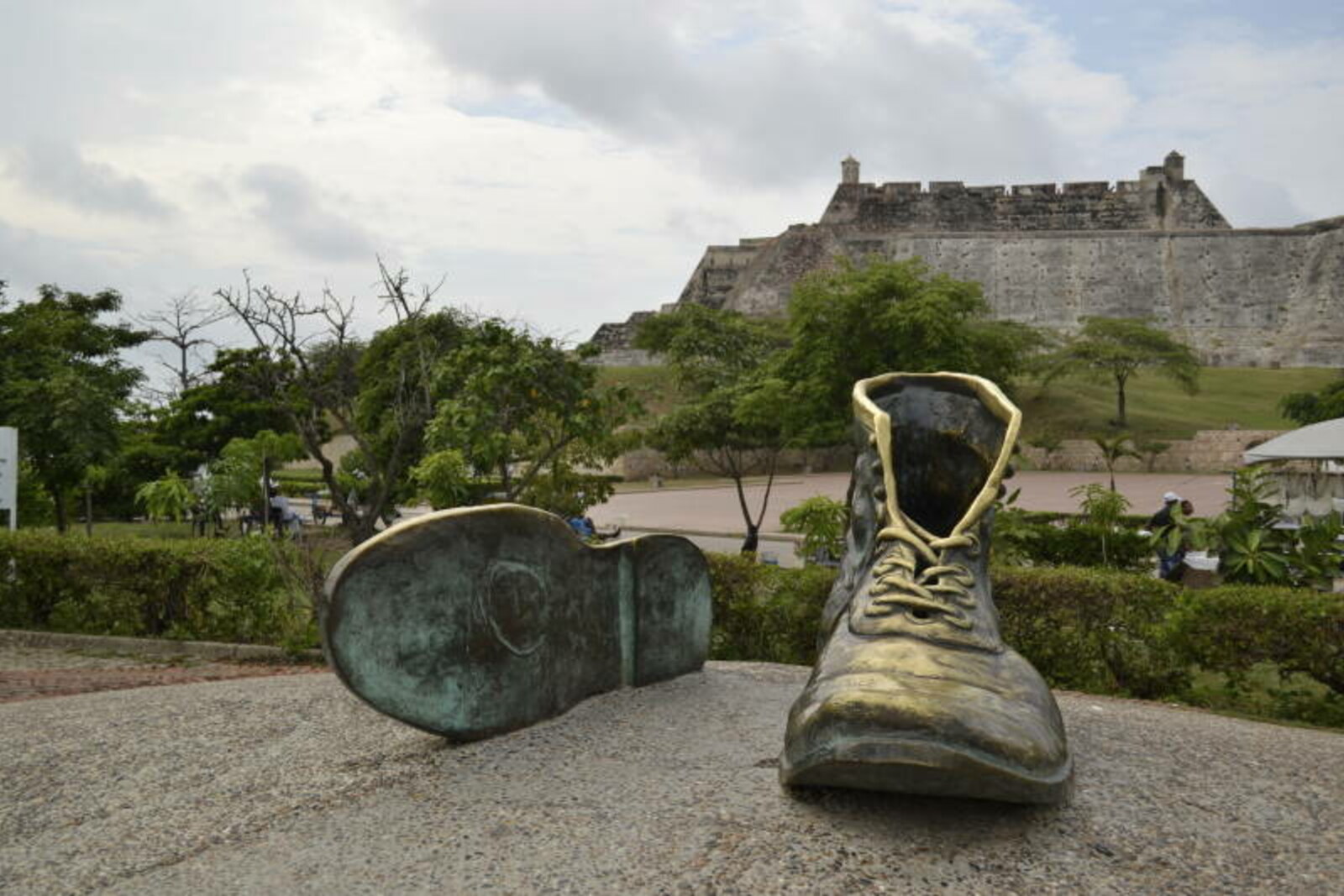
Look around first
What to notice
- Two bronze boots
- Hollow shafts
- A place for a photograph inside a boot
The story of the place
In the summer of nineteen ninety-four, municipal workers began breaking up the huge cement boots by Heredia Bridge. Residents were promised that the monument would be moved, but there was nothing to move: the cement had cracked and the metal frame had rusted through. Thirty-seven years of repainting had prolonged the boots’ life, but it was no longer possible to lift them as a whole.
The sculptor Héctor Lombana, the brother of the man who had devised the original composition, undertook to restore the monument. Héctor took a mold from it, destroyed the remains, and cast a new pair in bronze. He then gave it to the city. A park at Playón Grande, at the foot of San Felipe, had been prepared for the boots: the former site was occupied by the new Heredia Bridge. Thus, in early November, the very pair that stands here now appeared in front of the fortress.
The first pair was made by Tito Lombana, a young sculptor seeking the freedom to choose a monument to the Cartagena poet Luis Carlos López. City Hall wanted to commemorate the writer, who had died several years earlier. Tito proposed a bargain: he would give his work to the city, and the officials would not dictate what he should sculpt. Instead of a figure of the poet, two worn-out cement boots over a metal frame were installed at a traffic interchange in nineteen fifty-seven.
López gave the sculptor this form in the final lines of the sonnet To My Native City. The poet came from a modest family of merchants, worked in the family shop and for newspapers himself. He wanted to speak of Cartagena without solemn flattery, although he lived among people offended by his mockery. In the sonnet, a cross and a sword, caravels, and heroic defenders of the colonial city first appeared. Then López returned to the Cartagena he knew—neglected, proud of its past, and still native to him. Such a city, he wrote, inspires the affection a person feels for old shoes.
Some residents heard an insult in the comparison. The monument was called ugly and disrespectful toward Cartagena: a bronze head on a pedestal had been expected from a monument to the poet, but worn-out footwear was received instead. Héctor Rojas Herazo, a poet who tried to explain Lombana’s idea to the public, stood up for the work. In his speech, he listed the places to which human shoes carry their owner: to meet a loved one, to a friend, to the hospital, the church, and the cemetery. After that, people began to see the biography of an ordinary person in the boots, and tourists began taking photographs inside them.
Two works stand before San Felipe at once: Tito Lombana devised the form and sculpted it in cement, while the present bronze pair was made by his brother Héctor. Nothing remains of the original from nineteen fifty-seven. People who climb into a boot for a photograph continue an activity that began at the old interchange in front of Heredia Bridge.
Useful on site
Open urban space; best viewed in daylight and without a crowd around the pedestal.
Checked: June 26, 2026. Check the official source before visiting.Walk around the sculpture at ground level to examine both forms and the inscription. In sunny weather, the bronze and the surrounding pavement can become very hot.