 Guide On Map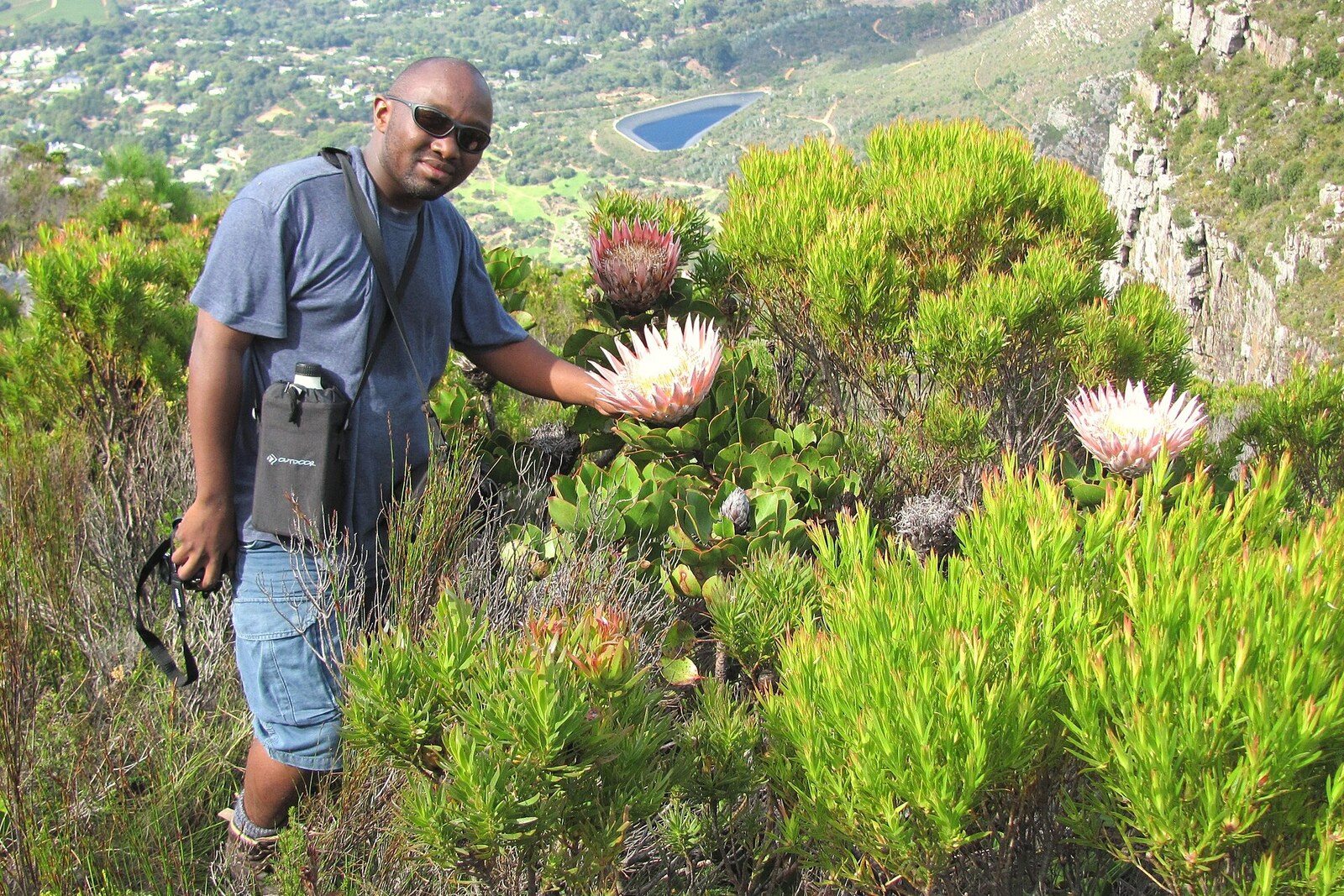
Look around first
What to notice
- Low fynbos shrubs
- Restios
- Quartz sandstone boulders
- Trees in protected ravines
The story of the place
The open western slope of Table Mountain rests on pale quartz sandstone: as it weathers, it turns into acidic, stony sand almost devoid of available nutrients. That is why low shrubs, heaths, and thin, reed-like restio stems remain among the boulders rather than an unbroken forest. Their roots gather scarce substances from a large volume of soil, while proteas can free bound phosphorus. Trees establish themselves only in wetter, protected hollows and lower down, where the soil is more fertile.
In eighteen eighty-three, Joseph Storr Lister, head of plantations for the Cape Colony, demanded that land be allocated in Oudekraal, on the continuation of this western slope of Table Mountain. The colony lacked timber: the available native forests had already been heavily logged, construction timber was brought by sea, and locomotives needed fuel. Lister intended to grow fast-growing non-native trees here. He chose the species himself, without first conducting trial plantings, and believed that the new forest might even help increase rainfall.
The main difficulty lay beneath the saplings. The pale rocks of the Twelve Apostles are made almost entirely of quartz sandstone. As it weathers, it produces acidic, stony sand with little available nitrogen and phosphorus. Agriculture scarcely developed on such soil, and pine plantations proved commercially unprofitable. Lister did not obtain the timber supply he expected here. The Forestry Department later removed the experimental plantings from the sandstone areas; they lasted longer on the more fertile granite soils in other parts of the peninsula.
The low vegetation around you is called Cape Peninsula Sandstone Fynbos. Fynbos is the name for an entire type of shrubby vegetation: it includes proteas, heath ericas, bulbous plants, and reed-like restios. Restios are its main identifying feature.
Underground, these plants do what commercial pines could not. Many species have extremely fine, highly branched absorbing roots. They penetrate a large volume of poor soil before the thicker roots of trees can take the scarce nutrients. Proteas form dense clusters of short rootlets and release substances that free phosphorus bound in the soil. On rich land, fast-growing plants would shade out such slow specialists. Here, the lack of nutrients limits their competitors.
During the construction of Pipe Track in eighteen eighty-two, a photograph of the slope was taken near Blinkwater Ravine. Low fynbos shrubs were already growing among large sandstone boulders in it. Lister's pine experiment began a year later and ended with the removal of the plantations. The present slope retains the same spatial arrangement: trees cluster in protected, damp ravines and on richer soil below, while exposed quartz sandstone remains with small-leaved shrubs.
Useful on site
Open natural area; stay on the marked trail.
Checked: June 28, 2026. Check the official source before visiting.Do not leave the trail for flowers, do not pick plants, and do not necessarily expect to see a king protea: flowering depends on location and season.