 Guide On Map
District Six and Old Cape Town
From District Six Museum through the Castle of Good Hope and Grand Parade to Company's Garden
Guide On Map on your phone
Open the walk like a regular app
It takes about 10 seconds to install. No app store needed.
The whole path
Route map
About the walk
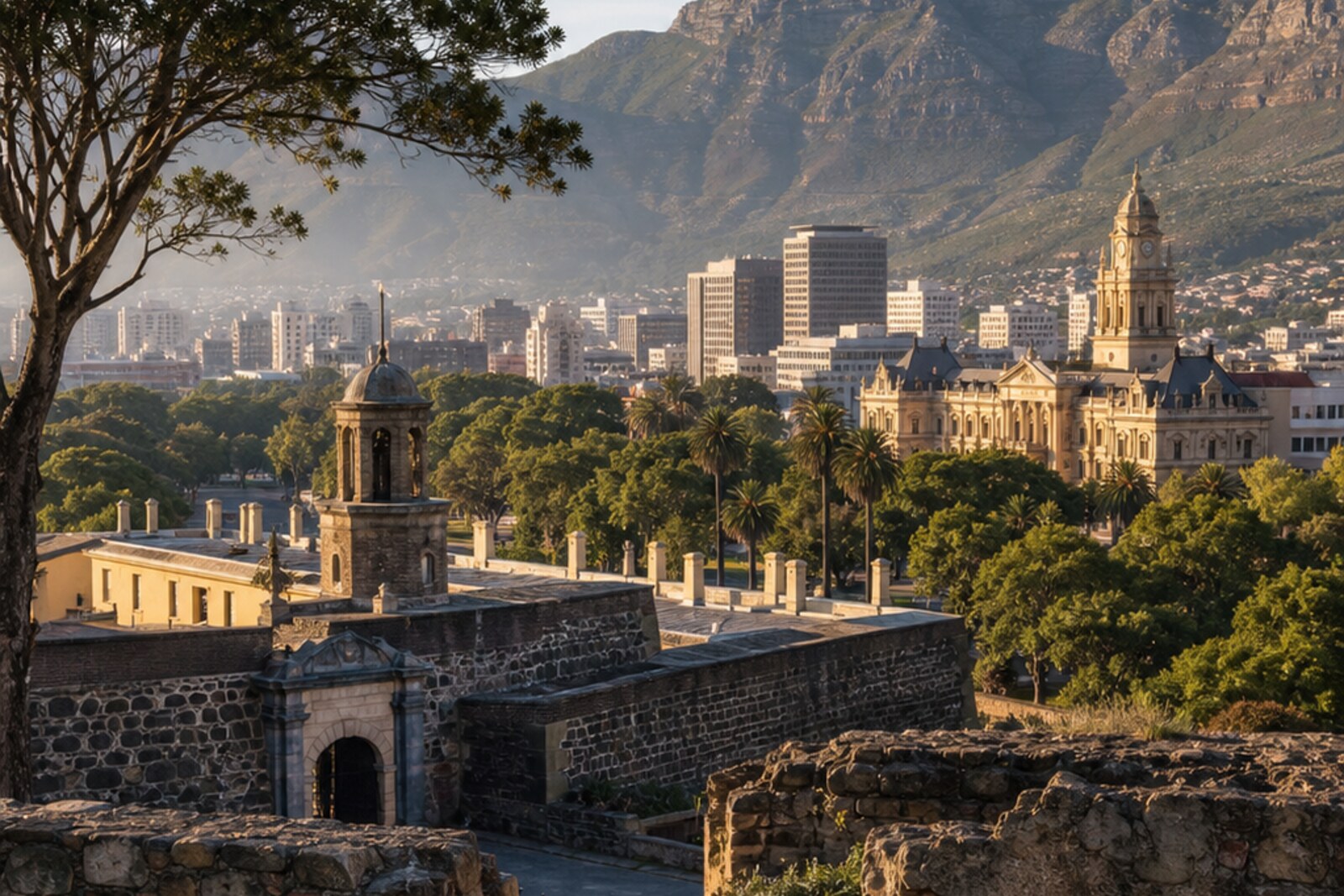
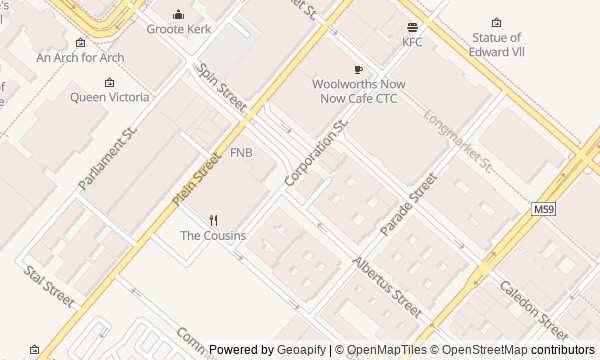
The route begins at a former church on the edge of District Six. Then you will follow Buitenkant Street to an old warehouse, the Castle of Good Hope, the city square, Iziko Slave Lodge, and the cathedral. It ends beneath the trees of Company's Garden.
These stops were built for very different kinds of power: to evict, imprison, set a price on freedom, ban gatherings, and block a familiar way through the city. Yet at each one, there is someone who refused the role assigned to them.
Why did the man overseeing demolitions hide street signs in a basement? Why did a newly freed speaker need someone else's glasses? What turned a walk through the garden into a visit under surveillance?
The story follows documents and small human choices. It separates what is established from local legend and later museum conjecture. By the end, you will read central Cape Town as an argument over the right to return, gather, and leave your name on the map.
Why this order
First, the museum shows how residents put destroyed streets back on the map, while the neighboring District Six Museum Homecoming Centre carries that work beyond the exhibition, into buildings connected to the district's former life. From there, the route leads to the Castle of Good Hope, where an earlier mechanism of colonial rule comes into view: here, authorities tried to silence a complaint through imprisonment. Just beyond its closed walls lies Grand Parade, an open square where a speech could reach tens of thousands. After that public promise of freedom, Iziko Slave Lodge brings the route back to an uncomfortable question: on what terms was freedom granted before? The cathedral continues the theme through collective action, as an entire procession challenged a ban on marching from its steps. The final walk into Company's Garden narrows the scale from a march of many thousands to an ordinary passage along an avenue—and shows that the right to use a city is tested not only in its squares.
Those who want Cape Town's history without the ceremonial retelling Those who enjoy documentary stories about individual lives Those who want to understand the connection between District Six and the old center
Those looking for a light overview of sights without difficult subjects Those who prefer short facts to detailed stories
Before you go
Check access to District Six Museum, the Castle of Good Hope, and Iziko Slave Lodge in advance: their interiors are an important part of the experience, and visiting hours may change.
The cathedral remains an active place of worship, so entry can sometimes depend on services and other events; keep quiet inside and do not disturb worshippers.
Choose daylight hours, bring water, and leave time for pauses. The distance is moderate, but after substantial museum stops you may need a breather.
When to go
Allow 3–4 hours if you visit the museum, castle, and Iziko Slave Lodge exhibitions. An outdoor version without lengthy visits inside takes about 2–2.5 hours, though rushing does not suit this material.
Backup plan
If District Six Museum is closed, begin outside its building and give more time to District Six Museum Homecoming Centre and the surrounding emptiness of the cityscape.
You can read a closed Castle of Good Hope from the outside through its bastions, moat, and gate, then continue the conversation about public power at Grand Parade.
At Iziko Slave Lodge, focus on the entrance door and restrained facade, and save the exhibition for a separate visit. If the cathedral is inaccessible, look at the west facade and keep the stop connected to the street where processions began.
Route conditions
Surface. Paved — 1.7 km (data covers 80% of the route)
Facilities. Toilets — 1
Elevation. Ascent — 33 m; descent — 24 m
OpenStreetMap extract of June 18, 2026: database data, not a check on the ground. Data © OpenStreetMap contributors, ODbL licence
Walk plan
Open in maps ↗- 1
District Six Museum
Here, private memories will first come together into a shared map of the destroyed district. - 2
District Six Museum Homecoming Centre
This stop shifts the conversation from preserved memory to the practical work of bringing a community home. - 3
Castle of Good Hope
Here the route will show how a written complaint managed to get beyond the walls where its author was held. - 4
Grand Parade
The route needs the square as the place where one person’s release became a public event for the entire city. - 5
Slave Lodge
This stop shows personal freedom as a transaction whose terms were set by the owner. - 6
St George's Cathedral (the People's Cathedral)
From here, individual stories of resistance give way to a peaceful city march. - 7
Company's Garden
The finale will bring the larger conversation about freedom down to the simple right to walk through a city garden without permission.
Route features
Everything you need stays in the browser
Progress, saves and your trip plan are stored on this device.
Add Guide On Map to your home screen so the walk opens outside the browser.
How we handle sources, maps and corrections: our editorial standards