 Guide On Map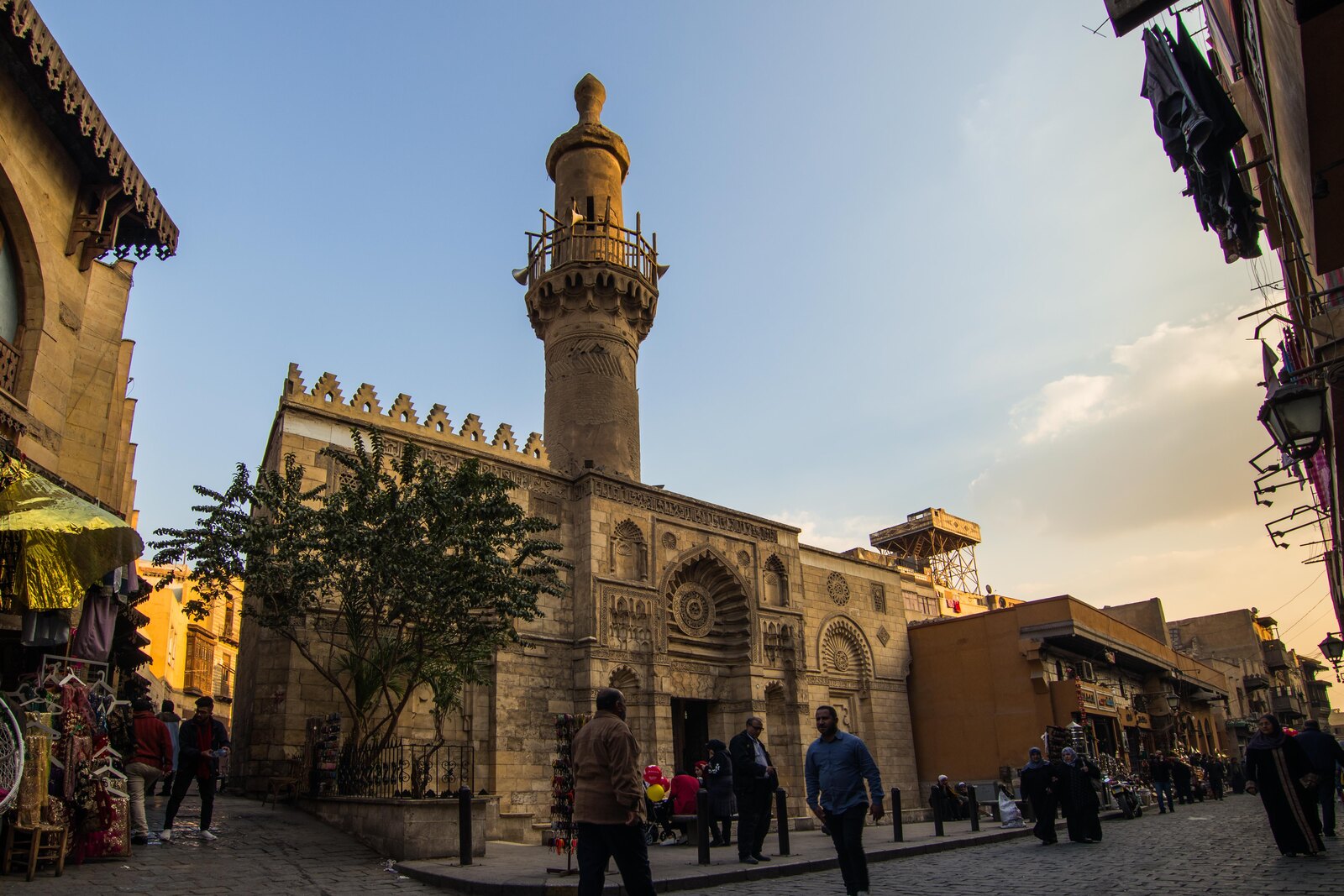
Look around first
What to notice
- Round medallion above the entrance
- Carved stone facade
- Building inscription
- Angled transition to the prayer hall
The story of the place
The carved light-colored facade of Al-Aqmar Mosque follows the line of Al-Muizz Street, although the hall behind it is turned toward Mecca. An angled transition between the wall and the hall reconciles these directions, so outside the building became part of the city's street frontage, while inside it served communal prayer. Commercial premises once operated below, but their doors opened onto a side alley, leaving the building's main side as an unbroken surface of carved stone. The round inscription above the entrance and the building inscription in stone still recall the Fatimid rulers and the descent they claimed.
During one of the Fatimid New Year processions, the cortege stopped before this mosque. Caliph al-Amir, ruler and spiritual head of Egypt's Ismailis, was seated on horseback. At the facade, he was awaited by his chief minister, Muhammad ibn Fatak, who had received from the caliph the title al-Ma'mun, “the trusted one.” Al-Amir gave him a brief sign of greeting. At court, such a gesture was considered the highest honor a caliph could bestow on his vizier.
Al-Ma'mun arranged this scene himself. Before al-Ma'mun, the caliph had remained in the shadow of the chief minister for years and had barely taken part in state affairs. The new vizier sought a different arrangement: he ran the administration, while al-Amir appeared before his subjects during holidays and ceremonial outings. Al-Ma'mun restored the grand processions and religious ceremonies, preparing their order and decorations—even the facade before which the caliph stopped.
What is now Al-Muizz Street then ran between two Fatimid palaces. According to the medieval historian al-Maqrizi, the shops near the main palace irritated al-Amir, and he instructed the vizier to build a mosque here. The commercial premises were not demolished: the builders placed them below, but gave them doors opening onto a side alley. A carved stone wall now faced the ceremonial street.
This wall follows the street, while the prayer hall behind it is turned toward Mecca. Between them, the builders left an angled transition: outside, the facade continues the line of the processions; inside, the rows of worshippers face toward the qibla. This created one of Cairo's first mosques in which the outer wall and the hall follow two different directions.
The carving indicated who stood behind the new arrangement. In a round medallion above the entrance, the names of the Prophet Muhammad and Ali are intertwined; around them runs a Quranic verse about the Prophet's family. The Fatimid caliphs traced their descent from Fatima, Muhammad's daughter, and her husband Ali. The building inscription names al-Amir himself and his vizier al-Ma'mun. The name Al-Aqmar is usually translated as “moonlit” and linked to the whiteness of the stone facade.
The sign of honor before the mosque was not enough for al-Ma'mun. He compelled the caliph to sign a promise: al-Amir was to inform him personally of all accusations against the vizier and, after the vizier's death, to look after his children. Al-Ma'mun had no reliable army of his own; his office and wealth depended on the caliph's favor, so a written guarantee seemed to him a safeguard.
The outcome was the opposite. The celebrations the vizier arranged for al-Amir restored the caliph's public role and confidence. In the fall of eleven twenty-five, when the mosque had already been completed, al-Amir ordered al-Ma'mun's arrest. Medieval authors disagree about the specific accusation: some wrote of a plot with the caliph's brother, while others wrote of suspicions prompted by the vizier's excessive rise. The signed promise did not save him. Al-Ma'mun spent almost three years in confinement and was executed in July eleven twenty-eight on al-Amir's orders. For the rest of his reign, the caliph did not appoint another chief vizier.
Both Fatimid palaces have disappeared. On Al-Aqmar's facade inscription, the names of the executed “trusted one” and the man who ordered his execution still stand side by side.
Useful on site
Active mosque; the exterior facade can be viewed at any time, while entry inside may depend on prayer and local arrangements. Checked 2026-06-25.
Checked: date not specified. Check the official source before visiting.The street in front of the facade is narrow, so view the details from the edge and do not step into traffic for a photograph. The interior is not necessary for understanding this stop.