 Guide On Map
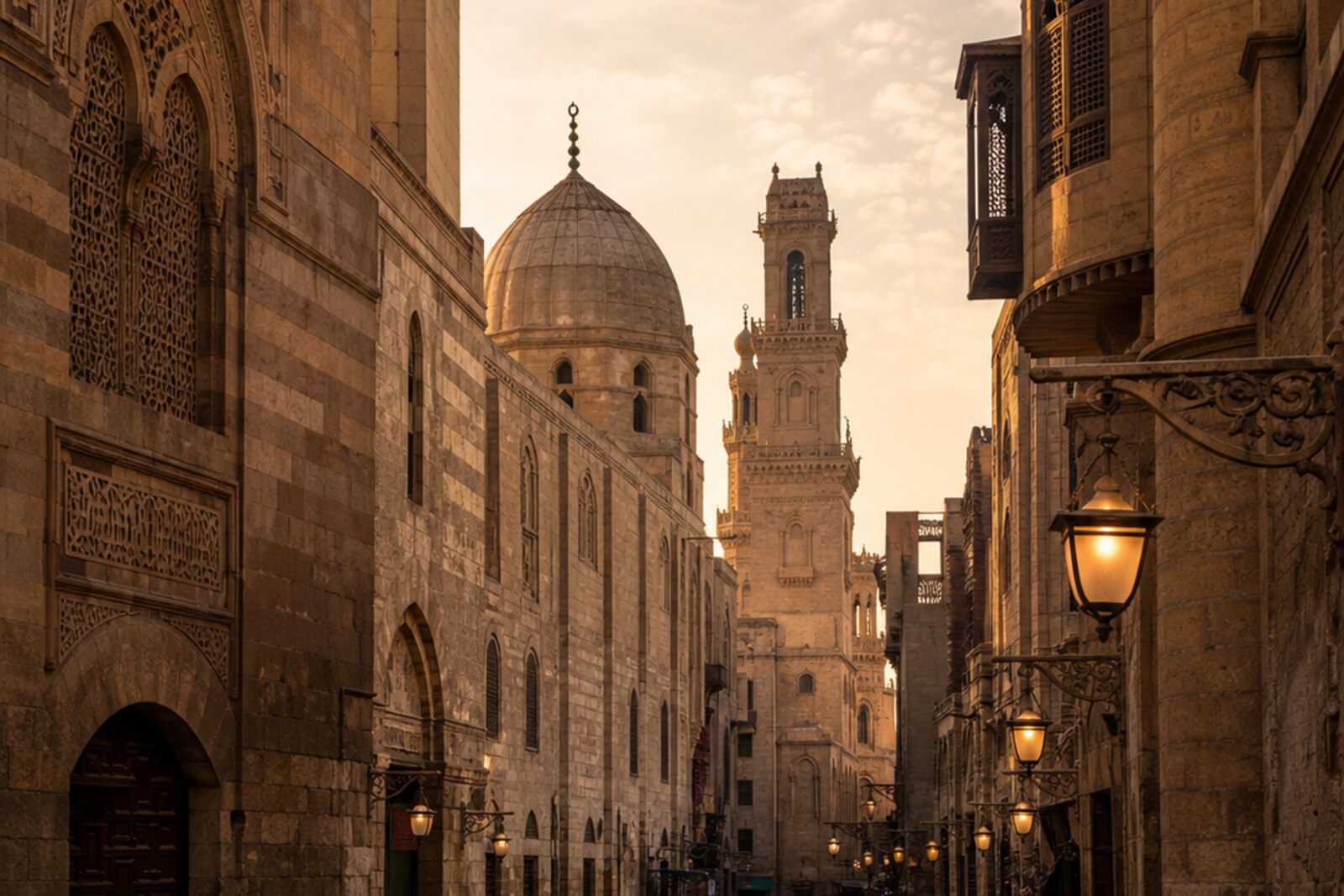
Medieval Cairo along Al-Muizz Street
From Bab al-Futuh to Bab Zuweila through mosques and Khan el-Khalili
Guide On Map on your phone
Open the walk like a regular app
It takes about 10 seconds to install. No app store needed.
The whole path
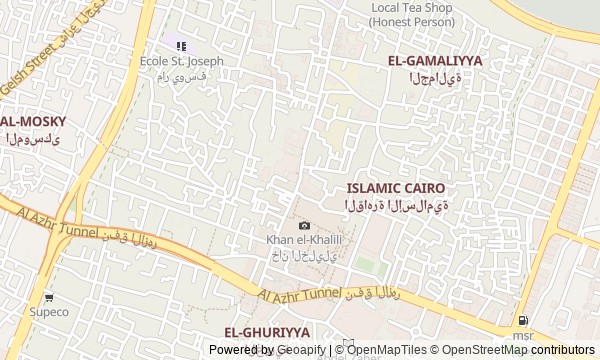
Route map
About the walk
You will cross Cairo from north to south along Al-Muizz Street, from Bab al-Futuh to Bab Zuweila. First come stone gates and 2 Fatimid mosques. Then there will be a carved facade, a sultan's complex, and the edge of Khan el-Khalili; at the southern gate, the road will end.
Along the way, an official name will remain only in an inscription, a school courtyard will once again become a mosque, and a written promise will not save the person who demands it. One builder will change a sultan's commission. One trading courtyard will receive a plot that only appears to be vacant.
The story will stay with particular actions and their consequences. Architectural details will matter where they reveal a dispute, fear, or calculation. By the end of the walk, you will be able to tell apart the Fatimid capital, the Mamluk street of institutions, and the trading quarter that took the place of an earlier mausoleum along Al-Muizz Street.
Why this order
The northern gate comes first because its new stretch of wall brought Al-Hakim Mosque inside the city for the first time: the next short walk will show the consequence of that decision. After it, Al-Aqmar Mosque continues the Fatimid story on the ceremonial street, where its facade was adapted for processions. The Complex of Sultan Qalawun comes next: on part of the former Western Fatimid Palace rose a Mamluk hospital, school, and mausoleum. Beside them, Khan el-Khalili shows how trade took over land near the main street. From the market, the route continues south and ends at Bab Zuweila. The northern and southern gates close the walk, while the fate of the last Mamluk sultan completes the story of changing power.
Those who want to understand medieval Cairo through people's decisions rather than a list of dynasties Those interested in mosques, gates, and the city street as one story Those ready for difficult stories of seizing power, coercion, and execution
Those looking for an overview of all Cairo in one walk Those who want a route only through mosque interiors Those who prefer a light story without violence or religious conflict
Before you go
Wear comfortable closed shoes: there will be different surfaces underfoot, and your attention will often be divided between facades, people, and traffic.
Bring water and sun protection; it is best to take the open stretches without rushing, especially in the hot middle of the day.
Clothing that covers your shoulders and knees will let you enter active mosques if access is open. Inside, silence your phone, do not cross the prayer space in front of people, and follow staff requests.
Do not build the walk around interiors. The core of the route is visible from the street; if you want a special visit inside or a climb up any structure, check and arrange it separately.
When to go
08:00–11:00 or 16:30–18:30
Backup plan
If mosques or complexes are closed, do not try to find an unofficial entrance: follow the route through facades, gates, and street passages—the main drama will remain intact.
In severe heat or if you are tired, split the walk at the Complex of Sultan Qalawun and return to the southern section at another time. If the market is too crowded, do not go deeper into the lanes of Khan el-Khalili: listen to the story at its edge and continue along the main axis.
During prayer, step away from the entrance and let worshippers pass; you can finish listening a little to the side without blocking the narrow street.
Route conditions
Surface. Paved — 172 m (data covers 8% of the route)
Stairs. Flights: 2, 26 m in total
Access. Wheelchair — no; stroller — limited (stairs)
Facilities. Toilets — 1
Elevation. Ascent — 12 m; descent — 12 m
OpenStreetMap extract of June 25, 2026: database data, not a check on the ground. Data © OpenStreetMap contributors, ODbL licence
Walk plan
Open in maps ↗- 1
Bab al-Futuh
Here it becomes clear how a seizure of power acquired a boundary in stone. - 2
Al-Hakim Mosque
This stop will help distinguish the building's medieval parts from its twentieth-century restoration. - 3
Al-Aqmar Mosque
The inscriptions will connect court ceremony with the fate of the vizier who restored it. - 4
Complex of Sultan Qalawun
The position of the madrasa and mausoleum will show how the dispute between the sultan and the construction supervisor ended. - 5
The Edge of Khan el-Khalili
Here you will learn why the name of a vanished trading courtyard outlived both the building and the former cemetery. - 6
Bab Zuweila
Here, the execution of one sultan will conclude the route about the end of Mamluk rule.
Route features
Everything you need stays in the browser
Progress, saves and your trip plan are stored on this device.
Add Guide On Map to your home screen so the walk opens outside the browser.
How we handle sources, maps and corrections: our editorial standards