 Guide On Map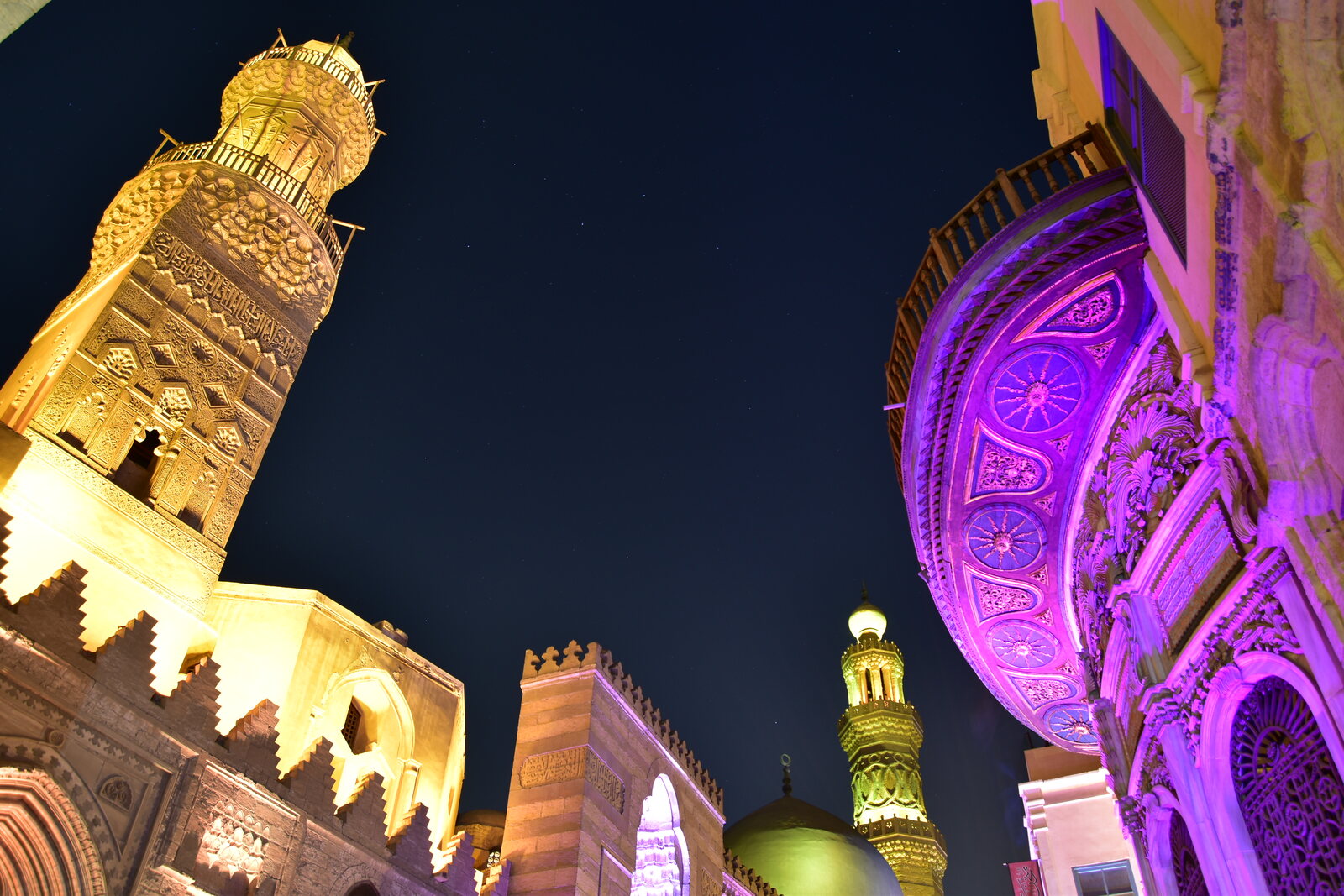
Look around first
What to notice
- Entrance corridor
- Mausoleum on the right
- Madrasa on the left
- Eastern vaulted hall with a marble pool
The story of the place
Sultan al-Mansur Qalawun wanted to place his future tomb here, exactly opposite the tomb of as-Salih Ayyub—the former master whom he had once served as a mamluk. The Mamluks were warriors bought as youths: they were trained in mounted combat, freed, and admitted into the sultan's army. Qalawun rose from such a warrior to become an emir and took the Egyptian throne in twelve seventy-nine. It was at as-Salih's tomb across the road that Mamluk commanders then swore allegiance to the next sultan.
Qalawun intended above all to build a hospital. A medieval tradition recorded by the historian al-Maqrizi links this plan to Qalawun's own illness. While still an emir, he fell gravely ill during a campaign in Syria. Doctors sent him medicine from the Bimaristan of Nur al-Din in Damascus—a bimaristan was a hospital—and Qalawun recovered. He then vowed that, if he became sultan, he would open a similar institution in Cairo.
A former section of the Western Fatimid Palace, by then converted into a residential property, was cleared for it. Its residents were evicted, and Qalawun entrusted the work to Emir Sanjar al-Shuja'i, a military commander knowledgeable about construction. Sanjar assembled craftsmen from Cairo and Fustat and forbade them to take other commissions. According to al-Maqrizi, even passersby who happened to be nearby were forced to work; captives taken in wars against the Mongols also performed the heavy labor. Stone and columns were taken from other buildings. The entire complex was erected in thirteen months. Some legal scholars then declared prayer in the new building impermissible.
Sanjar also altered the project itself. Qalawun had planned a hospital and a mausoleum, but the construction supervisor added a madrasa—a school of Islamic law—between them. As a result, an educational wing stood opposite as-Salih's tomb, while Qalawun's burial chamber was shifted to one side. When the sultan came to inspect the completed hospital and learned of the alteration, he grew angry and refused to enter the madrasa.
Qalawun did not order the madrasa demolished. All four Sunni legal traditions were taught in the school; by the beginning of the fourteenth century, fifty people studied here, receiving stipends and places in the dormitory. Deep within the complex, the hospital operated with departments for internal medicine, surgery, and eye treatment. Muslims were admitted regardless of whether they were military personnel or city dwellers, and the length of their stay was not limited. Those who recovered were given clothing and money; if a patient died, the patient's family had the funeral paid for.
After Qalawun's death in twelve ninety, he was buried in the mausoleum here. Qalawun's son, the new sultan Khalil, received the oath of allegiance at his father's tomb. The following ceremonial processions also began to end here, rather than at as-Salih's across the road.
The entrance corridor still preserves the result of the dispute between the patron and the construction supervisor: Qalawun's mausoleum is on the right, the madrasa added by Sanjar is on the left, and farther in lie the remains of the medieval hospital. Part of its eastern vaulted hall with a marble pool has survived, and the medical institution at the complex now treats eye and dental diseases. Opposite as-Salih's tomb, it is still a school that stands today, not Qalawun's burial chamber—the school whose threshold the sultan refused to cross.
Useful on site
The street facade is available for exterior viewing; interior areas may open according to the site's current operating arrangements and restoration work. Checked 2026-06-25.
Checked: date not specified. Check the official source before visiting.Do not block the entrances: part of the complex is connected with an operating medical institution. The account is intended for viewing from the street; guaranteed interior access must be arranged separately.