 Guide On Map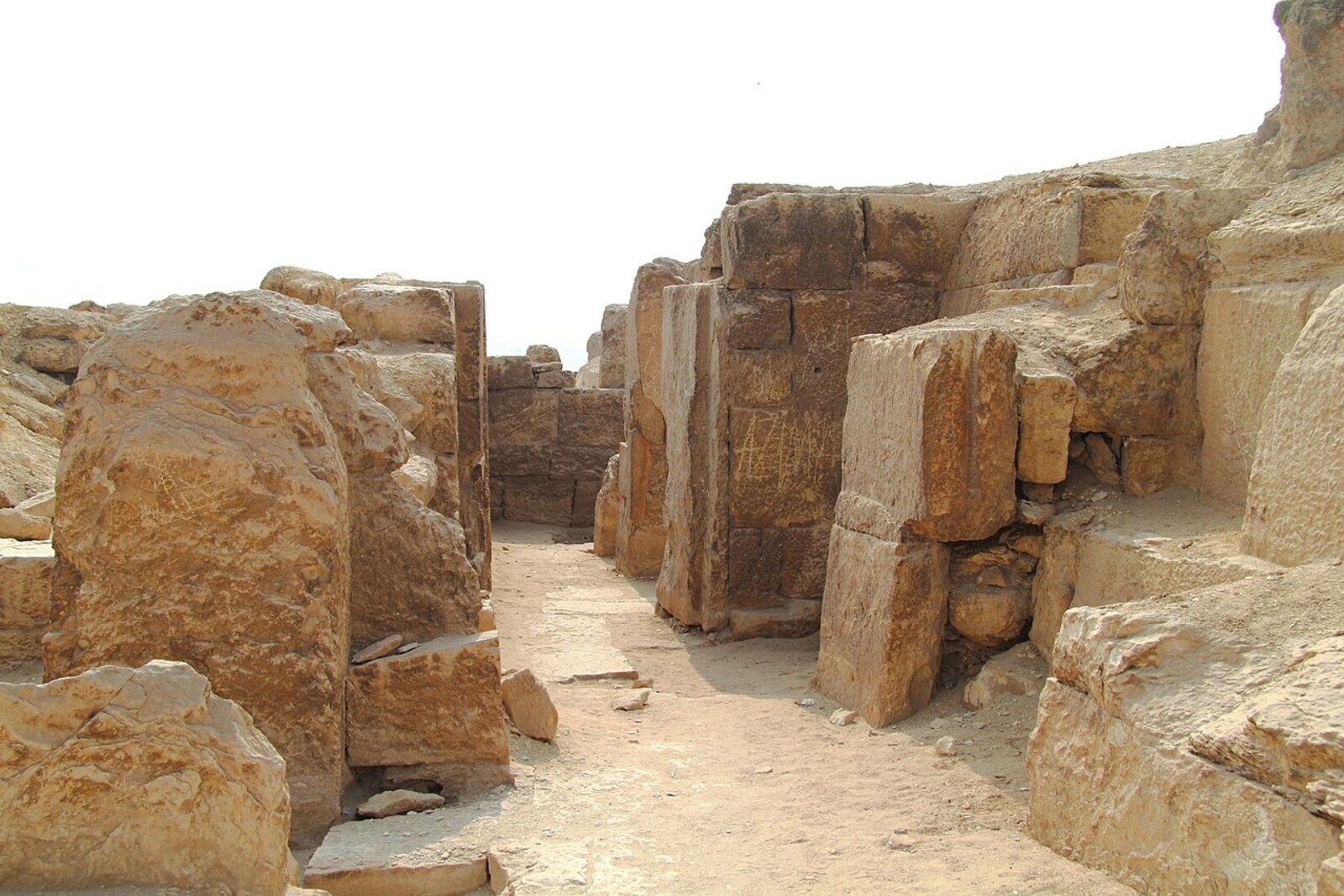
Look around first
What to notice
- Rectangular mastabas
- Burial shafts
- Chapel of Meresankh III
- Ten female figures
The story of the place
While the tombs remained closed, an entire household continued to work around them: some baked bread and brewed beer, while others herded cattle, wove mats, and smelted metal for memorial offerings. Stone chapels were left above ground for these offerings, while the buried lay below; attendants performed the required rites again and again. Among the low rectangular tombs, a chapel survives with a row of ten female figures on its north wall. Robbers nearly emptied the underground chambers, but the wall reliefs outlasted them and preserved the faces of those for whom everything here had been arranged.
East of the Great Pyramid of Giza stretch rows of mastabas. The Arabic word “mastaba” means bench: it is the name given to the low rectangular superstructure above an underground grave. Inside was a chapel for offerings, while the body was lowered by a shaft deep into the bedrock. This cemetery is called Eastern because of its position relative to the Great Pyramid of Giza. Plots here were assigned chiefly to the king's closest relatives.
One of the mastabas held the burial of Meresankh III—Khufu's granddaughter and an Egyptian queen. She died before her mother, Hetepheres II. Hetepheres II was Khufu's daughter and was already building her own mastaba here. After her daughter's death, Hetepheres gave her a heavy sarcophagus of black granite. The mother's name and titles survive on the stone, along with her words: “That which I gave to my daughter, the royal wife Meresankh.”
Archaeologists believe that Hetepheres also yielded the tomb itself to her daughter, although the inscription does not state this directly. Indirect confirmation is carved on the entrance jambs. One line records Meresankh's death, another the day of her burial. Two hundred seventy-two days, nine months and two days passed between them. That was far too long for embalming; the mastaba and its underground rooms were probably being hastily adapted for a different owner.
A sarcophagus alone was not enough. After Meresankh's burial, she needed food, clothing, and servants—for her existence in the afterlife. The walls list the estates that belonged to her and show what they were to supply: bread was baked here, beer brewed, cattle herded, mats woven, metal smelted, and offerings carried. Priests serving the funerary cult came to the chapel while the body lay in the chamber beneath them. Thus close kinship with Khufu became a very material right to land, a sarcophagus, a mastaba, and continuing support after death.
Later, robbers lifted the lid of the granite sarcophagus, took away almost everything valuable, and left Meresankh's bones in a scattered heap. The chapel survived better than the burial. Ten female figures project from the rock on its north wall: they are thought to depict Meresankh, her mother, and her daughters. Hetepheres also appears beside her daughter in the reliefs—in the very tomb she had prepared for herself. Where Hetepheres herself was ultimately buried has not been established with certainty.
Useful on site
An open area of the plateau covered by the general ticket; check the official ticket page for the plateau's last entry.
Checked: June 28, 2026. Check the official source before visiting.Do not approach the edges of the shafts, and do not count on entering a particular tomb: access to chapels may be restricted. The cemetery's overall layout is easy to read from outside.