 Guide On Map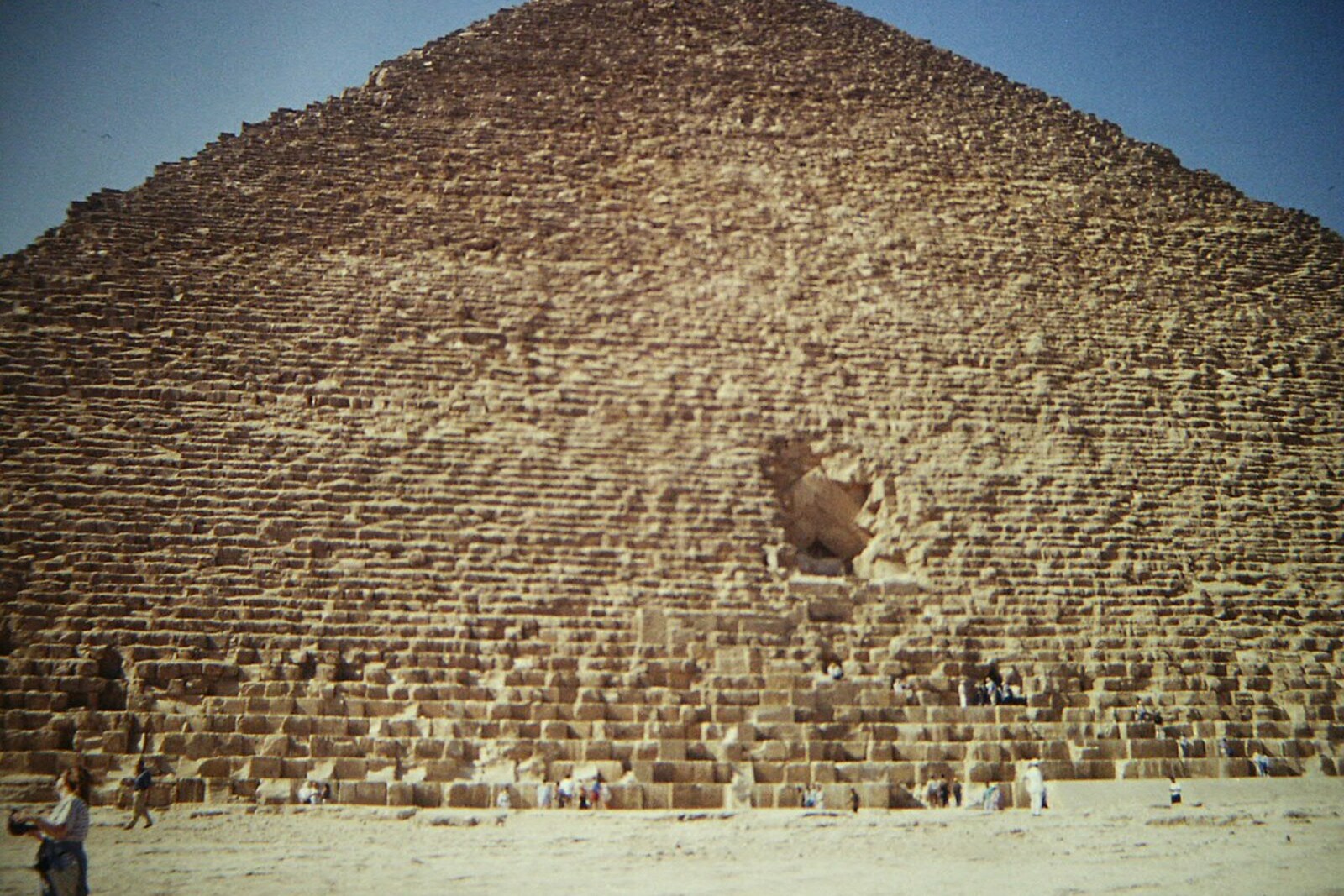
Look around first
What to notice
- Limestone masonry
- Granite sarcophagus
The story of the place
Limestone masonry is visible on the surface, and behind it are the burial chamber with its granite sarcophagus and five low cavities above its ceiling: they bore the weight of the stone. The pyramid and the burial complex surrounding it were prepared for an Egyptian king. The plateau near Memphis gave the builders a solid foundation and most of the limestone, while a nearby branch of the Nile made it possible to transport cargo. The king’s body and burial gifts disappeared long before the first reliable accounts, but the stone framework of the tomb remained.
In eighteen thirty-seven, the British colonel Richard William Howard Vyse was searching for unknown chambers inside this pyramid. He paid for the excavations himself and hoped for a discovery worth dismantling millennia-old masonry for. His diary also records another incentive: an ordinary worker received one piastre a day, the men inside the pyramid received more, and Vyse offered double pay for a significant find.
By then, one low cavity above the king’s granite burial chamber was known. Such chambers took the weight of the masonry above the flat ceiling onto their stone ceilings. Vyse decided that there might be others higher up. On his orders, workers drove a passage upward with gunpowder charges. They opened four more chambers in succession.
There were no treasures there. Red lines, signs, and royal names remained on the rough blocks. Part of the inscriptions ran beneath neighboring stones: it would have been impossible to apply them after the masonry was completed. These were workmen’s markings made by ancient masons, along with the names of construction crews.
Vyse’s assistant copied the signs, and Samuel Birch, the British Museum’s curator of antiquities and one of the few experts in hieroglyphs at the time, set about reading them. Among the inscriptions was the name Khufu. Before this discovery, Europeans associated the pyramid with the king chiefly by following Herodotus, a Greek historian who lived about two thousand years after it was built. Now the king’s name had been found on blocks that his masons had walled into the masonry.
The discovery brought Vyse recognition as a researcher. After returning to England, he published a detailed three-volume report on the work at Giza. Almost all the Egyptian workers who forced a path for him remained unnamed in the book. But the inscriptions of another work crew—the one that lifted the blocks in the twenty-sixth century BCE—preserved the name of the commissioner.
Khufu was an Egyptian king of the Fourth Dynasty of Egypt. Cheops is the Greek form of his name that has become established in Russian. A tomb and a burial complex were built here for Khufu. The site lay near Memphis, the state center at the time: the limestone plateau provided a solid foundation and most of the stone, while a branch of the Nile came close enough to transport cargo. An empty granite sarcophagus still stands inside the pyramid; the king’s body and burial gifts disappeared long before reliable accounts appeared.
Five low chambers remain above the ceiling of the burial chamber. Vyse’s workers opened four of them. The red markings are there too, on blocks hidden from the usual route inside the pyramid. The ancient masons wrote them for their own work, then laid the next course of stone above them. Khufu’s name remained inside the masonry—directly above the place prepared for his body.
Useful on site
Exterior access with a plateau ticket; the interior requires a separate ticket. Official ticket page: from 07:00, last entry 16:00.
Checked: June 28, 2026. Check the official source before visiting.First look at the pyramid from a distance, then approach the masonry to feel the difference in scale. The interior passage is narrow, has no paintings, and requires separate access.