 Guide On Map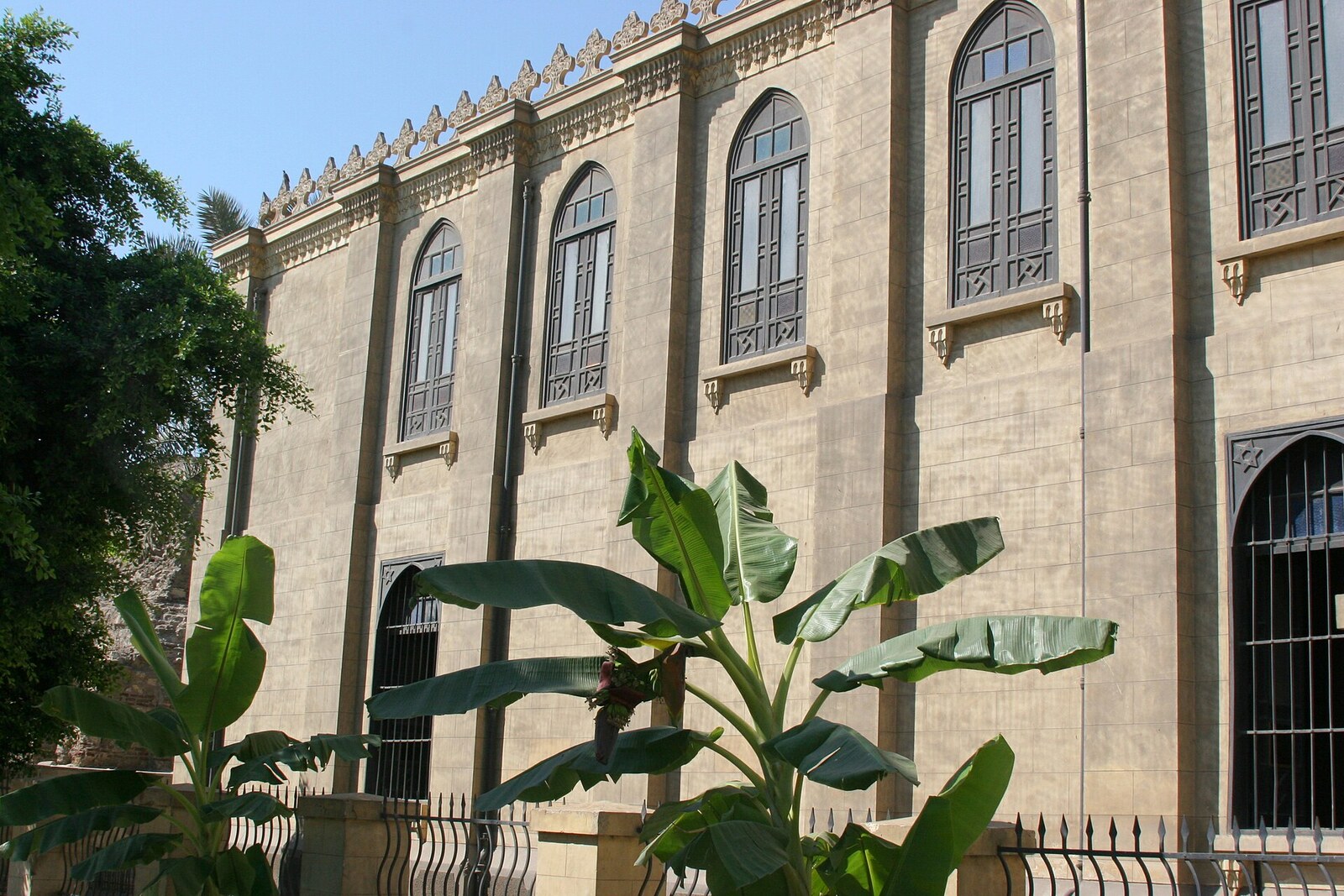
Look around first
What to notice
- Women’s gallery
- High opening of the geniza
The story of the place
In Ottoman times, the synagogue acquired the name of Ben Ezra, a Jewish poet, philosopher, and interpreter of the Bible. In medieval papers, it was called the synagogue of the Jerusalemites or Syrians: a community following the customs of the Land of Israel prayed here. A high opening in the wall has survived above the women’s gallery. There are no regular services now.
For several centuries, worshippers at this synagogue carried worn-out papers up to the women’s gallery and pushed them through a high opening in the wall. The purpose was religious: texts bearing the name of God could not be thrown away or destroyed as trash. They were placed in a geniza—a storeroom where written sheets awaited respectful burial.
The Jews of Fustat understood this rule broadly. Prayer books and Torah scrolls went into the storeroom, along with marriage contracts, divorce letters, merchants’ accounts, private correspondence, medical prescriptions, and school exercises. Even a business letter might contain a blessing or be written in Hebrew letters. People got rid of papers they no longer needed and accidentally left behind the most detailed collection of documents about their own lives—from trade with India to family quarrels.
In eighteen ninety-six, two Scottish widowed twins, Agnes Lewis and Margaret Gibson, who were searching for ancient manuscripts, bought several such sheets in Cairo. In Cambridge, they showed them to Solomon Schechter, a lecturer in rabbinic literature who made his living studying Jewish texts and was trying to recover a lost book. On one scrap, he recognized an ancient Hebrew text of the Book of Ben Sira. The original of this book had long disappeared from circulation; scholars knew it mainly through translations and later quotations.
One damaged sheet meant that the rest might be lying somewhere in Cairo. Charles Taylor, the wealthy head of a Cambridge college, paid for the trip so that Schechter would not have to wait through lengthy university approval. In December of that same year, the researcher came here.
He could not himself dispose of the contents of the storeroom. Aaron Raphael Ben-Shimon, the Chief Rabbi of Egypt, was responsible for access to community property; Schechter secured his consent and permission from the leaders of Cairo’s Jewish community. After that, he went up to the opening above the women’s gallery.
It was impossible to read the manuscripts calmly inside: there was not enough light, the sheets lay in tangled heaps amid dust and insects. At the same time, there was a race against antiquities dealers. In a letter from Cairo, Schechter complained that the hired assistants were pulling out good fragments and selling them to middlemen. He was unable to prevent this and bought the stolen sheets back. So instead of selecting individual treasures, he decided to take everything the community would allow. In just three weeks, he had thirteen large sacks; in all, about two hundred thousand fragments were sent to Cambridge.
Two years later, Schechter and Taylor published the discovered Hebrew text of the Book of Ben Sira. The Cambridge collection was named after them. Other researchers began to read papers that their former owners had considered worn out: marriage terms, debts, prices, merchants’ routes, and letters between parents and children. Manuscripts from the Cairo Geniza are now distributed among more than sixty libraries and private collections; roughly half are in Cambridge.
The synagogue’s current name is officially associated with Abraham ibn Ezra, a twelfth-century Jewish poet, philosopher, and interpreter of the Bible. It became established only in the Ottoman period. In medieval documents from the same storeroom, worshippers called it the synagogue of the Jerusalemites or Syrians: a community that followed the liturgical and legal customs of the Land of Israel prayed here.
There are no regular services now, and the geniza is empty. Above the women’s gallery remains the high opening through which worshippers for centuries threw away what they refused to destroy.
Useful on site
Daily 09:00–16:00 according to MoTA; access may change because of security, holidays, and restoration work.
Checked: June 28, 2026. Check the official source before visiting.Treat the synagogue as a religious space and follow the attendants’ instructions. If entry is not allowed, you can calmly listen to the story of the manuscripts outside.