 Guide On Map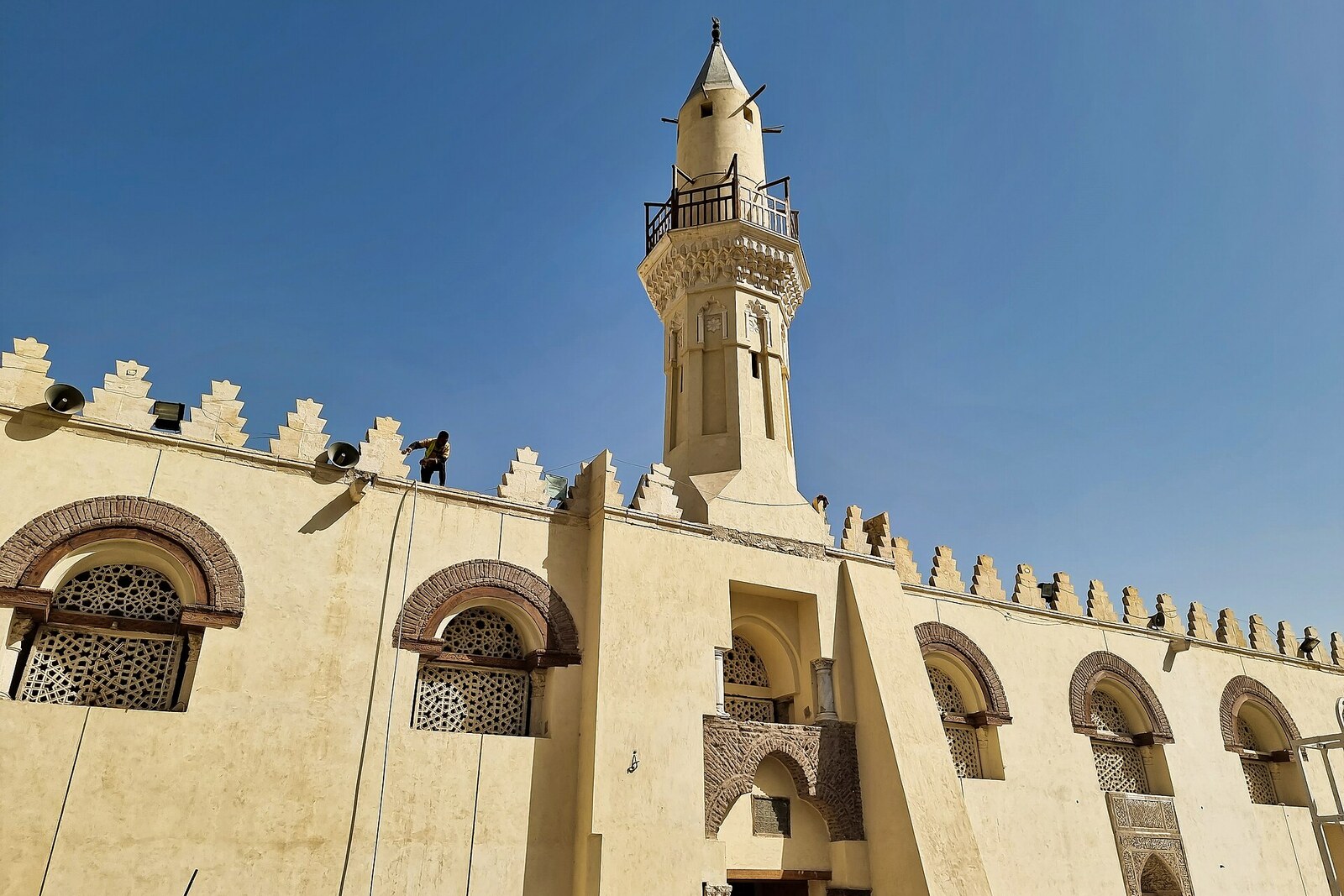
Look around first
What to notice
- Open courtyard
- Arcades
- Minarets
- Eastern corner of the complex
The story of the place
Around six hundred forty-two, a private house was to be built on this site. Qaysaba ibn Kulthum, an officer in Amr ibn al-As’s army, returned from a campaign to Alexandria and intended to settle in Fustat. Medieval chroniclers call his property a garden; another account speaks of a new family home. It was a substantial household: Qaysaba had come from Syria with fifty slaves, thirty horses, and a hundred pack animals. While the army was away, all of this remained here, so the plot was recognized as his.
At that time, the caliph Umar ibn al-Khattab, who led the community from Medina, ordered that the principal mosque for the collective Friday prayer be established in the new Egyptian capital. Amr ibn al-As, the commander and first governor of Fustat, chose Qaysaba’s plot. He did not take the land away, but offered the owner any other place in exchange.
Qaysaba refused the exchange. He gave the plot to the Muslim community without compensation, so the house had to be moved. On the cleared land, they built a low mosque with sun-dried brick walls and a roof resting on palm trunks. There was no inner courtyard, and pebbles covered the floor. The mosque was named for Amr: it was he who secured its construction and turned his officer’s plot into the center of the new city.
Muslims were then a minority among Egypt’s inhabitants, and separate buildings for the court, treasury, and teaching had not yet appeared. People came here to pray, listen to sermons and orders, and settle disputes. Later, judges held sessions here several days a week, and a treasury was set up in front of the pulpit on stone columns. It was entered by a wooden bridge: attendants pulled it up with ropes and then locked an iron door. The mosque became the place where the new community prayed and dealt with its everyday affairs at the same time.
The first structure was demolished, enlarged, and rebuilt many times. Nothing remains of Amr’s walls or Qaysaba’s house; historians place the oldest core closer to the eastern corner of the present complex. The open courtyard, arcades, and minarets belong to much later reconstructions, and a significant part of the present building appeared only in the twentieth century. Prayers are still performed here, the mosque bears Amr’s name, and it occupies the plot that Qaysaba once gave up without an exchange.
Useful on site
Active mosque; tourist access depends on prayers, security, and the current arrangements.
Checked: June 28, 2026. Check the official source before visiting.Take off your shoes before entering, speak quietly, and do not cross the space in front of people who are praying. During prayer, access for viewing may be limited.