 Guide On Map
Old Cairo: Babylon Fortress, Coptic Cairo, and Fustat
From the Coptic Museum through the fortress and the quarter of three religions to Fustat Hills Park
Guide On Map on your phone
Open the walk like a regular app
It takes about 10 seconds to install. No app store needed.
The whole path
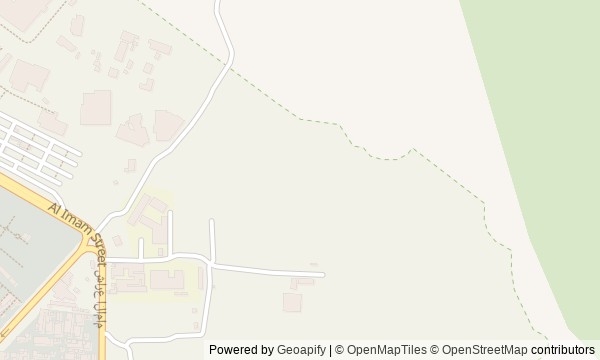
Route map
About the walk
You will begin at the Coptic Museum and pass through the former Roman fortress, where churches stand above the gates and old lanes run below the modern street. At first the route will feel tight: towers, stairways, church courtyards, a synagogue behind an unassuming facade. Then the quarter opens out toward Amr ibn al-As Mosque and the former city mounds of Fustat.
You will encounter silver vessels already valued as scrap, a patriarch taken from prayer in iron chains, and a tall opening where unwanted papers were placed for centuries. The answers remain inside the stories.
The narration separates documents from church tradition and tells history through transactions, disputes, and chance rescues. By the end, you will be able to explain how Roman towers, a Coptic church center, a Jewish archive, and the first mosque of Fustat became parts of one Old Cairo.
Why this order
At the museum, you will first see objects gathered from Coptic churches and old houses, then understand at the neighboring towers what Roman structure the entire quarter is built into. The Hanging Church comes next because it literally stands above the fortress gates and shows how a military structure became a church center. After it, the Church of Saints Sergius and Bacchus reveals an earlier site of patriarchal elections, contested by the Hanging Church. Nearby Ben Ezra Synagogue broadens the route from the history of the Coptic community to everyday life in Jewish Fustat. The road then leads out of the tight lanes to Amr ibn al-As Mosque: to the community and capital that arose after the fortress fell. The final walk into the park takes you from Fustat's main building to the remains of its homes and streets, where you can see what kind of city surrounded the mosque.
Those who want to understand Old Cairo beyond a pharaonic frame Those interested in stories of communities, manuscripts, and rescued objects Those who enjoy compact quarters with sharp shifts of era and religion
Those expecting a walk focused only on the grand mosques of Islamic Cairo Those uninterested in church history and manuscript archives Those who prefer broad avenues to narrow lanes and stairways
Before you go
Wear clothing that covers your shoulders and knees, and shoes that are easy to remove before entering the mosque. In active churches, keep your phone on silent, do not walk in front of people praying, and ask whether photography is allowed.
The route includes stairs, narrow passages, uneven surfaces, and an underground space. If descents are difficult, plan in advance to view some stops from the main level. Bring water, but do not eat inside shrines or museum galleries.
When to go
Allow about three hours. Museum exhibits and the details of church interiors will take the most attention; afterward, the walk to the mosque and through Fustat lets you slow down and take in not separate objects but the layout of the whole district.
Backup plan
If the Coptic Museum is unavailable, begin at the round towers and shift the theme of preservation to the Roman masonry itself. View a closed church only from permitted exterior areas, continuing to listen from outside.
If the descent into the crypt of the Church of Saints Sergius and Bacchus is closed, notice the position of the altar above it and imagine the building's vertical arrangement. If the interior of Ben Ezra Synagogue is unavailable, focus on the history of the Cairo Geniza without trying to pass beyond the barriers. In the park or archaeological zone, remain on open paths and end the route where the overall terrain can be seen safely.
Route conditions
Surface. Paved — 109 m (data covers 3% of the route)
Stairs. Flights: 6, 158 m in total
Access. Wheelchair — no; stroller — limited (stairs)
Facilities. Toilets — 1
Elevation. Ascent — 44 m; descent — 18 m
OpenStreetMap extract of June 25, 2026: database data, not a check on the ground. Data © OpenStreetMap contributors, ODbL licence
Walk plan
Open in maps ↗- 1
Coptic Museum
This is where the story begins of objects that had to be saved both from church melting-down and from urban demolition. - 2
Babylon Fortress
The towers explain why the future Fustat arose at this very spot. - 3
Hanging Church
This stop will show how the church center moved from Alexandria to Cairo. - 4
Church of Saints Sergius and Bacchus
Here, the choice of the head of the church turned from negotiations into a forcible decision. - 5
Ben Ezra Synagogue
An empty storeroom will lead to an archive that preserved the everyday life of medieval Fustat. - 6
Amr ibn al-As Mosque
The history of the donated plot will show how a communal mosque became the center of a new city. - 7
Fustat Hills Park
The finale will return homes and streets to the vanished city, recovered from the mounds along with soil used as fertilizer.
Route features
Everything you need stays in the browser
Progress, saves and your trip plan are stored on this device.
Add Guide On Map to your home screen so the walk opens outside the browser.
How we handle sources, maps and corrections: our editorial standards