 Guide On Map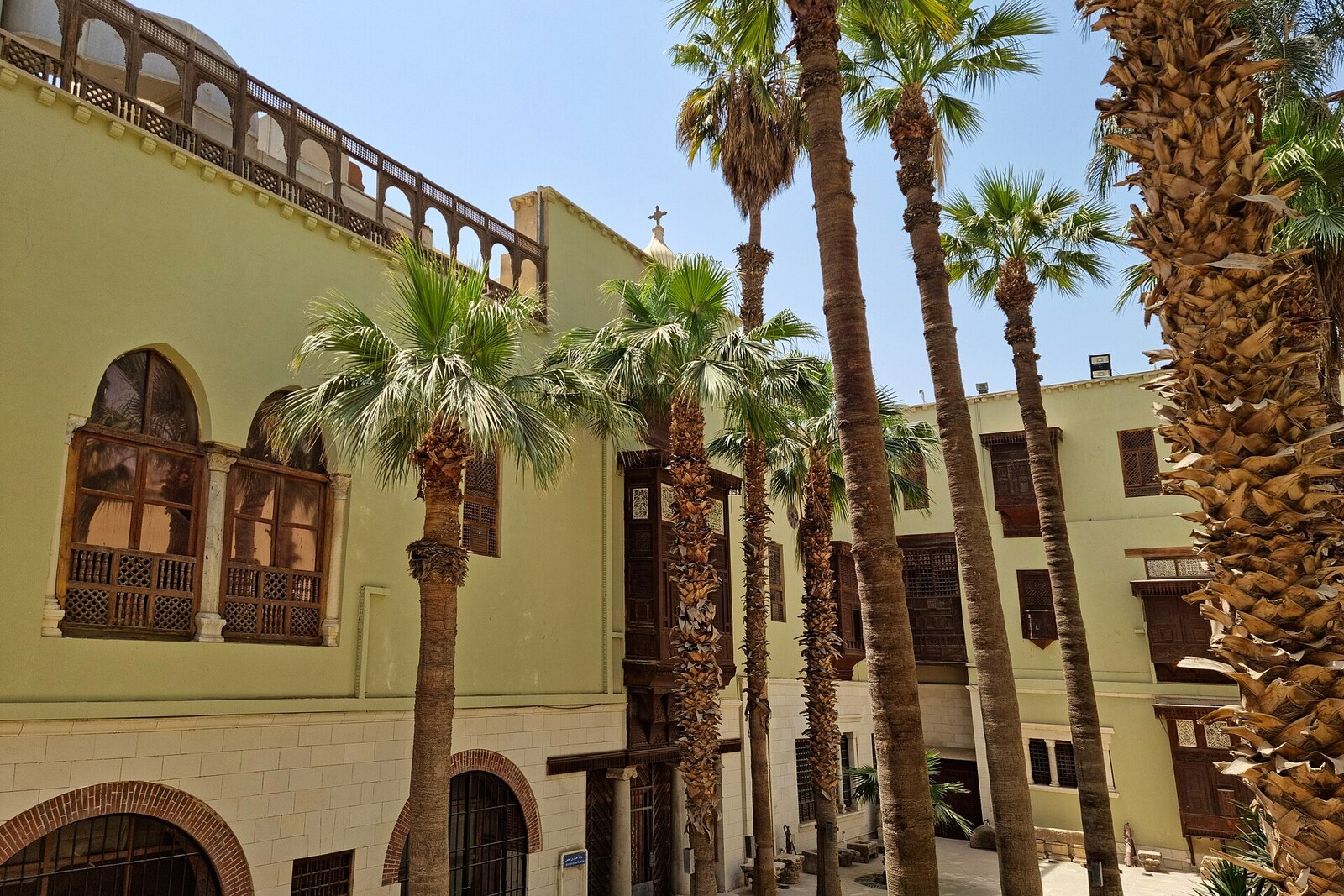
Look around first
What to notice
- Silver church vessels
- Carved ceilings
- Wooden mashrabiya screens
- The old and new wings
The story of the place
Textiles, manuscripts, icons, and carvings from Christian Egypt are kept here—the part of Egypt that usually remains outside accounts of the pharaohs and Islamic Cairo. In the older building and the later addition, you can see carved ceilings, door panels, marble, and openwork wooden partitions that once stood in Coptic houses. The Coptic Orthodox Church allocated the land beneath the buildings; the state later assumed the museum's expenses, but the church retained its rights to the plot and the collection. The holdings number about sixteen thousand objects.
In the winter of nineteen oh eight, the Coptic patriarch Cyril V ordered a jeweler to weigh old silver objects. Beside him lay a book in which a clerk recorded the value of each item at its scrap price. Gospel covers and church vessels from the fourteenth and fifteenth centuries, some with dated inscriptions in Coptic and Arabic, were about to be melted down. They were valued at one hundred eighty Egyptian pounds.
Cyril did not regard these objects as museum exhibits. A consecrated object no longer fit for use in services could not be handed over to outsiders: wood was to be burned, and metal remelted into new vessels. That is why old manuscripts in monasteries were sometimes used as kindling, while carved altar screens were dismantled for firewood. The patriarch intended to obtain new silver without breaking church rules.
Marcus Simaika was present at the weighing. A Coptic layman, he had recently retired from his post as chief auditor of the Egyptian State Railways. He now sat on the Coptic Community Council, which administered schools, hospitals, and church property. Simaika was seeking to establish a museum where objects from Christian Egypt could be collected. The Copts are the country's historic Christian community; their manuscripts, textiles, icons, and carvings remained between the two familiar narratives of Egypt—the Pharaonic and the Islamic.
Cyril had already refused Simaika once. He feared that consecrated objects would end up beyond church supervision. This time Simaika proposed a deal: he would raise money for new vessels, the silver would remain church property, and the first room would be set up here, at the Hanging Church, and entrusted to its priest. The patriarch agreed, locked the objects in a cabinet, and gave him two weeks. Simaika raised three hundred pounds from relatives and friends—substantially more than the scrap value.
The first display occupied one room. In nineteen ten, the museum officially opened. Simaika received no money from the church treasury: he drew up subscription lists, called on well-to-do acquaintances, and bought selected objects from the patriarchate for the sum it set. Whenever expansion was needed, he added one room after another.
The decoration of the halls came about in the same way. In Coptic houses condemned for demolition, Simaika searched for carved ceilings, doors, marble, and wooden mashrabiya screens. He climbed staircases without steps or railings, made his way beneath sagging floors, and installed the parts he found in the museum buildings. One of the finest mashrabiya screens had once served as a partition: its owners covered it with plaster on both sides, and that layer accidentally preserved the delicate carving.
The original deal had a consequence. In nineteen twenty, King Fuad I inspected the collection and demanded that the museum be incorporated into the state system. Simaika wanted permanent funding, but he could not hand over what belonged to the church. He proposed leaving the plot and the collection to the church, while assigning the expenses and supervision to the state. The king considered this disobedience and refused to receive Simaika for several years.
In January nineteen thirty-one, the new patriarch John XIX finally agreed to transfer the museum to the Department of Antiquities while preserving the church's rights. The Coptic Community Council objected. Hanna Shenouda, the priest of the Hanging Church, locked the museum doors and moved the inventory ledgers to the patriarchate. Abd al-Fattah Sabri, deputy minister of education, arrived with soldiers, ordered the entrance opened, and, after this was refused, ordered the doors forced and the locks changed. He then returned the buildings and the collection to Simaika—now as director of a state museum.
State funding made it possible to build a new wing, and later Christian antiquities were moved here from the Egyptian Museum. The collection now contains about sixteen thousand objects. The buildings stand on a plot allocated by the Coptic Orthodox Church; inside the state museum remain the silver saved from the melting pot and the carved elements from houses that Simaika removed before their demolition.
Useful on site
Daily 09:00–17:00; the ticket office closes at 16:00.
Checked: June 28, 2026. Check the official source before visiting.Do not rush between the display cases: the small lettering, seams, and traces of repair matter more here than the overall view. Ask the staff about photography rules.