 Guide On Map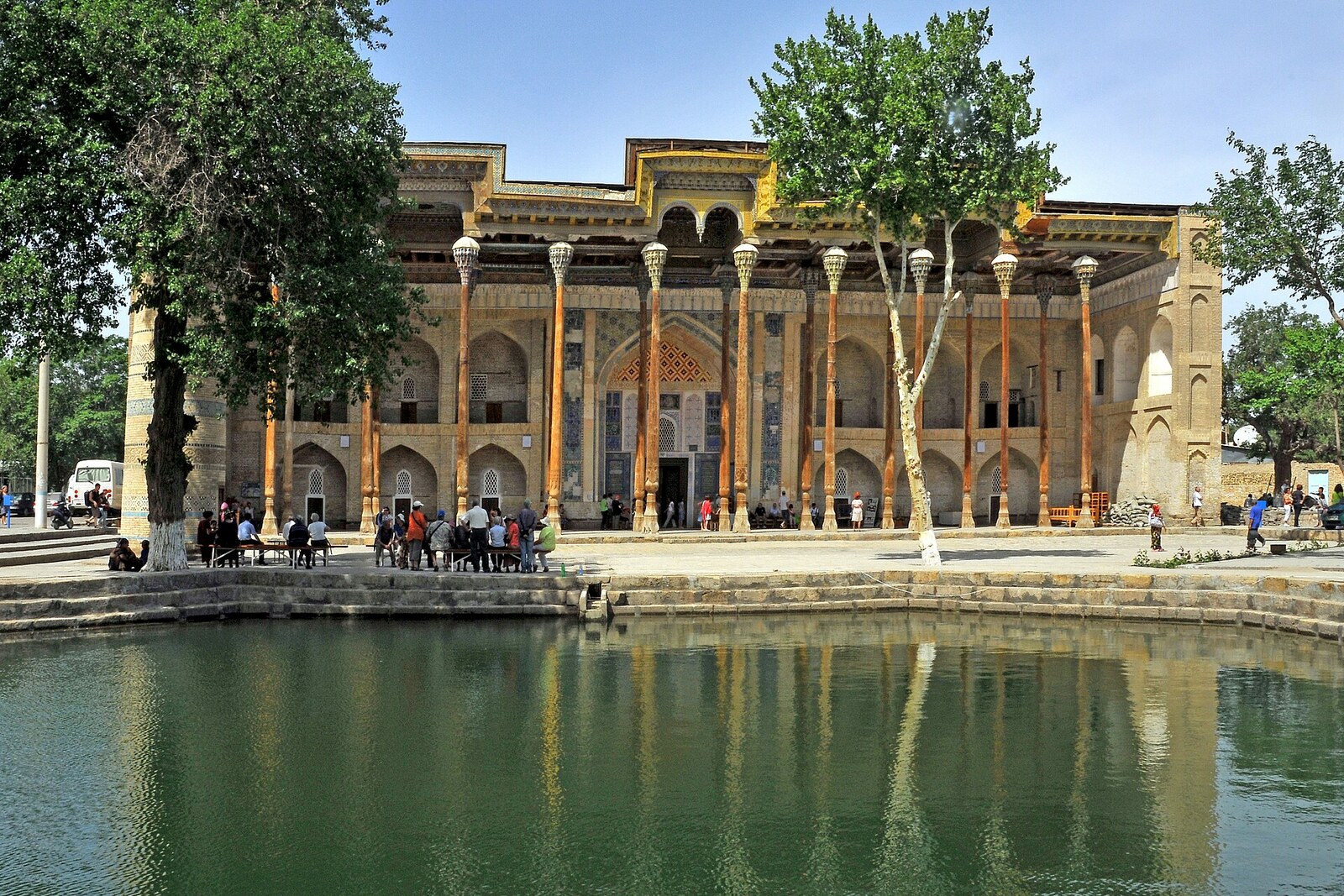
Look around first
What to notice
- Twenty wooden columns
- The painted ceiling of the iwan
- The dedicatory inscription
- The hauz in front of the mosque
The story of the place
Bolo Hauz Mosque stands opposite the Ark, beside a pool. Deep inside it is an enclosed winter hall, while a wooden iwan receives the community in the warm months; residents of neighboring neighborhoods and those who came to pray drew water from the hauz. Twenty long wooden columns support the canopy, and their reflections turn the row into forty.
A long dedicatory inscription has survived beneath the painted ceiling of the iwan. Its author identified the mosque’s first patron only as the wife of Khan Subhanquli. He left out her own name.
In seventeen twelve, this woman ordered a large mosque for the communal Friday prayer to be built opposite the Ark. Its location was precisely calculated: the ruler did not need to travel through the city. He left the citadel and crossed the Registan. On ceremonial days, courtiers spread carpets between the gates of the Ark and the mosque. The townspeople and the Khan prayed beneath one roof, yet the Khan’s route to it was still separated from the square.
The mosque was named for the pool in front of it. Bolo Hauz means “by the pool,” “on the bank of the hauz.” Its water was used by residents of the surrounding neighborhoods and by those who came to pray. Behind the hauz was an enclosed winter hall, and in front of it stood a wooden iwan for prayer in warm weather.
Two centuries later, the walls and ceiling of the iwan had lost their strength. Sayyid Alim Khan, the last emir of Bukhara, ordered it rebuilt. He entrusted the work to Ghulam Karaul-begi, the head of the court carpenters, who received a stipend for the Khan’s building commissions and was answerable to the court for the work of the other craftsmen.
Ghulam rebuilt the supports and ceiling, raising the canopy on twenty extraordinarily long wooden columns. The joined trunks were tightened with metal rings, the bases were covered with carving, and large stalactite capitals were made at the top. In nineteen sixteen, the master completed the iwan. The inscription says that he displayed his skill to “ordinary and distinguished people”: both the emir and the entire community gathering here were indeed meant to see the work.
Four years later, Alim Khan left Bukhara. The carpet road across the Registan was no longer laid out, and the post of chief court carpenter disappeared together with the emir’s court. The mosque was preserved, and Friday prayer is still performed here.
The tall iwan of Ghulam Karaul-begi is still supported by twenty columns. They may double in the water of the hauz, which is why the mosque is often called the mosque of forty columns. Yet its own name refers not to the columns, but to the pool before them.
Useful on site
The exterior can be viewed at all times; this is an active Friday mosque, and entry depends on the prayer schedule.
Checked: date not specified. Check the official source before visiting.This is a mosque, so do not block the entrance and observe the dress rules. The reflection is best seen from the bank when the water is still; there is no need to go inside for it.