 Guide On Map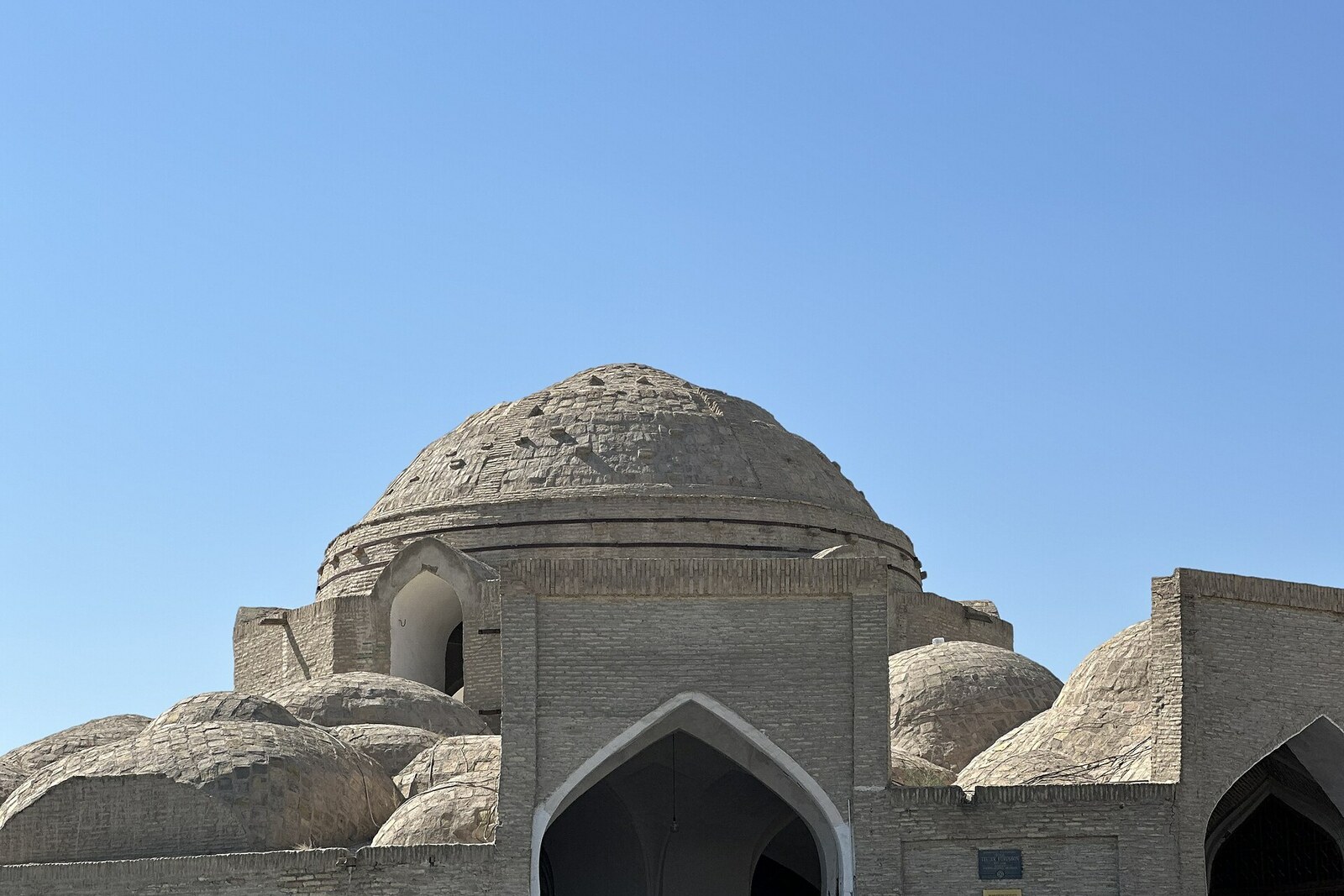
Look around first
What to notice
- Dome of Toqi Sarrofon
- Dome of Toqi Telpak Furushon
- Abdullah Khan Tim
- Dome of Toqi Zargaron
The story of the place
Here, several covered markets stretch one after another along the trading street of old Bukhara. The domes were built over intersections: passages from the streets led into the central hall, while trading niches ran around its edges, so that shoppers would not block the road between gates, caravanserais, and squares. In the second half of the sixteenth century, the ruler Abdullah Khan expanded this row with the jewelers' dome and the enclosed textile market. Now souvenirs, carpets, fabrics, and jewelry are sold beneath the vaults, while the former distribution of occupations has survived most precisely in the market names.
A merchant who reached Bukhara with Indian textiles or Iranian silver could not immediately go looking for local silk. First, he needed money that Bukhara's sellers would accept. For that, he went to the money changers and lenders beneath the southern dome of Toqi Sarrofon. Its name still means “Dome of the Money Changers.” A money changer accepted the coins brought in and gave Bukhara coins in exchange: copper puli, silver tangas, or gold tillas—local coins. Coins from different lands and even different courts varied in weight and precious-metal content, so an error in the calculation reduced the money changer's own capital. He could also lend the merchant the amount he lacked. Then the visitor bought goods before selling off the cargo he had brought, while the money changer waited for the money to be returned and earned from the loan.
Indian merchants were among these intermediaries. Family trading houses sent agents to Bukhara with goods received on credit. An agent sold part of the cargo, put the proceeds back into trade and lending, and often remained in the city for several years. For him, Bukhara was a place where he had to return the capital entrusted to him and earn enough to make the journey along the caravan routes worthwhile. For local artisans, his money meant an opportunity to buy raw materials and make the next batch of goods.
Once he had Bukhara coins or credit, the merchant continued along the same trading street. Beneath Toqi Telpak Furushon sat sellers of headwear; this market was once also associated with booksellers. Fabrics and silk were kept in the enclosed Abdullah Khan Tim. At Toqi Zargaron, jewelers sold finished pieces and worked in workshops beside the shops. The names preserved people's occupations: “telpak furushon” means sellers of caps, and “zargaron” means jewelers. There was no strict division, however: craftspeople from other professions also traded in the rows.
The domes were built over intersections. Street passages led buyers directly into the central hall, while shops occupied niches around its edges. This way, trade did not block traffic while also drawing in people walking between gates, caravanserais, and central squares. In the second half of the sixteenth century, Abdullah Khan, a ruler seeking to establish Bukhara as the capital, expanded this trading chain. Under him, the jewelers' dome and the enclosed textile market that bears his name appeared.
Today there are no money changers' tables beneath Toqi Sarrofon: souvenirs, fabrics, and handicrafts are sold there. Carpets and textiles still lie in Abdullah Khan Tim, and jewelry is still sold beneath Toqi Zargaron. The old arrangement has survived most precisely in the names: money was exchanged at Lyab-i Hauz, fabrics were traded farther along the street, and jewelers sat closer to Poi Kalyan.
Useful on site
Pedestrian passageways under the domes are always accessible; shop hours vary.
Checked: date not specified. Check the official source before visiting.These are active shopping passageways: do not stand in a narrow spot, and ask permission before photographing people. You do not need to buy anything to examine the arrangement of the domes.