 Guide On Map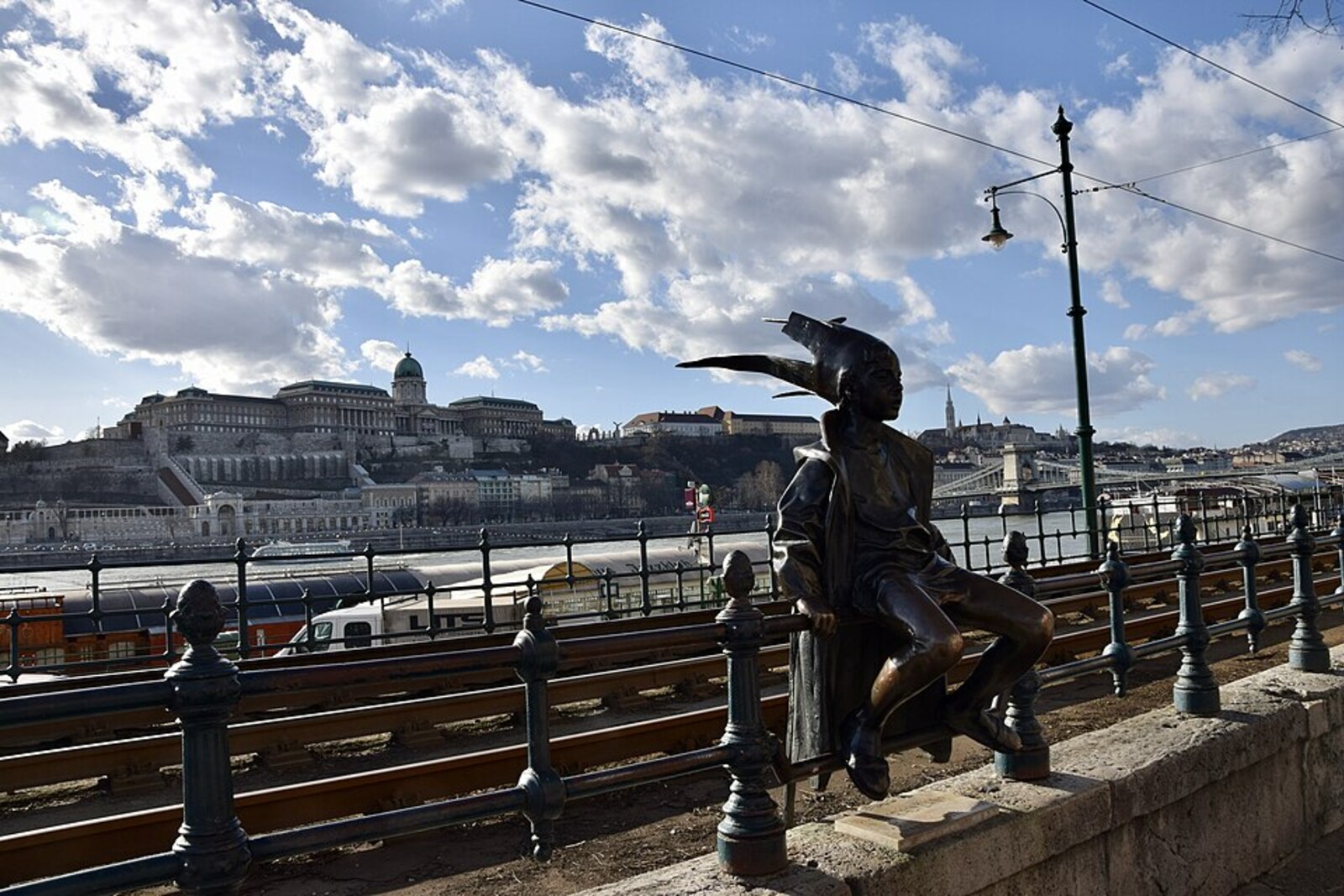
Look around first
What to notice
- Bronze figure on the railing
- Pointed crown
- Bathrobe-mantle
- Shining knees
The story of the place
A bronze girl in a pointed crown sits on the cast-iron embankment railing; her bathrobe takes the place of a mantle, and her knees shine from touch. With no pedestal, she is at the height of a seated person, between the pedestrian path and the tram tracks. The small original is kept in the Hungarian National Gallery, while other casts stand in Tapolca and Tokyo. The crown was once a sheet of newspaper, and urban tradition attributes good luck to touching the bronze.
In the spring of nineteen eighty-nine, Budapest commissioners asked the sculptor László Marton to create a figure for the Danube Promenade, an embankment promenade, for Hungarian Children's Day. The work was intended for a prominent spot near the Vigadó and the tram stop. Marton decided to enlarge a small bronze sculpture he had created seventeen years earlier.
Its model was Évika, the sculptor's five-year-old elder daughter. The girl played princess on a playground in Tabán, a neighborhood on the Buda slope. Her father made her a crown from newspaper, and she wore a bathrobe as a mantle. Marton saw his daughter sit down in her costume with her hands on her knees, and sculpted her in the same pose. He called the figure, about fifty centimeters tall, “Little Princess.”
For the new urban commission, Marton recreated this domestic scene on a larger scale and cast it in bronze. The key decision was the location: in nineteen ninety, the girl was seated directly on the cast-iron railing between the promenade and the tram tracks. She has no pedestal. You can sit beside her and easily reach her hands and knees. At the time, this placement was considered unusual and bold for Hungarian urban sculpture.
Évika grew up, and her childhood game was reproduced in several copies. One copy was installed in Tapolca, Marton's hometown, and the sculptor gave another to a cultural center in Tokyo. The small original from nineteen seventy-two is in the Hungarian National Gallery.
The enlarged version remained on the Danube Promenade. According to an urban legend, touching it brings good luck. The newspaper-sheet crown disappeared back in Évika's childhood, while the bronze girl's knees now shine from the palms of passersby.
Useful on site
Open-air street sculpture on the promenade; watch for trams, cyclists, and heavy pedestrian traffic.
Checked: June 25, 2026. Check the official source before visiting.The spot is popular for photographs and is beside a busy promenade; do not block the way and watch the movement around you.