 Guide On Map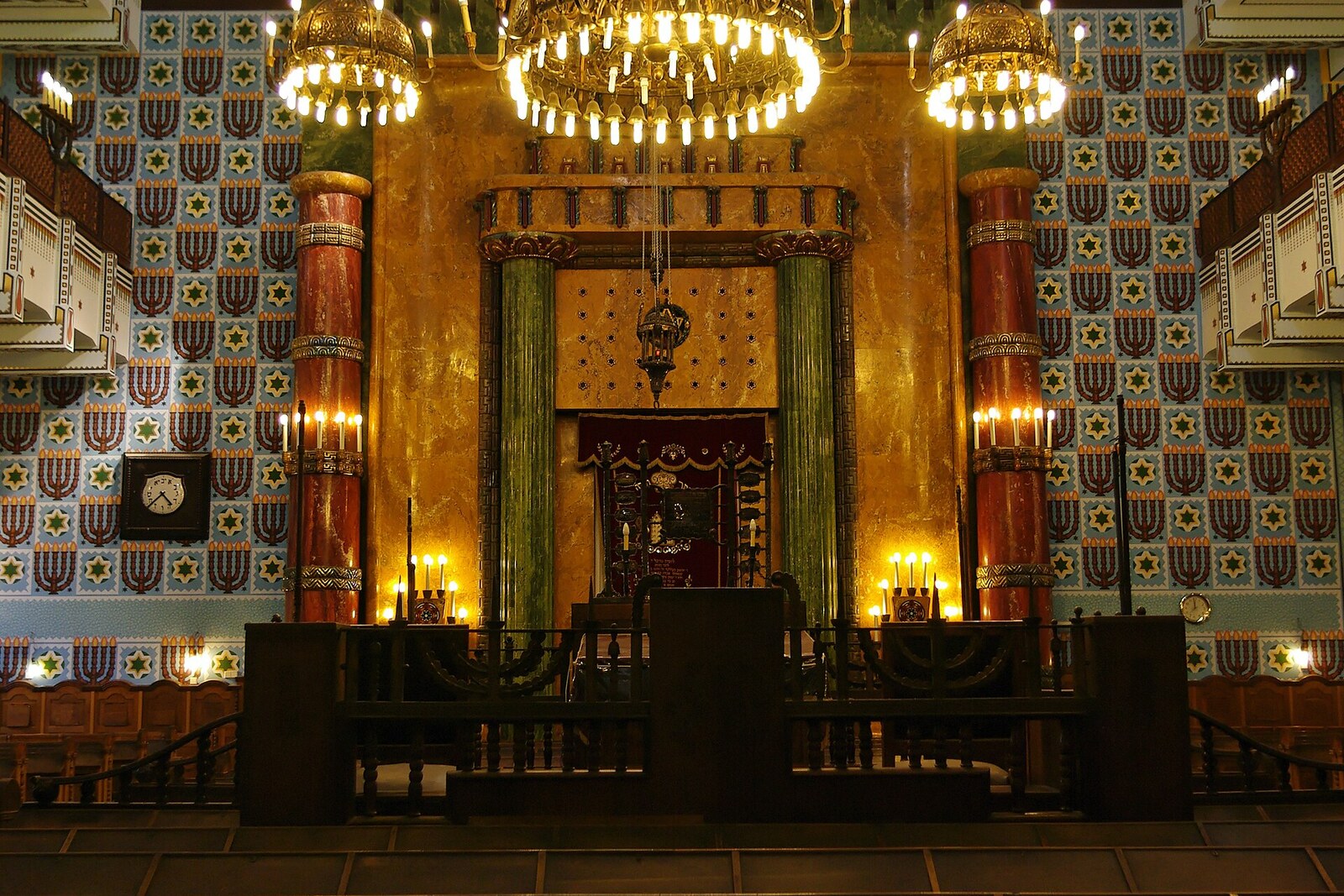
Look around first
What to notice
- The empty chair to the left of the cabinet containing the Torah scrolls
- The cabinet containing the Torah scrolls
- The prayer hall
- The inner courtyard
The story of the place
In September nineteen twenty-nine, the coffin of Jakab Koppel Reich, the chief rabbi of Budapest's Orthodox community, was carried out of this synagogue. The procession headed to the old Orthodox cemetery, with thousands of people following behind the coffin. When services resumed here, Reich's chair to the left of the cabinet containing the Torah scrolls remained empty.
His son-in-law, Mordechai Ephraim Fischel Zussman, took over the leadership of the community. He received his predecessor's post but refused to sit in his place. Zussman explained this by respect and humility: he did not consider the chair of a man who had led the community for forty years to be his own. The rabbi continued his service from another seat. The religious leaders who followed also accepted his decision.
Reich had also taken part in the dispute from which the word “Orthodox” appeared in the synagogue's name. In the winter of eighteen sixty-eight to eighteen sixty-nine, representatives of Hungary's Jewish communities gathered in Pest, then a separate city before its union with Buda. They were required to create a common organization and uniform rules for schools and community administration. Reich represented the traditionalists, who sought the direct subordination of these rules to Jewish religious law. The majority adopted a different charter. The traditionalists rejected it and, two years later, secured recognition for a separate Orthodox organization.
In eighteen ninety, Budapest's Orthodox Jews chose Reich as their chief rabbi. The choice split the community itself: a rival group had another candidate, and after his defeat, his supporters withdrew from common affairs for a time. Reich inherited an organization with little money, a small school, and no full-fledged house of study. Many congregants could not pay community dues; a substantial share of expenses was covered by fees connected with supervision of kosher meat. Reich gradually brought his rivals back to working together.
During his tenure, the elders decided to gather the necessary institutions in one courtyard between Kazinczy Street and Dob Street. They commissioned a school, a house of study, the rabbi's apartment, the community board offices, a kitchen, a dining room, and a large prayer hall. By nineteen thirteen, the complex was complete, and Reich became the first rabbi of the new synagogue. Here people prayed, taught children, considered religious questions, performed marriages, and fed those in need.
The synagogue is still active. To the left of the cabinet containing the Torah scrolls stands the chair of its first rabbi; since the decision of Mordechai Ephraim Fischel Zussman, the community's religious leaders have no longer sat in it.
Useful on site
Accessible outside at all times; interior access depends on the religious schedule, tours, and community rules.
Checked: June 28, 2026. Check the official source before visiting.This is an active Orthodox synagogue, so the community always has priority. Appropriate clothing and calm behavior are required for entry; the restaurant, mikveh, and prayer hall should not be considered one freely accessible space.