 Guide On Map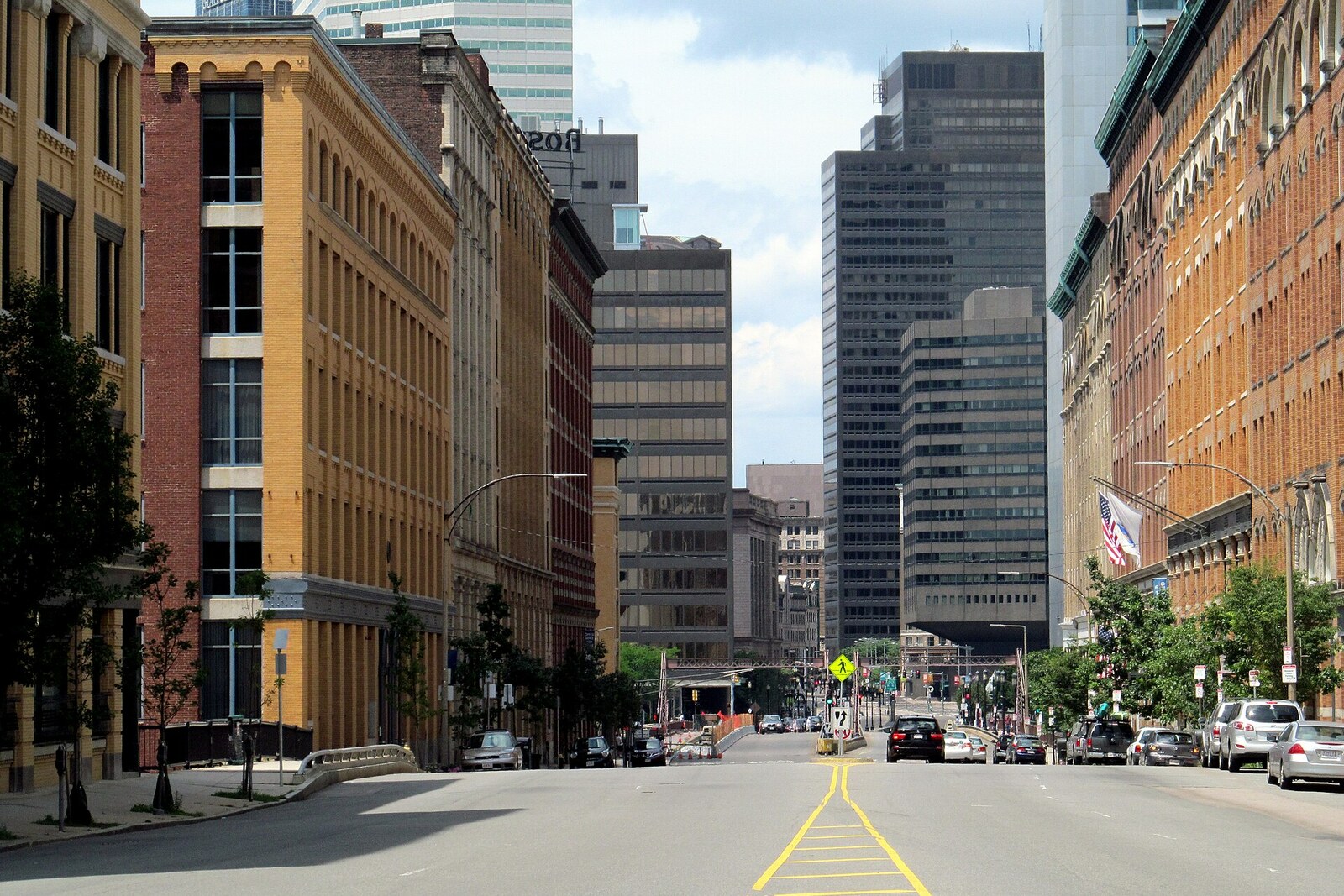
Look around first
What to notice
- Brick warehouse façades
- Tall multi-pane windows
- Wide freight openings
- Massive floor slabs
The story of the place
The Boston Wharf Company kept the buildings along the channel as goods warehouses. Strong floor slabs between the levels held bales of wool and crates, freight hoists connected the levels, and daylight reached workers through tall windows. The dark brick façades, wide loading gates, and closely spaced window frames reveal their former purpose; later, the large floors were divided into separate spaces, water was installed, and additional exits were made.
In March nineteen seventy-six, the sculptor Christopher Sprout crossed the channel in search of a studio. A fire in the Plant Shoe Factory building in Jamaica Plain had deprived him and several other artists of their premises. For Sprout, this meant losing a place where he could make and store large works. The new studio had to be spacious and cheap.
Vacant floors stood in the brick warehouses of the Boston Wharf Company in Fort Point. High ceilings made it possible to lift large objects, freight elevators carried materials, and the floors had been designed for bales of wool and crates. Large windows, needed by warehouse workers, provided daylight. Sprout told acquaintances about the discovery. Together with the artist Domingo Barreres, he rented the fifth floor at thirty-four Farnsworth Street. The company agreed to rent that the artists could afford, and other artists followed the first two here.
The warehouses acquired a new internal layout. Artists divided entire floors into studios, ran water, set up kitchens, and made additional exits. Some also lived there, although city regulations did not yet permit this. By the end of nineteen eighty, they had held their first open studios and formed the Fort Point Arts Community: it found vacant floors, brought tenants together with the owner, and negotiated on the group's behalf.
But the lease agreement left the owner the right to sell the entire building along with the artists' studios. In nineteen eighty-two, the artists hired Jero Nessen as the community's director. He pressed for them to be able to own the premises where they worked and lived. Thirty-six people agreed to take part in buying a former lithography building on A Street. They received a grant of twenty-two thousand dollars, hired an urban planner, and obtained permission to combine a studio with a residence.
The hardest decision concerned a future sale. The artists wrote into the cooperative's rules that a share could be transferred only to another artist and at a price below market value. Each participant gave up part of a possible profit in advance, while the next owner received an affordable studio. In August nineteen eighty-three, the group bought the building for less than a million dollars and established Massachusetts's first cooperative of this type there.
When the Boston Wharf Company sold its warehouses in the early two thousands, many tenants lost their studios. The cooperatives remained. The building at thirty-four Farnsworth Street, where Sprout and Barreres rented the community's first floor, still stands. And in the former wool warehouse on Summer Street, artists still own forty-eight live-work studios: the sale of each share is limited by a rule devised by people who had once already lost their workplace in someone else's building.
Useful on site
Outdoor district; studios and galleries open for events, not as a permanent museum.
Checked: June 30, 2026. Check the official source before visiting.This stop is read from the street: do not expect to enter studios or building entrances without an open event and an invitation.