 Guide On Map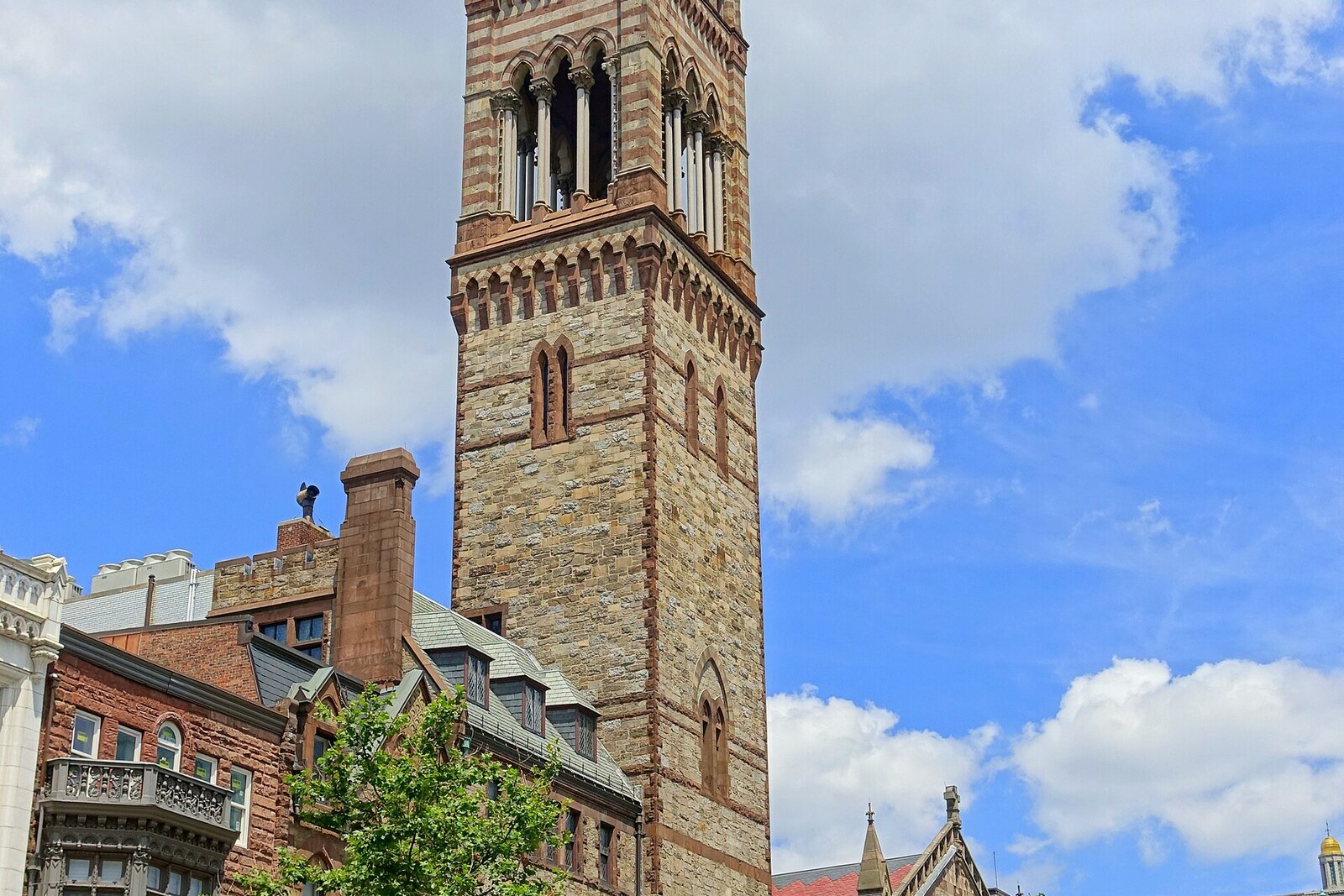
Look around first
What to notice
- Main façade
- Entrance to the sanctuary
- Library building across the street
The story of the place
The old name here belongs first and foremost to the congregation, founded in Boston in sixteen sixty-nine. It began to be called South after another church appeared, and the parishioners moved to Copley Square only in eighteen seventy-five. Behind the main façade and entrance, an active sanctuary is at work: worship services stand alongside city charitable work, and the parishioners themselves manage the shared property.
On Sunday, December second, two thousand twelve, more than three hundred parishioners gathered in this sanctuary. They had to decide the fate of a small, worn volume: whether to sell one of the church's two copies of the Bay Psalm Book.
The book was printed in Cambridge in sixteen forty. It was the first edition produced by printing press in the British colonies of North America. Puritan ministers translated the psalms so that parishioners could sing them during services. Eleven copies survive from the original print run, and two ended up at Old South.
By the start of the vote, the church could no longer cover its expenses. The building needed repairs costing at least seven million dollars, and hundreds of thousands more had to be found every year for its upkeep. The parishioners increased their donations and rented out rooms, but the numbers still did not add up. Nancy Taylor, the senior pastor and head of the church organization, advocated selling the book: her job was to preserve a working congregation with worship services and city charitable programs, not to turn its heritage into a museum collection.
The decision did not belong to Taylor alone. Old South is a Congregational church: here, the parishioners themselves manage the shared property. Eleanor Jensen, who had belonged to the congregation since nineteen sixty-one, voted in favor of the sale. For her, the choice came down to whether the church would keep valuables or work for city residents. Paul Dutton, a longtime parishioner, objected: he considered the book part of an ancestral heritage that the present generation had not been entrusted to give away.
The dispute lasted about two hours. Two hundred seventy-one people supported the sale, and thirty-four voted against it. In November of the following year, David Rubenstein bought the psalter at auction for fourteen million one hundred sixty-five thousand dollars—more than had ever been paid at auction for any printed book. He began exhibiting the acquisition in public libraries. Old South added the proceeds to its fund, from which it pays for the building's upkeep and the congregation's work.
The word “Old” in the church's name refers to the congregation itself. It was founded in sixteen sixty-nine, and Old South—“Old South”—began to be called that after another church appeared farther south in seventeen seventeen. The parishioners moved to this site only in eighteen seventy-five.
The sold psalter was not in the current building even on the day of the vote. Both copies had been kept at the Boston Public Library since eighteen sixty-six—nine years longer than this church at Copley Square has existed. One now belongs to Rubenstein; the other remained the property of Old South and is still kept in the library's rare books department.
Useful on site
Mon–Thu 8:00–20:00; Fri 8:00–19:00; Sat 9:00–16:00; Sun 8:30–16:00.
Checked: June 28, 2026. Check the official source before visiting.The church remains a place of worship, so the ability to enter depends on its current activities. The letters, diaries, and parish records mentioned are kept in the archive and are usually not visible during an ordinary visit.