 Guide On Map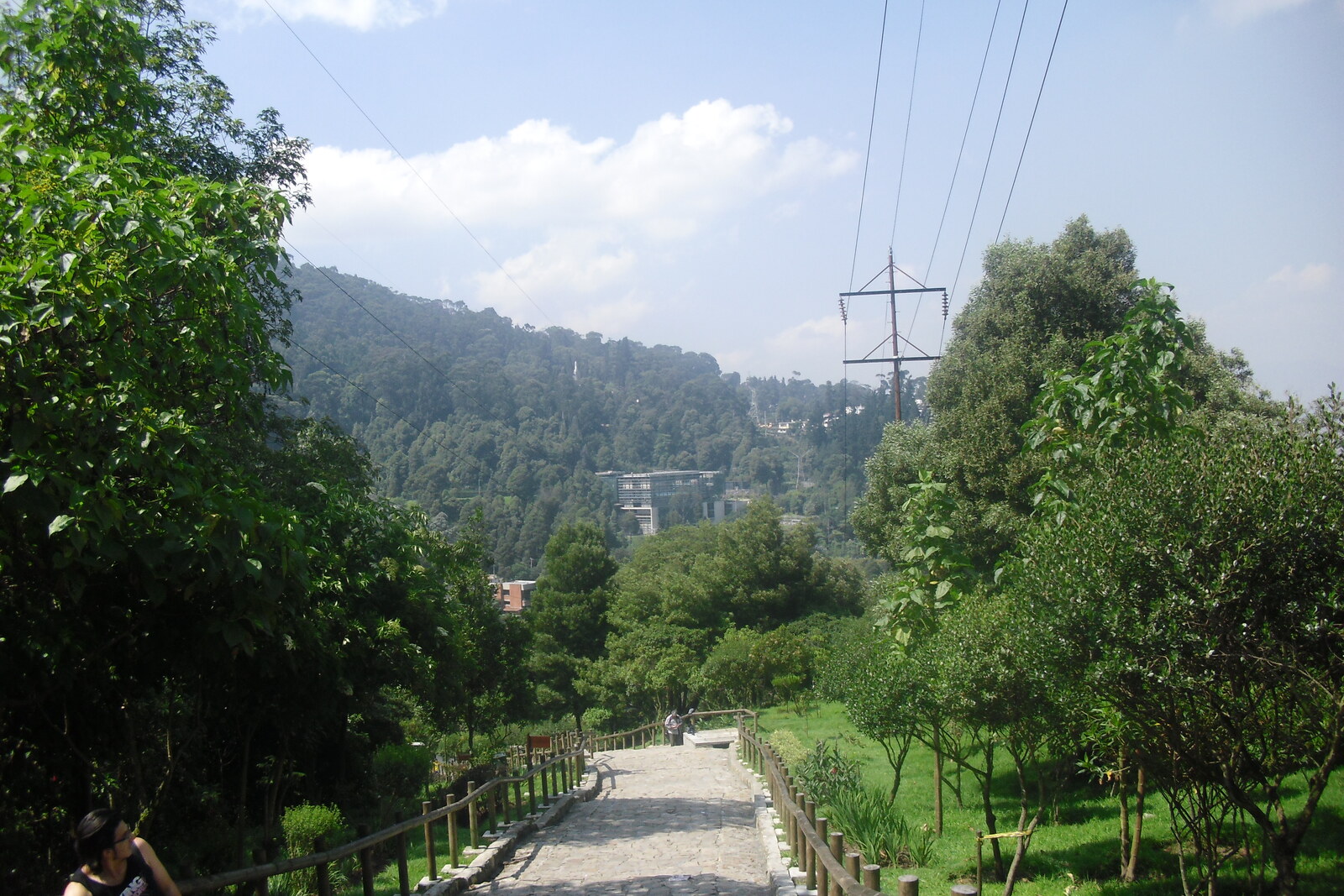
Look around first
What to notice
- The trail’s stone paving
- Sculptural Stations of the Cross
- The steep slope
The story of the place
A walking route runs along the steep slope of Monserrate, leading from Bogotá to the sanctuary on the summit. Sculptural Stations of the Cross stand along it, installed later than the small chapels that were once carved directly into the rock. People still use this route for more than a walk: under a local vow, they climb here seven Sundays in a row, asking for health, work, or help with a personal matter.
The stone paving on this trail was laid only in nineteen eighty. The historic ascent was rocky and began in the city itself, at Las Nieves Church. In the middle of the seventeenth century, the road was adapted for pilgrims, and four small chapels were carved into the rock, where people could take shelter and pray on their way to the summit.
This route was devised by the priest and writer Pedro Solís y Valenzuela. His older brother Fernando left for the Spanish monastery of El Paular and became a Carthusian—a monk who had chosen silence and solitude. Pedro wanted to found a similar community near Santa Fe, as Bogotá was then called. He controlled the family fortune and could finance his plan: a chapel, dwellings for hermits, and an image of the Virgin of Montserrat. It was from this Catalan dedication that the mountain of Las Nieves received its present name: Monserrate.
Between sixteen fifty and sixteen fifty-seven, Pedro and his companions enlarged the chapel on the summit and laid out the path to it. Bernardino de Rojas then joined them—a wealthy priest who wished to withdraw from city life. He collected donations and began a monastic courtyard with twelve cells. Court records preserve an important detail about this trail: the brothers of the community and other residents carried building materials on their own backs. Everything that appeared at the top first came up this ascent.
Before long, Bernardino decided to hand the buildings over to the Jesuits so that they could open a novitiate house here. According to surviving documents, the other founders did not know about this. A new monastery in the Spanish possessions could be established only with royal permission, which the Jesuits did not receive. When they tried to take possession of the property in sixteen fifty-seven, Pedro went to court and recovered the chapel and buildings that same year.
The victory did not fulfill his original wish: Pedro was unable to obtain permission for a Carthusian community either. Bernardino left the mountain and later took part in creating a Jesuit novitiate house in the city itself. Pedro handed the chapel over to the Augustinian Recollects, but they too settled there without the required license. In sixteen seventy-nine, the attached monastic house was demolished.
The present sculptural Stations of the Cross appeared later and are not the four chapels carved into the rock. Yet people still make the ascent as a vow. One local tradition is called “seven Sundays to the Lord of Monserrate”: a person asks for health, work, or help with a personal matter and walks the trail seven Sundays in a row. Someone who comes here with a vow on the first Sunday must still make six more ascents by the same route.
Useful on site
Wed–Mon ascent 5:00-13:00, descent until 16:00; Tue closed.
Checked: June 28, 2026. Check the official source before visiting.Use only the official trail, keep a steady pace, and stop if you experience shortness of breath, dizziness, or a sudden deterioration in the weather.