 Guide On Map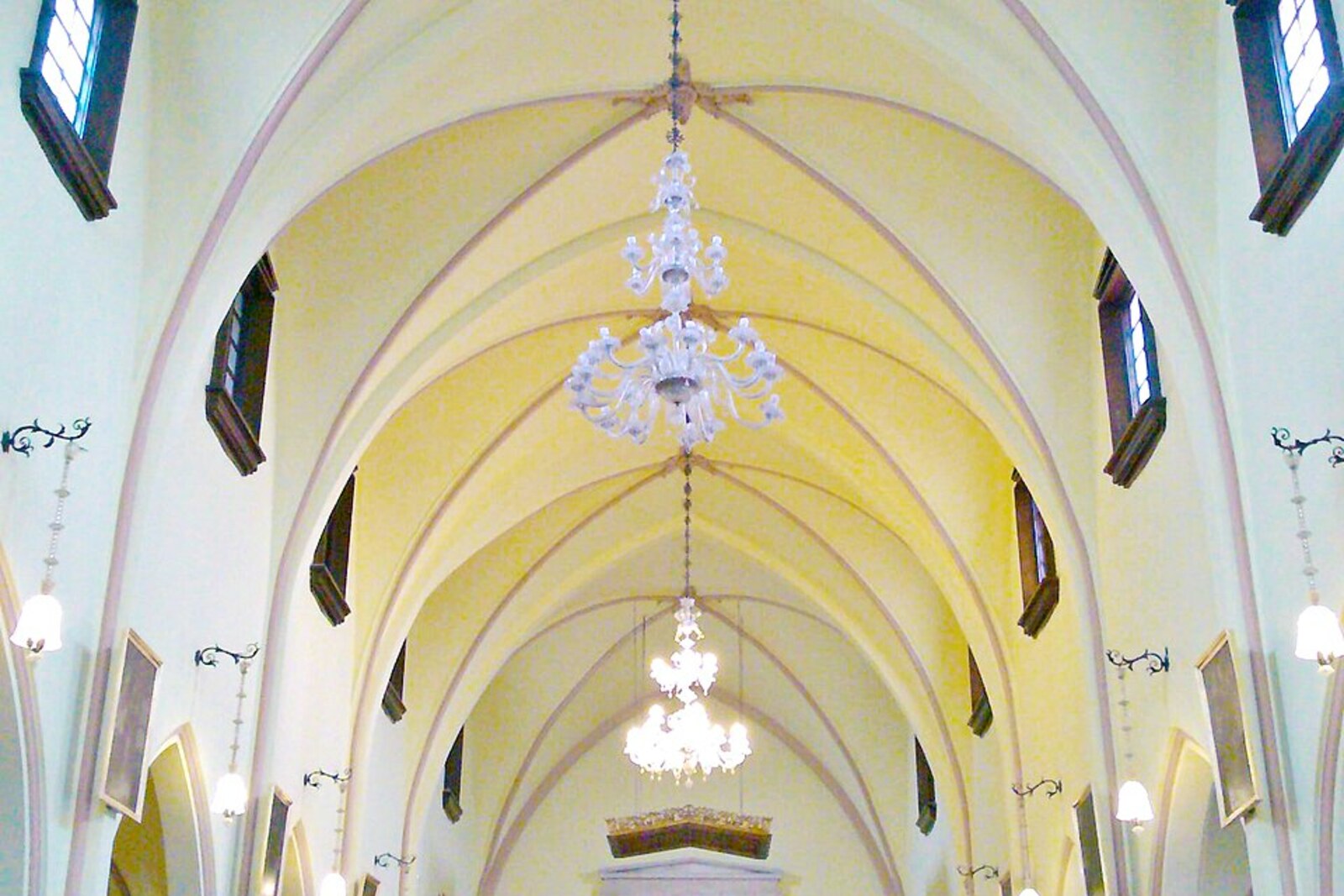
Look around first
What to notice
- The figure of Señor Caído
- The main altar
- The side chapel
- The copy of the Madonna of Montserrat
The story of the place
The present sanctuary at the summit of Monserrate was built in place of a cramped chapel when the pilgrims became too numerous. That chapel was built around the Black Madonna of Montserrat, brought from Catalonia, but nothing remains here of its first statue. A copy later donated by Catalans stands in a side chapel, while another sacred figure occupies the church's main place.
The name “Señor Caído”—“Fallen Lord”—refers above all to the figure in the main altar. Christ is depicted after the scourging, on the ground, at the moment when one hand has already been nailed to the cross. It is a rare scene: the crucifixion is not yet complete, and a person is trying to rise.
In sixteen fifty-six, the priest Bernardino de Rojas recorded in the accounts expenses for the work of the Bogotá sculptor Pedro de Lugo y Albarracín. For forty patacones, he made “Christ, fallen after the scourging and nailed to the cross.” The figure was intended for the sacristy, a service room adjoining the chapel. The main altar was occupied by the Black Madonna of Montserrat, brought from Catalonia: the chapel was built on the summit for her, and there was an attempt to establish a monastic community.
Almost a century later, the townspeople themselves changed that order. On October eighteenth, seventeen forty-three, an earthquake damaged Bogotá's churches: towers, parts of vaults, and monastic buildings collapsed. The chapel on Monserrate held firm. Residents attributed its preservation to the Christ made by Lugo y Albarracín and, during subsequent tremors, began climbing here with requests for protection. This was the believers' conviction, not an established cause of why the building did not collapse.
Pilgrims brought donations and made vows to Señor Caído. The original statue of the Madonna disappeared after the death of the chapel's founder; no documents have been found on who took it or where. By the end of the eighteenth century, residents came to the summit above all on the Fridays of Holy Week, to the scene of the scourging and crucifixion. In the following century, ascents for a request or in gratitude became a common urban practice. When the old chapel could no longer hold the pilgrims, the clergy dismantled it and built the present sanctuary.
At the center of the main altar stands the figure once commissioned for the sacristy. During restoration, an X-ray showed how Pedro de Lugo assembled it: he carved the body and face from wood, cast the hands and feet in lead, and placed a protective lead piece beneath the hair. Nothing remains here of the first Madonna of Montserrat; a copy later donated by Catalans was placed in a side chapel. Señor Caído retained its place at the main altar.
Useful on site
Mon–Sat 6:00–19:00; Tue 11:30–19:00; Sun/holidays 6:00–17:30.
Checked: June 28, 2026. Check the official source before visiting.Keep quiet inside and do not disrupt services; it is better to postpone your visit if the space is crowded with worshippers.