 Guide On Map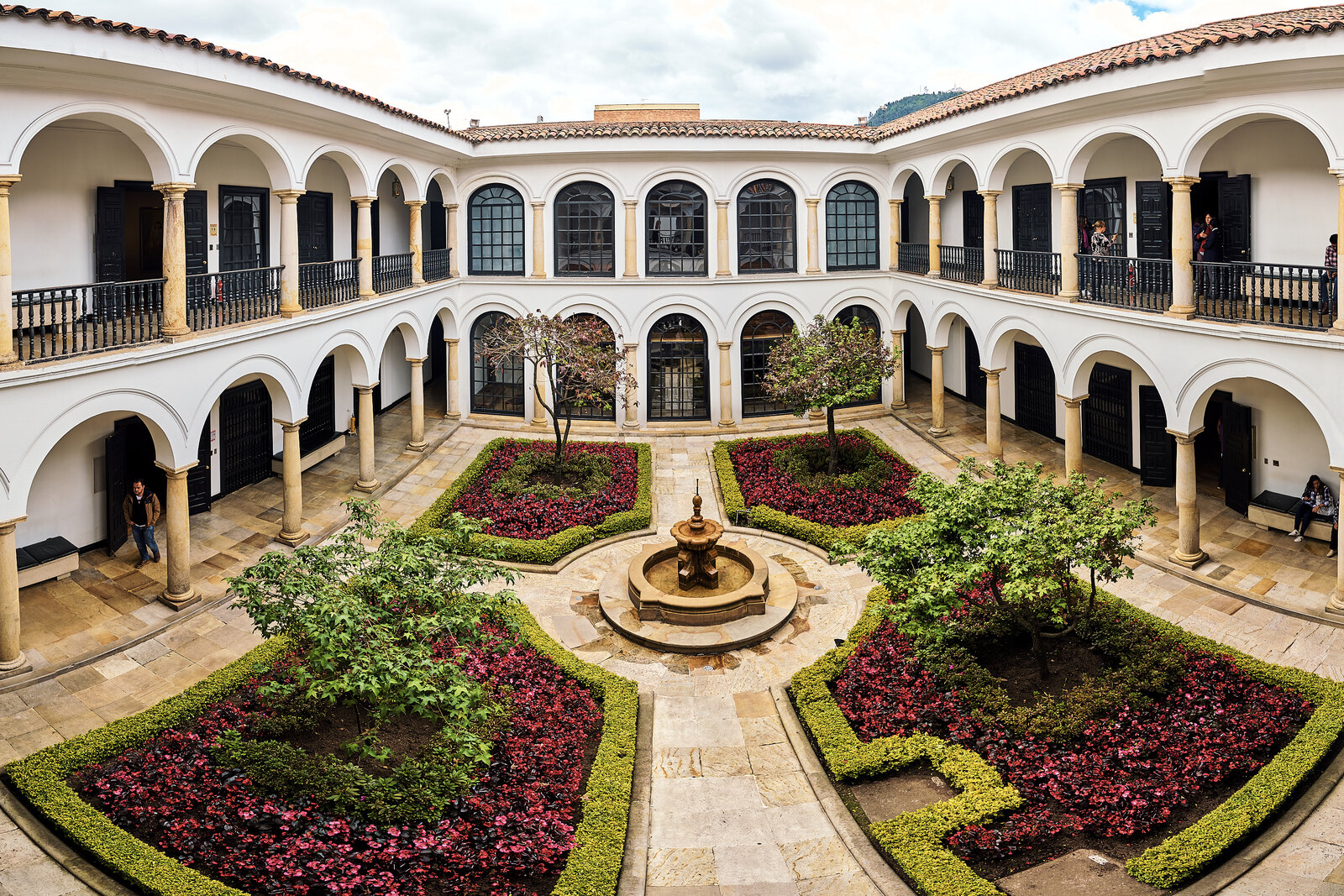
Look around first
What to notice
- Minting machines
- Coins and banknotes
- Inner courtyards and passageways
- Works by Botero
The story of the place
Several old buildings in one block now contain galleries connected by courtyards and covered galleries. One of them was a mint for more than three and a half centuries: here, gold and silver were turned into money for a city where a purchase could once be paid for with gold dust or a piece of metal, weighed on the spot. When production was moved to Ibagué, the workshops initially stood empty. Today, minting machines and display cases with money speak of the former work.
On his first day at the head of the Bank of the Republic, the economist Miguel Urrutia came here on foot. The new governor of Colombia's central bank wanted to understand what to do with the buildings the bank had accumulated. At the time, its cultural division occupied the former archbishop's house—today's Botero Museum. Urrutia walked through the neighboring buildings with their director, the writer Darío Jaramillo, and asked aloud: “What should we do with this block?”
Part of the answer was already in the name Casa de Moneda—the House of Coin. In the early seventeenth century, purchases in Santa Fe, as Bogotá was then called, were paid for with gold dust and pieces of silver. The metal had to be weighed for every transaction; counterfeit hallmarks and additions of copper or lead made it possible to deceive both the seller and the royal treasury.
In sixteen twenty, King Philip III made an agreement with the military engineer Alonso Turrillo de Yebra. At his own expense, Turrillo was to establish a mint in Santa Fe, make the tools, and bring in craftsmen. He expected to recover his investment over fifteen years of running the enterprise. Four years later, he complained to the king that he had already spent more than thirty thousand ducats, while his planned minting of inexpensive silver-copper coins had been cut back after resistance from local merchants and city councils.
Nevertheless, by sixteen twenty-two, gold and silver were already being minted here. Turrillo died in Santa Fe shortly before the agreement ended; his widow inherited his rights, and his nephew continued the work. Coins were produced in this block for another three and a half centuries. Only in nineteen eighty-seven was the equipment moved to Ibagué. The old production buildings stood empty, while the bank kept its archives in neighboring rooms.
It was those archives that Urrutia saw on his first walk. Soon afterward, the curator Carolina Ponce de León arranged a temporary exhibition of the bank's painting collection in the Casa de Moneda. Urrutia decided to open it permanently to the public. The archives were sent to other bank branches, the former workshops were adapted as galleries, and inner courtyards and passageways connected them to the archbishop's house.
Several years earlier, Fernando Botero had exhibited his paintings of bullfighting in this house. He was a Colombian artist and collector who sought to ensure that the country's residents could see original European art without traveling overseas. He was pleased with the way the bank's staff handled the works and prepared the exhibition. After conversations with Jaramillo, Botero sent Urrutia a handwritten letter: he offered to give the bank his collection of foreign art and approximately the same number of his own works.
Urrutia presented the proposal to the bank's board. The board agreed to assign the former archbishop's house to the collection, and Botero personally oversaw its remodeling and the placement of the paintings. The artist was parting with works he had bought over the years with money earned from painting: among them were works by Corot, Monet, Renoir, Picasso, Dalí, and Miró. He set conditions: admission would remain free, the paintings would not be lent for temporary exhibitions, and the exhibition he had arranged would be preserved.
In two thousand, crates arrived from Switzerland with two hundred eight works: one hundred twenty-three by Botero himself and eighty-five items from his personal collection. The museum opened in November. Botero's name on the façade points to the person who gave both his own art and the works he had collected for himself.
Today, the Casa de Moneda displays coins, banknotes, and minting machines, while passages through the courtyards lead to the galleries of the Botero Museum. This is the very route through the neighboring buildings that Urrutia took on his first working day. The paintings remain in the places designated by Botero, they are not lent to other museums, and admission is still free.
Useful on site
Museo Botero and Casa de Moneda are part of the Bank of the Republic's Manzana Cultural; hours are usually Mon/Wed-Sat 09:00-19:00, Sun 10:00-17:00, Tue closed.
Checked: June 28, 2026. Check the official source before visiting.The complex can easily become a separate visit lasting several hours; decide in advance whether to see both collections, and check access to the buildings you need.