 Guide On Map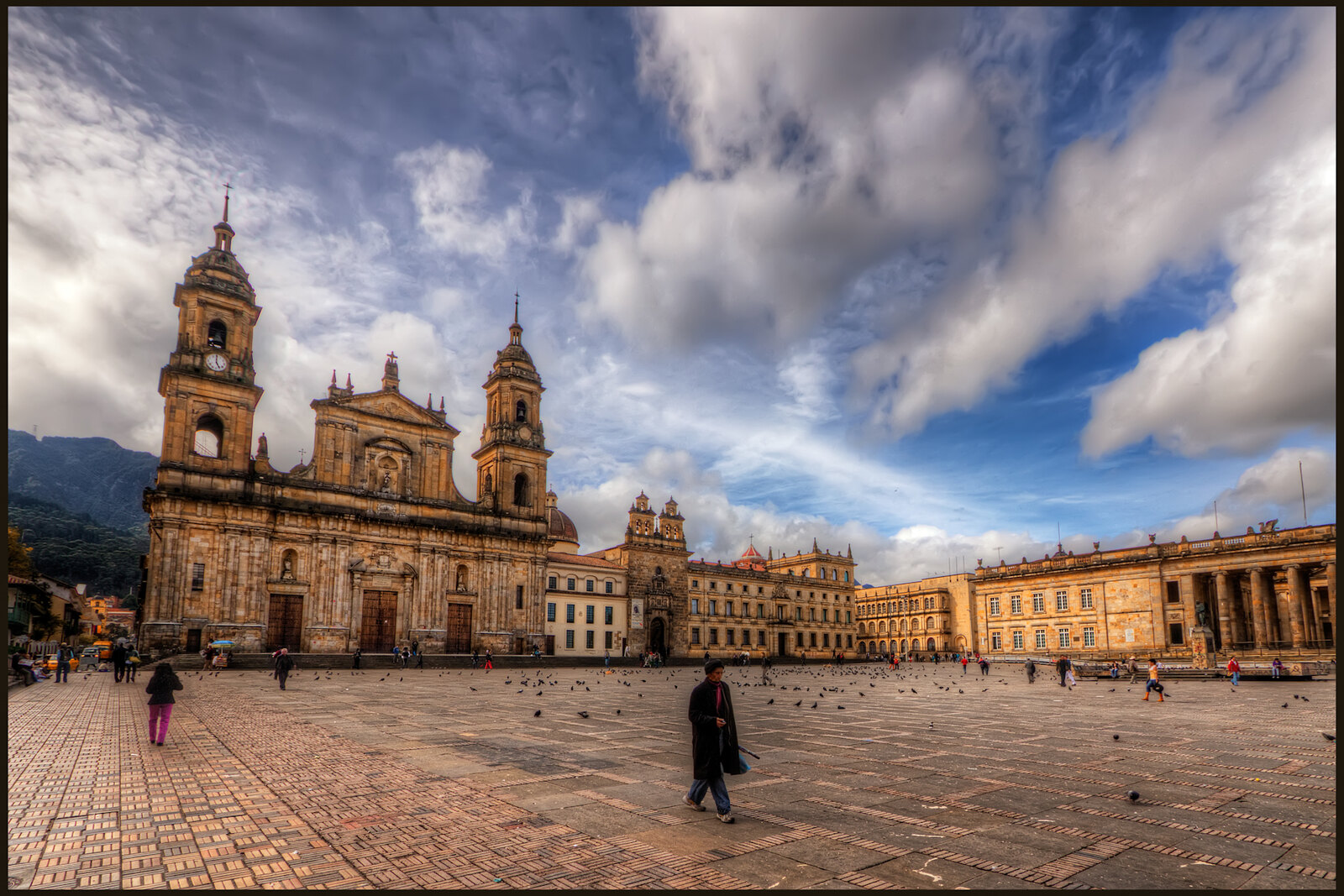
Look around first
What to notice
- High altar
- Chapel of Saint Elizabeth of Hungary
- White tomb figure
The story of the place
The Archbishop of Bogotá's cathedra is here, and it is from this that the church received its cathedral status. The word “Primatial” in the name affirms the Bogotá archbishop's honorary precedence among Colombia's bishops. Where the high altar rises today, a priest from the first Spanish detachment once celebrated Santa Fe's first Mass before a rough altar. In the Chapel of Saint Elizabeth of Hungary, the white tomb figure recalls the city's early years.
In eighteen ninety, a box of human bones was discovered by the cathedral's high altar. The identity of the deceased was confirmed by an inscription that he himself had bequeathed for his grave: “I await the resurrection of the dead.” This was how the builders found Gonzalo Jiménez de Quesada, the Spanish conqueror and founder of Santa Fe, present-day Bogotá.
Quesada was a lawyer and received a salary for administering justice in the colony of Santa Marta. In fifteen thirty-six, he led an expedition from there into the interior of the continent. He was required to find a route to Peru, collect gold, and bring the inhabitants under the Spanish Crown. Of about eight hundred participants, one hundred seventy-eight reached the division of the captured spoils. They conquered the lands of the Muisca, took gold and emeralds, and Quesada declared the territory a possession of the Spanish monarchs.
On the site of the present-day cathedral, Domingo de las Casas, a Dominican priest accompanying the expedition, celebrated Santa Fe's first Mass before a rough altar. Quesada himself soon left for Spain: he had to prove at court that he was the one who should govern the conquered province. The Spanish Crown gave him titles and income-producing estates, but not the governorship. Later, he invested in another expedition for El Dorado, went bankrupt, and died in Mariquita while continuing to litigate with his creditors.
Eighteen years after his death, Lope Clavijo, the executor of his will, brought Quesada's remains to Santa Fe. They were placed by the altar of the cathedral church. They remained there for almost three centuries, until the work of eighteen ninety caused the burial to be opened again.
The municipal council decided to turn the founder's bones into a city monument. On July fifteenth, eighteen ninety-two, the canons handed Mayor Higinio Cualla a wooden urn, inside which stood a second, zinc box. Four days later, the urn was placed in a mausoleum in front of the Central Cemetery. Quesada left the cathedral for the first time since his remains had been brought there.
While the urn was by the cemetery, the word “Primatial” appeared in the church's name. On November seventh, nineteen oh two, Pope Leo the Thirteenth conferred on the Archbishop of Bogotá the honorary title of Primate of Colombia. The church is called a cathedral because the archbishop's cathedra is here; “Primatial” indicates his honorary precedence among the country's Catholic bishops.
The organizers of Bogotá's four-hundredth anniversary decided to bring the founder back. On August fifth, nineteen thirty-eight, his remains were solemnly carried back inside and placed in the Chapel of Saint Elizabeth of Hungary. A white tomb figure by Luis Alberto Acuña marks the urn's return forty-six years after the municipal authorities themselves had removed it from the cathedral.
Useful on site
Access to the Primatial Cathedral of Colombia depends on liturgy, security, and the current arrangements at Plaza de Bolívar.
Checked: June 28, 2026. Check the official source before visiting.The cathedral can be taken in fully from outside; enter with the service, closed chapels, and the rules of a religious space in mind.