 Guide On Map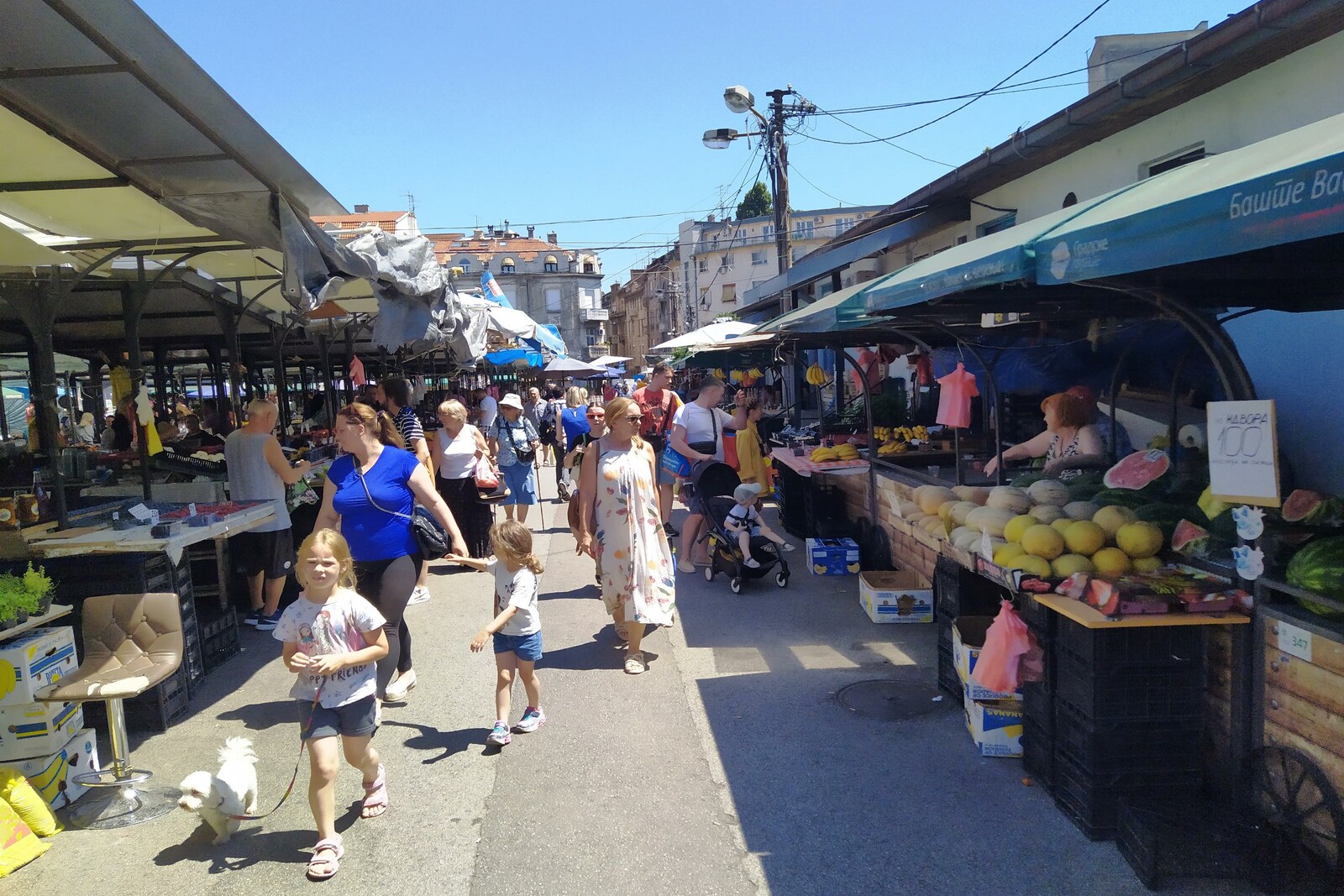
Look around first
What to notice
- Vegetable rows
- Dairy pavilion
- Meat and fish stalls
The story of the place
Officially, this market is called “Skadarlija,” but Belgraders almost always call it “Bajloni.” The surname became attached to this low-lying area before the present vegetable rows, dairy pavilion, and meat and fish stalls appeared here.
Ignat Bajloni is often called the market’s founder. The chronology is more precise: he died nearly half a century before it opened. A tanner from Litomyšl in the Czech lands, he had planned to leave for America, but in eighteen fifty-five, on a relative’s advice, he moved to Belgrade with his wife and four sons. Here he opened an inn, went into milling, and founded the family firm Ignat Bajloni and Sons.
After their father’s death, the sons continued to run the firm. Jakov Bajloni, a cooper who had learned his trade at a Vienna brewery, took over a small business near Skadarska Street. Its previous owner had installed a steam engine but still could not withstand the competition and sold the business. On February twenty-ninth, eighteen eighty-eight, the Bajlonis began their own production here. Jakov bought up neighboring plots and expanded the business; the family drained the marshy land nearby. Over eight years, production grew by more than three times. The future market took its name from the neighboring Bajloni Brewery, whose owners’ surname was on the sign.
After the First World War, a wholesale market—called a kvantaš in Serbian—was set up on the drained plot. Its location was explained by the city’s trade: sellers of large food consignments were scattered across different squares, and buyers had to look for them all over Belgrade. On November first, nineteen thirty-three, the city administration gathered the wholesalers in two places—here and at Zeleni Venac Market. At Bajloni, thirty-eight private wooden sheds were put up for them; at Zeleni Venac, eight were needed. Producers and small traders could rent municipal stalls, paying a fee for each day.
In nineteen forty-six, both wholesale and retail trade were permitted here at the same time, and the official name was changed to “Skadarlija.” The wooden sheds and the marsh are gone. “Skadarlija” remains on the documents, but Belgraders still arrange shopping trips and meetings at Bajloni.
Useful on site
The official city markets website lists daily hours of 06:00–19:00; the stalls are actually more fully stocked in the morning and afternoon.
Opening hours by day
Do not get in the way of sellers and shoppers; during quiet hours, treat the market as an urban gathering place rather than expecting full-scale trade.