 Guide On Map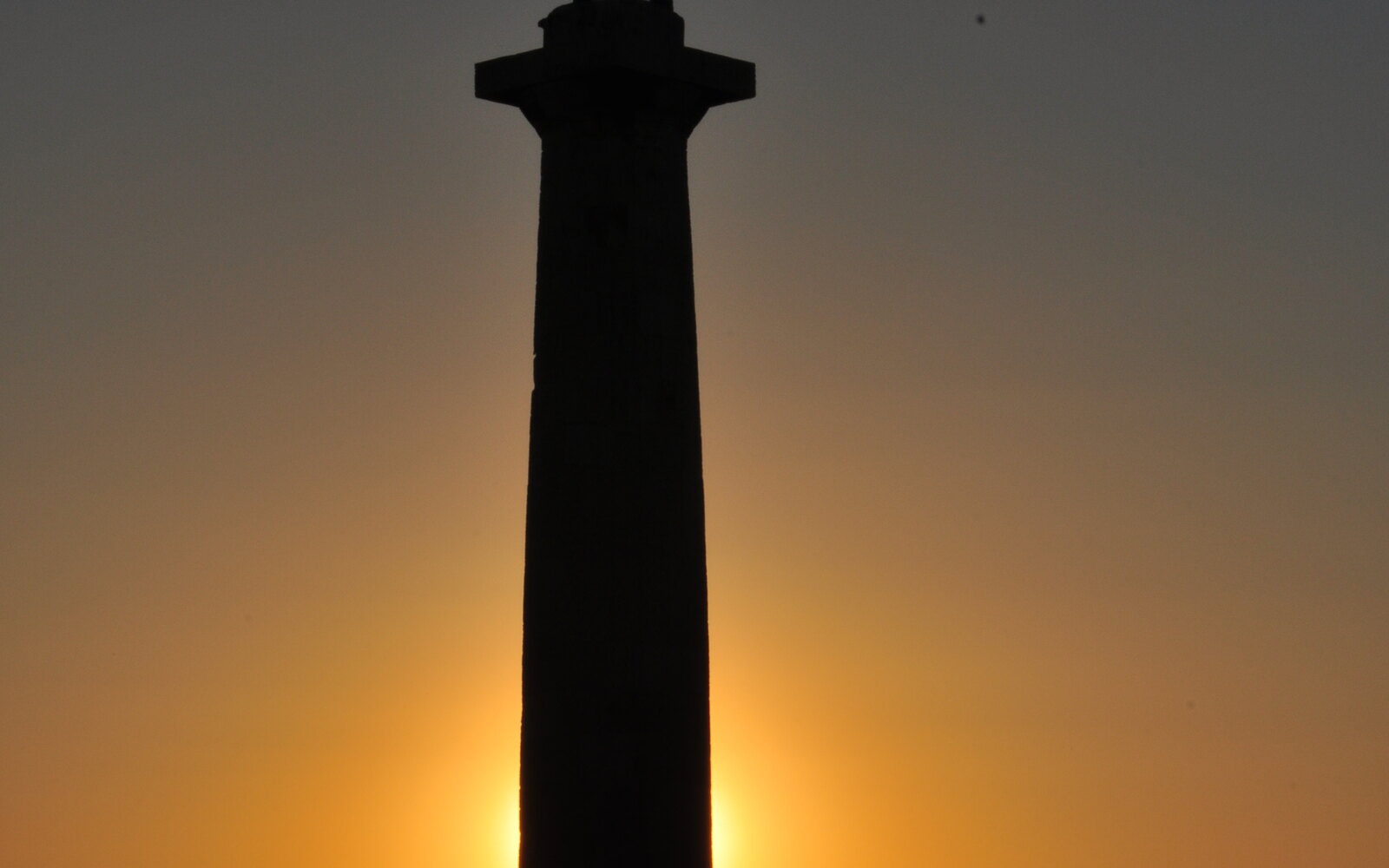
Look around first
What to notice
- Bronze figure of a warrior
- Lowered sword
- Falcon on the palm
- Tall stone pedestal
The story of the place
The bronze man above the confluence of the Sava and the Danube was cast for Terazije Square. In nineteen thirteen, the chairman of the Belgrade municipality, Ljubomir Davidović, wanted to mark the Serbian army's victory over the Ottoman Empire in the First Balkan War. He commissioned the sculptor Ivan Meštrović to create a huge city fountain.
Four stone lions were meant to hold a basin with reliefs of Serbian-Turkish battles. Rising from the water would have been a column with five rings—one for each century of Ottoman rule. At the top stood a naked warrior with a lowered sword and a falcon. He has no name of any historical commander. He is a composite victor, and it was from him that the Belgrade monument got its name—The Victor.
Meštrović worked for eight months in the gymnasium of a school near the cathedral. He managed to send the central figure and several lion masks to a Czech foundry workshop. Then the First World War began. The unfinished parts of the fountain disappeared during the occupation of Belgrade.
For the sculptor, this was a paid commission into which he had already invested his own money. After the war, Meštrović demanded reimbursement for the cost of casting and transport. The municipal council gave no final answer for several years and eventually rejected the expensive fountain. When the bronze figure was handed over to Belgrade, it was placed in a shed among water pipes in Senjak.
In nineteen twenty-six, Mayor Kosta Kumanudi decided to bring the drawn-out story to an end and place The Victor on Terazije at least without the fountain. Meštrović agreed and designed a tall, sturdy pedestal: he understood that a temporary installation might remain forever. In the spring of the following year, workers began digging the foundation.
Then the writer and critic Petar Odavić, who was seeking to have the installation canceled, launched a newspaper campaign. His supporters were outraged by the figure's nudity. Others asked why the Serbian army's victor was depicted without a soldier's šajkača cap and opanci, traditional peasant footwear, and why the monument had been commissioned from a Croatian sculptor. The common story about Belgrade ladies unanimously driving a naked man out of the center is too simple: some women's associations defended Meštrović's work. Yet the disputes were loud enough for municipal officials to halt construction in Kumanudi's absence.
On his return, the mayor told Meštrović that the work had been stopped without his order. He promised to resume it after the elections. The promise went unfulfilled. On June sixteenth, nineteen twenty-eight, Deputy Mayor Kosta Jovanović notified the sculptor that the artistic commission had selected the city rampart at the end of Kalemegdan Terrace. Meštrović objected—the figure's proportions had been calculated for a square and a fountain. From the same letter, he learned that officials had given the work a new name: “Messenger of Victory.”
A new occasion for the installation was found at this edge of the fortress as well. The Sava Promenade and the Great Staircase were just being completed here, and in the autumn Belgrade marked the tenth anniversary of the breakthrough on the Macedonian Front. On that front, after retreating from its own country, the Serbian army fought alongside the Allies; the September breakthrough of nineteen eighteen opened its way back north. On October seventh, Kumanudi, who had sought the installation on Terazije, unveiled the monument himself on the fortress rampart.
The figure was turned to face the Sava. In nineteen twenty-eight, lands of the former Austria-Hungary lay across the river; after the war, they had entered the new Yugoslav kingdom. Thus, the monument to victory over the Ottoman Empire was now dedicated to another victory and to the unification of the country. Officials removed the naked figure from the main square, farther from view, and raised it above all Belgrade.
Of the original concept, only one bronze warrior remains here. Beneath the tall column there is no basin, no lions, and no reliefs; the sword is lowered in front of the body, the falcon sits on the palm, and the face of The Victor is turned toward the Sava and the former Austro-Hungarian shore.
Useful on site
An open viewing point in the fortress; access may change because of works, wind, or events.
Checked: June 28, 2026. Check the official source before visiting.Approach the railing without rushing, and first take in the two rivers with your eyes; wind and sun are especially noticeable at this exposed edge.