 Guide On Map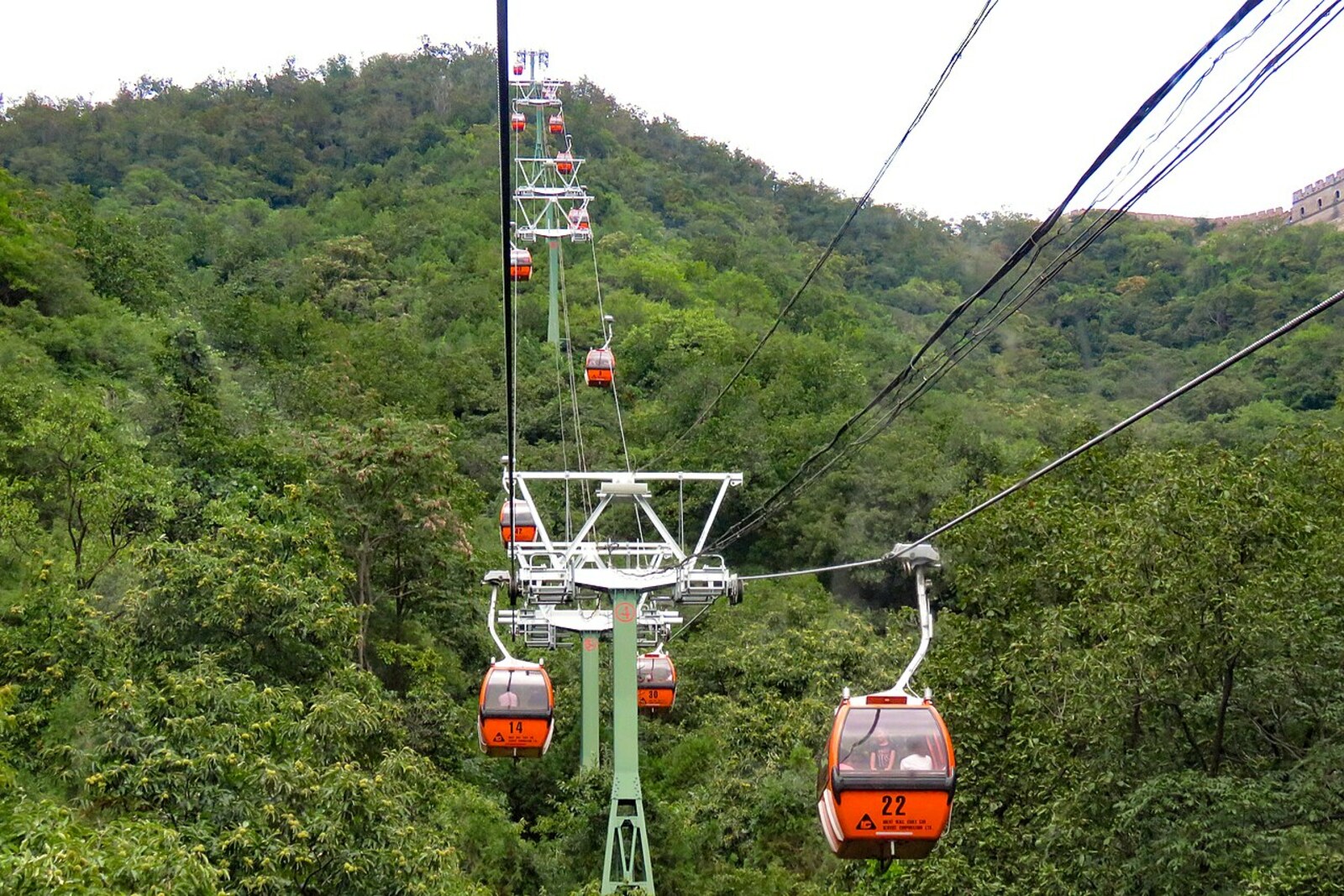
Look around first
What to notice
- Cableway cabins
- Pine-covered slopes
- Tower No. 14
- Upper station
The story of the place
A line of cabins stretches up the pine-covered slope toward Tower No. 14 of the Great Wall. It rises from the north entrance to the upper station by the wall’s stone walkway, where the route branches toward the eastern section and the western ridge. Today’s eight-seat cabins replaced the earlier ones, while some retired cars remain below as rest areas. Before the lift existed, people reached this tower on foot along mountain trails and the wall itself.
The tower that the cabin climbs to became a gateway to Mutianyu even before the first tourists arrived. In the mid-nineteen eighties, planners extended the initial phase of the restored section from the first tower to Tower No. 14. They also ran the cableway here: its upper station stood at the western end of the prepared wall, from where visitors could continue straight along the ridge.
The cableway began operating in nineteen eighty-six, two years before Mutianyu’s official opening. It was the first imported passenger cableway on the Great Wall with detachable cabins. On the line, a cabin was held by a moving cable, while at the station a mechanism detached it and slowed it down. Passengers did not have to board while it was moving; if necessary, the operator could stop a cabin to help an elderly person or a passenger with limited mobility.
This is how the engineers changed the purpose of Tower No. 14. Previously, the wall and mountain trails led to it. Now the seven-hundred-twenty-three-meter line brought people here directly from the north entrance. The tower became the route’s main branching point: from here, routes lead to the eastern section of the wall or farther along the western ridge.
The first lift operated for thirty-five years—more than ninety thousand hours. On October fourteenth, two thousand twenty-one, its final cabin arrived at the lower station. Its three final passengers were riding inside. After they got out, Zhang Jingui, the cableway’s deputy director, walked to the control panel and pressed the stop button. For him and the operators’ shift, it meant the end of the machine they had maintained for decades.
The old equipment was not kept in operation. After an eight-month reconstruction, engineers launched new eight-seat cabins; the line’s capacity doubled. Not all the retired cars were sent for scrap: some were placed beside the road below and converted into rest areas. Another lift now moves above the pines, but its upper station still leads to the same Tower No. 14, which planners assigned this role in nineteen eighty-six.
Useful on site
Operates according to the section’s schedule and current cableway announcements; in the high season of 2026, weekdays are listed as 07:30–18:00 and weekends as 07:30–18:30, with earlier cutoffs for sales and entry.
Checked: June 28, 2026. Check the official source before visiting.Do not confuse this line with the chairlift and toboggan at No. 6: the complexes operate separately.