 Guide On Map
Mutianyu: Along the Great Wall Ridge
From the north entrance and Tower No. 14 to Tower No. 20
Guide On Map on your phone
Open the walk like a regular app
It takes about 10 seconds to install. No app store needed.
The whole path
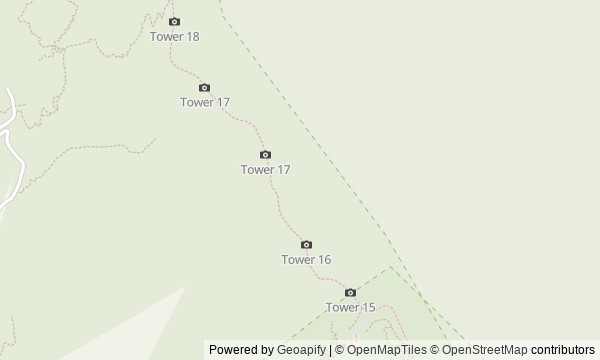
Route map
About the walk
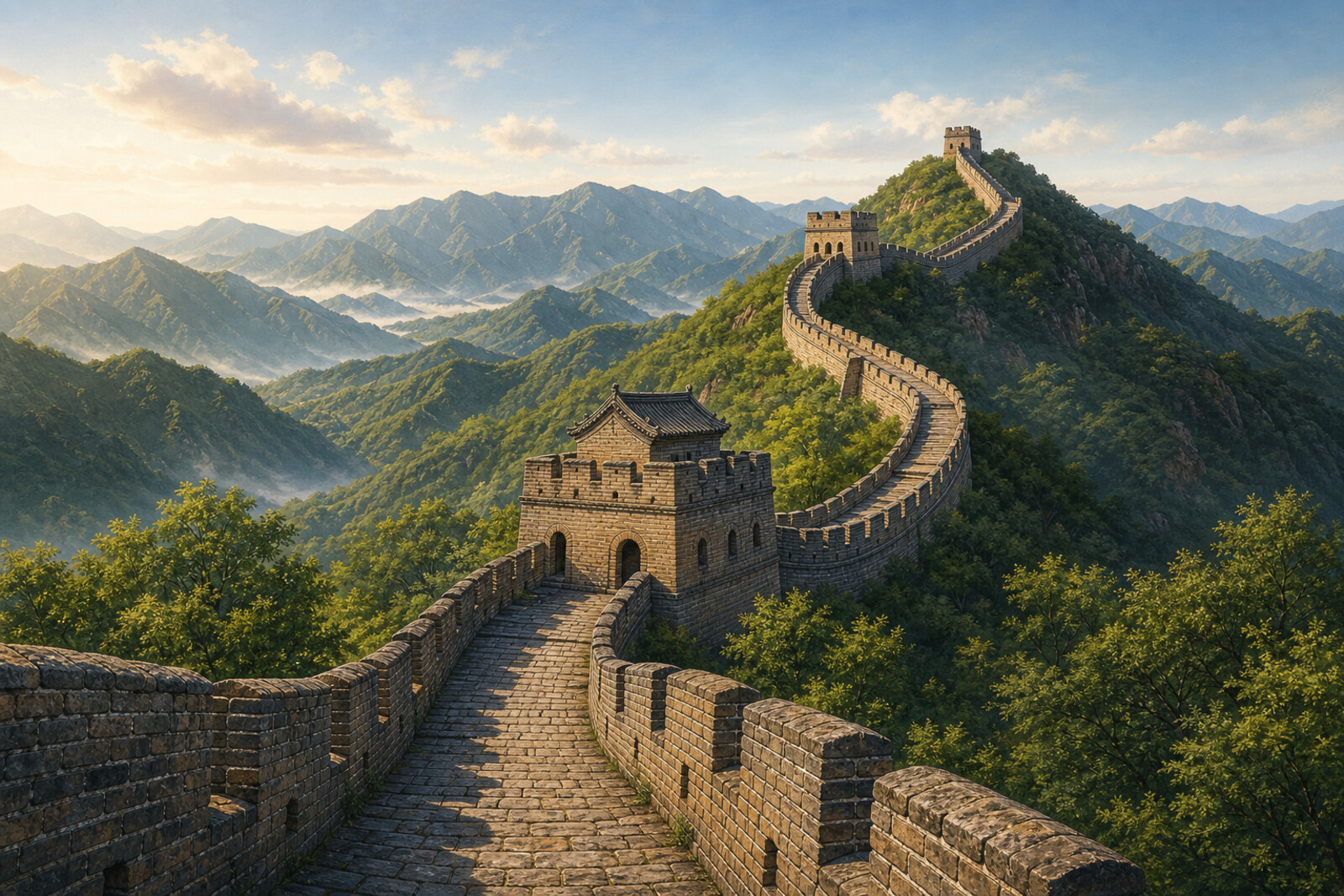
You will climb from a narrow gorge to Tower No. 14, then follow the exposed ridge west to Tower No. 20. Steep stairs will lie underfoot, pine-covered slopes will fall away on either side, and white signs will show on the neighboring mountain in the distance.
All along the ancient masonry, you will notice traces of the recent past. At the upper station, a phrase born in very different mountains will greet you. At the next tower, a plaque will remain from 2 days spent waiting for a brief moment of sunset light. Farther on, there will be a stone political inscription, a boundary slab, and neat masonry that visitors were kept away from for a long time. Why did a finished section remain closed? And why were vanished signs returned to the slope?
The story will stay calm and specific: plaques, stones, and mortar joints will matter more than broad statements about antiquity. By the end, you will be able to point out where the garrisons' boundary ran and why restored masonry did not yet mean an open route.
Why this order
The route begins in the gorge where the tourist entrance appeared: without that point, it is hard to understand why the climb reaches Tower No. 14 in particular. The Mutianyu Cableway will physically take you to its upper station, while the nearby Hero Stele shows how an engineering hub immediately took on a symbolic role. After that, neighboring Tower No. 15 continues the theme of the wall's new use through film. Farther on, the open ridge provides the needed distance: between Tower No. 16 and Tower No. 17, the inscription on the opposite slope comes into view. From that outward sign, the route returns to the masonry itself—to the slab at Tower No. 18, which divided duty between garrisons. A steep western climb through Tower No. 19 leads to Tower No. 20, where the boundary is no longer military but administrative: the restored wall continued for a long time beyond a closed passage.
Those who want to walk Mutianyu along the ridge instead of stopping at the Mutianyu Cableway platform Lovers of specific stories about restoration, film, and signs in the landscape Those who value panoramas and a steady climb toward the upper towers
Those not prepared for steep stairs and elevation gain Those who want to hear only about ancient military history Those looking for a walk on level ground
Before you go
Choose the enclosed Mutianyu Cableway that arrives at Tower No. 14. The chairlift and toboggan near Tower No. 6 belong to a different system, require separate arrangements, and do not replace a return ticket on the line you chose. Wear shoes with grippy soles: the steps vary in height and steepness, and you will need to retrace the entire ridge on the way back. Bring water, sun protection, and a layer for the wind. Treat Tower No. 20 as the final boundary of the walk and do not plan to continue onto the wild wall.
When to go
Start with enough time and energy not only for Hero Slope, but also for the return to Tower No. 14. In clear weather, the neighboring ridges and the unrestored line beyond Tower No. 20 are easier to make out; in strong wind, on wet steps, or in poor visibility, it makes sense to turn back earlier.
Backup plan
If the full crossing feels too demanding, after arriving at Tower No. 14, walk to Tower No. 15 and return to the Mutianyu Cableway. This shorter option keeps the essentials: the view of the mountain terrain, the Hero Stele, double-sided embrasures, and the first change in elevation. If fatigue or weather catches up with you farther along, do not feel obliged to reach Tower No. 20—turn around at the nearest tower and return by the same familiar route.
Route conditions
Facilities. Toilets — 1
Elevation. Ascent — 221 m; descent — 24 m
OpenStreetMap extract of June 23, 2026: database data, not a check on the ground. Data © OpenStreetMap contributors, ODbL licence
Walk plan
Open in maps ↗- 1
The Gorge at the North Entrance
Here it will become clear how a military gorge was turned into a second tourist section of the Great Wall near Beijing. - 2
Above the Pines to Tower No. 14
The ascent links the engineering history of the cableway with the chosen point where it reaches the ridge. - 3
Hero Stele by Tower No. 14
The stele explains how a phrase from a distant march acquired a new tourist role here. - 4
Tower No. fifteen
The plaque marks the place where film turned the tower into a setting for a repeated gesture. - 5
Ridge between Tower No. sixteen and Tower No. seventeen
From here, a trace of the Cultural Revolution will come into view; it was later restored to the tourist landscape. - 6
Tower No. 18
A stone slab explains how responsibility was divided among garrisons within a single defensive line. - 7
Tower No. twenty
The finale will show why a completed restoration still did not mean an open passage.
Route features
Everything you need stays in the browser
Progress, saves and your trip plan are stored on this device.
Add Guide On Map to your home screen so the walk opens outside the browser.
How we handle sources, maps and corrections: our editorial standards