 Guide On Map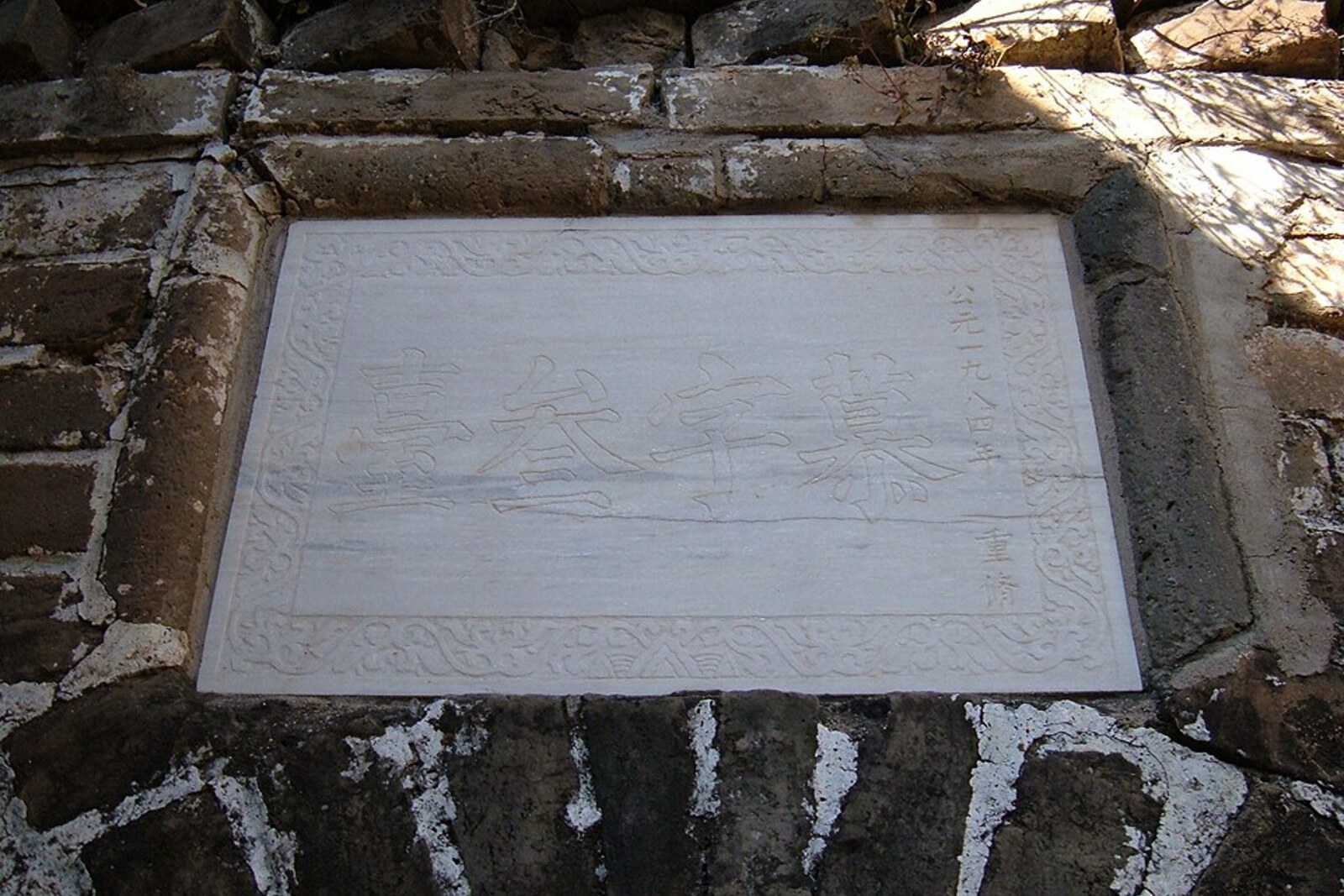
Look around first
What to notice
- Stone stele
- Carved phrase
- Tower No. 14
- Upper-station platform
The story of the place
The Chinese word “haohan” means a brave person, a worthy person. That is why the stone by Tower No. 14 is called the Hero Stele. The phrase carved into it translates as: “He who has not reached the Great Wall is not a hero.” The stele is not dedicated to a specific defender of Mutianyu. It invites everyone who has made it to the wall to be considered a hero.
These words appeared far from here. In the autumn of nineteen thirty-five, Mao Zedong, the political commissar of a Red Army detachment, was leading it toward a base in Shaanxi Province. A year earlier, about eighty-six thousand people had left the encircled area in Jiangxi Province. Fewer than eight thousand reached the north. The survivors carried what remained of their weapons and marched in light uniforms and footwear not designed for the approaching winter. They were pursued by Kuomintang troops—the then-ruling party of China.
The final high barrier on their route was the Liupan Mountain range. On October seventh, scouts discovered two enemy cavalry companies near the village of Qingshizui, halted with supplies. Mao ordered them attacked from three sides. The battle lasted about half an hour; Red Army soldiers captured more than one hundred horses, ammunition, and supplies, then continued north.
While crossing Liupan Mountain, Mao drafted a poem later titled “Qing Ping Yue · Liupan Mountain.” Nearby ran the remains of an ancient wall of Qin State. It was there that the line about the hero and the Great Wall first appeared; originally, it had nothing to do with Mutianyu. On October nineteenth, the detachment reached Wuqi Town and joined local Red Army units. For the Central Red Army, the Long March was over.
Only the words from this story remain at Tower No. 14. The modern stele was placed on the platform where the cableway arrives: a person steps out of the cabin already on the Great Wall and can immediately take a photograph with the title of “hero.” The real steep climb, called Hero Slope in Mutianyu, begins farther on—between Tower No. 19 and Tower No. 20. Neither the battle at Qingshizui nor the crossing of Liupan Mountain took place here. Here, a line about people who survived nearly a year of retreat became a caption for a tourist photograph.
Useful on site
Accessible only during the operating windows of this section and the cableway; before going up, check official announcements and weather closures.
Checked: June 28, 2026. Check the official source before visiting.The platform can be busy with people taking photographs; look at the embrasures without lingering in the narrow passage.