 Guide On Map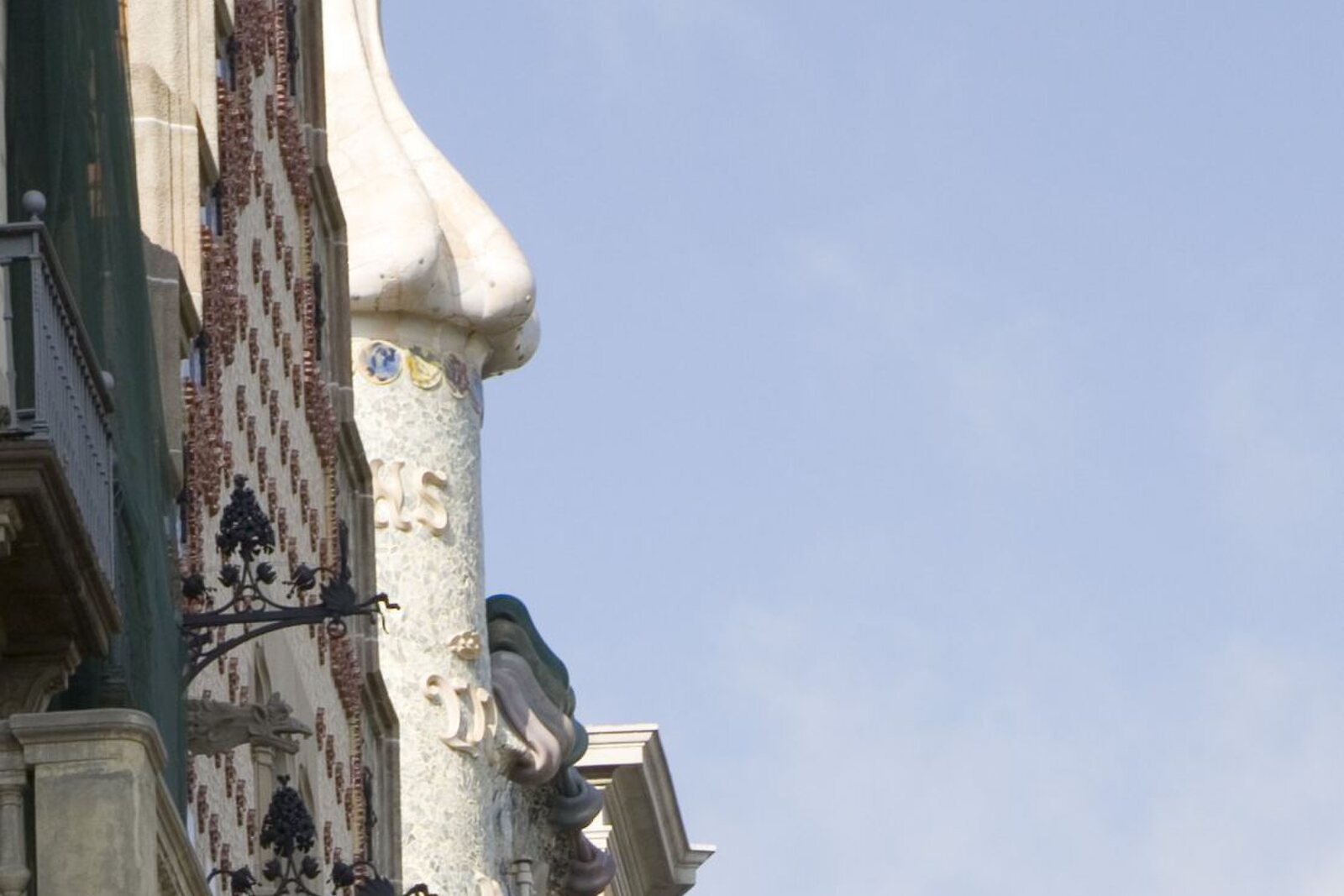
Look around first
What to notice
- Three dissimilar facades
- Bronze award plaque
- The stepped gable of Casa Amatller
- The iron balconies of Casa Batlló
The story of the place
On one short block of Passeig de Gràcia, several neighboring apartment buildings bring together facades that are easy to compare at once: a stepped gable, iron balconies, and a stone corner stand almost side by side. The avenue grew from the old road to Gràcia when, after the walls were demolished, Barcelona began building Eixample in blocks with chamfered corners. Factory owners and merchants moved here, occupied the principal floors, and rented out the remaining apartments. A house’s exterior both proclaimed the family’s prosperity and brought it income.
In eighteen ninety-eight, Antoni Amatller, the owner of a large chocolate-making business, bought an ordinary apartment building here. He needed a home that would make Barcelona understand at once how successful its owner had become. Amatller commissioned the young architect Josep Puig i Cadafalch to remodel the building and even agreed to pay a fine for departing from the building regulations.
The address was chosen strategically. After the city walls were demolished, engineers laid out Eixample, a new district of regular blocks with chamfered corners. The city authorities turned the old road to the village of Gràcia into the broad Passeig de Gràcia. Owners of factories, trading houses, and inherited fortunes moved here. They occupied the principal floor and rented out the remaining apartments. The facade displayed the family’s standing, while the tenants generated income.
Two years later, Amatller’s house already stood out among the even cornices. Then Francesca Morera, who had inherited the corner building on the same side of the block, hired the celebrated architect Lluís Domènech i Montaner. She wanted to renovate the old apartment building and leave her family’s signs upon it. Francesca died before the work was completed. Her son Albert Lleó i Morera continued the commission, and the finished building received his surnames.
The last to join this row was Josep Batlló, a textile industrialist and owner of several factories. In nineteen oh three, he bought the neighboring house and gave its remodeling to Antoni Gaudí, an architect from whom he expected the most striking solution. Thus, over just a few dozen meters, three clients placed side by side the works of three masters whom their contemporaries constantly compared.
There was no documented personal quarrel between the architects. It was the owners who competed above all: each chose a celebrated author, invested factory income or an inheritance, and displayed the result on the city’s most fashionable avenue. Barcelonans turned this comparison into a nickname.
The Catalan word “illa” means a city block. The pun is easier to hear in the Spanish word “manzana”: it means both a block and an apple. In Greek myth, the uninvited goddess of discord, Eris, wishing to take revenge on the participants in a wedding feast, brought a golden apple inscribed “for the fairest.” Three goddesses disputed it, and Paris, a Trojan prince, had to choose the winner. His decision became one of the causes of the Trojan War. The three dissimilar Barcelona facades reminded the city’s residents of the same choice—who should receive the apple.
The city hall even proposed its own way of choosing the best. From eighteen ninety-nine onward, it annually awarded the most successful new or remodeled house. The three buildings never competed in the same round: their owners completed the work in different years. In nineteen oh six, the jury awarded the prize to Casa Lleó Morera. Francesca Morera did not live to see that decision; the prize went to the house her son finished. Casa Batlló entered the very next competition, and then the judges preferred another building.
A bronze award plaque from nineteen oh six is still fixed to the stone facade of the corner Casa Lleó Morera. Casa Amatller and Casa Batlló stand farther along in the same row; the official answer to the dispute over beauty remains only on the first house.
Useful on site
Street viewing is available at any time; the best angle is from the opposite sidewalk of Passeig de Gràcia.
Checked: June 28, 2026. Check the official source before visiting.First examine the entire side of the block from a distance, then approach the facades. Do not try to make sense of the houses’ competition while standing directly beneath the balconies.