 Guide On Map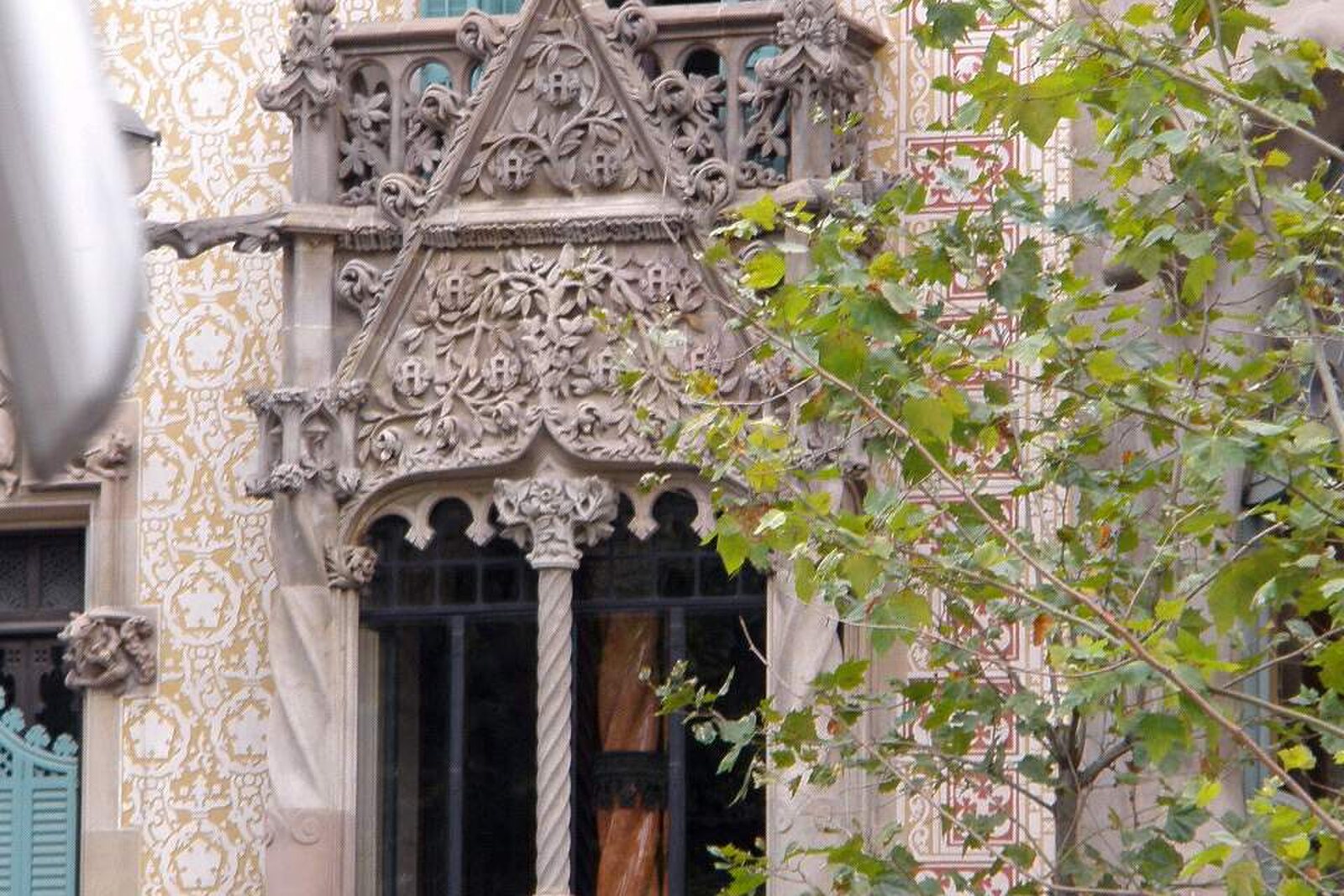
Look around first
What to notice
- Stepped gable
- Almond branches on the facade
- Family coats of arms
The story of the place
Behind the stepped gable is a house designed for several ways of living at once. The vestibule and main floor were remodeled for the owners' family, while the other floors remained separate apartments for rent. A photography studio operated beneath the high roof, and an art collection was kept between the living rooms. Outside, coats of arms and almond branches recur in the stone, playing on the similarity in sound to the family's surname.
Casa Amatller is named after the people who lived here: the industrialist Antoni Amatller and his only daughter, Teresa. Chocolate brought money to the family. At nineteen, Antoni inherited a factory, reorganized its production, and turned the family business into one of the largest in Spain. With this income, he bought works of art, pursued photography, and in eighteen ninety-eight purchased an ordinary apartment building on Passeig de Gràcia.
Josep Puig i Cadafalch remodeled the facade, vestibule, and main floor for him. The father and daughter moved into the rooms facing the street; Antoni placed the finest pieces from his collection between their bedrooms and set up a photography studio beneath the high stepped roof. The other floors retained their division into separate apartments. The result was a family home that also brought in income, housed its owner's collection, and announced his surname to passersby: coats of arms and almond branches recur in the stone—a play on the sound of the name Amatller.
Antoni settled the fate of all this property in advance. In his will, he specified that if Teresa died without heirs, the house was to be turned into a museum of his collection. In nineteen ten, Antoni died. Teresa received the factories, works of art, photographs, and the building, where she continued to live. She did not marry, had no children, and handed the day-to-day management of the chocolate business over to hired administrators.
To carry out her father's will literally would have meant leaving the public a set of beautiful rooms. Teresa chose a more active future for the house. Her art adviser, Josep Maria Gudiol i Ricart, proposed combining the museum with a library and a photo archive that researchers could use. In nineteen forty-one, Teresa founded the Amatller Institute of Hispanic Art here, chaired its trustees herself, and named the foundation heir to her estate. A few months later, she bought the archive of the photographer Adolf Mas—an enormous collection of photographs of monuments and works of art. Thus her father's private interest in photography continued as a professional tool for historians.
After Teresa's death in nineteen sixty, the institute occupied the family rooms. Books and workspaces appeared in the drawing room and the music room, but the staff preserved most of the furniture, the collection, and the family documents. As a result, half a century later, restorers were able to return the main floor to the appearance of a residential apartment from nineteen hundred.
A house museum is now open in the former rooms of Antoni and Teresa. The library, photo archive, and institute staff are housed on other floors. The almond branches of the Amatller family remain on the facade, and behind it are both the house and the property that the last member of this family transferred to the foundation she established.
Useful on site
Casa Amatller: the official page lists daily visits from 10:00 to 19:00; check time slots, languages, and exceptions before purchasing.
Checked: June 28, 2026. Check the official source before visiting.The facade and entrance details can be examined from the street. The rooms, service spaces, and hidden layers of the house are accessible only as part of a separate visit, which is worth booking in advance.