 Guide On Map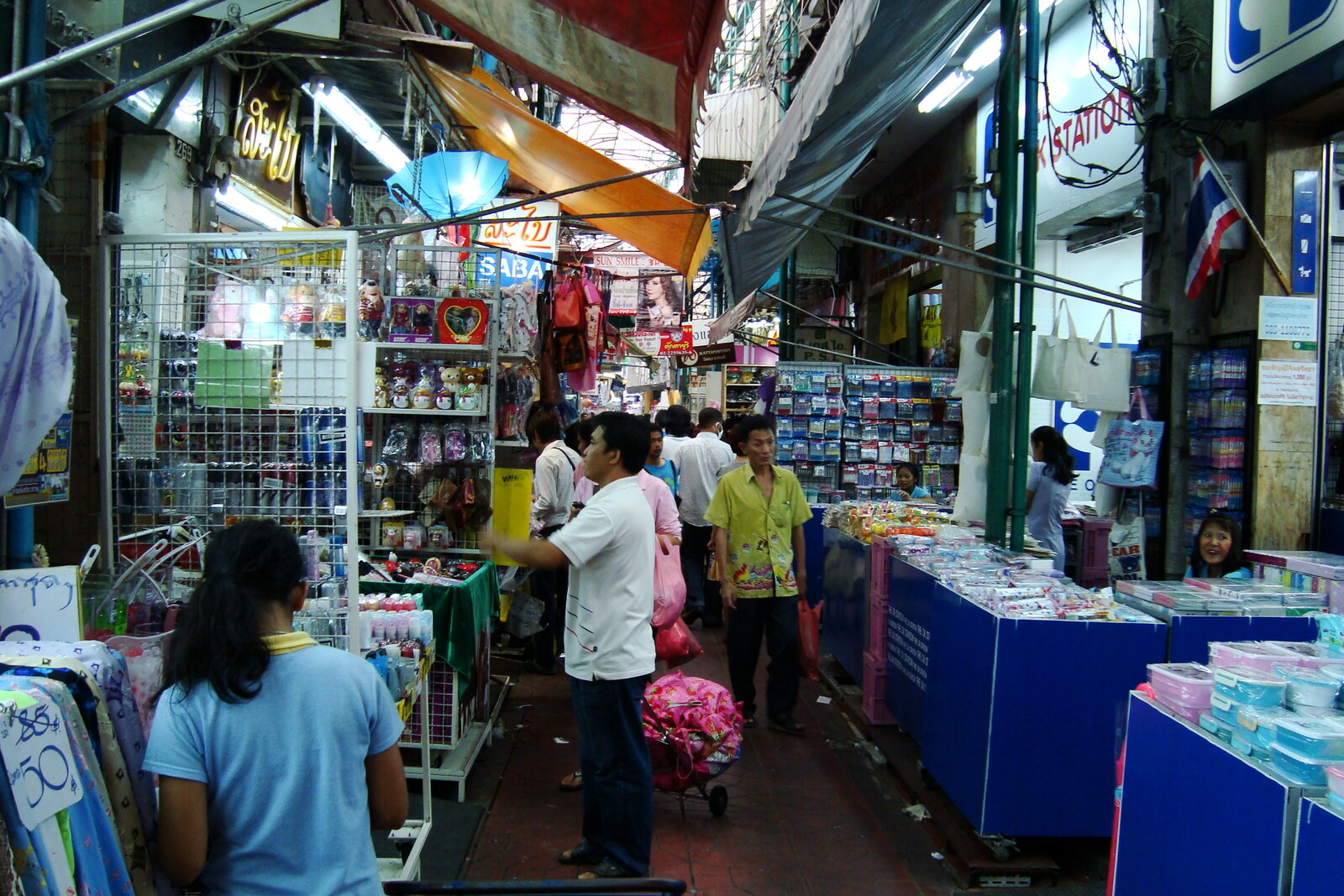
Look around first
What to notice
- Narrow trading passage
- Bundles and packages of goods
- Dense rows of shops
- A “Soi Wanit 1” sign
The story of the place
The site of today’s trading passage between the canals was once gardens near the temples of Sam Pluem and Sampheng. When merchants were relocated here from the site of the future Grand Palace, they put up homes, storerooms, and shops along the passage. Most came from Chaozhou and received Chinese goods delivered along the Chao Phraya River, storing them here before sending them to other districts of the city. The address plaques now say Soi Wanit 1, but among buyers and sellers the name Sampheng remains.
Sampheng deals in small wholesale lots. Shop owners from other districts come here for ribbons, fittings, costume jewelry, toys, and bags; they take goods in bundles and packages, then lay them out on their own counters. This role emerged here before the present-day shops.
In seventeen eighty-two, King Rama I chose a site near Tha Tian for the Grand Palace, where Chinese merchants already lived. They had to move beyond the wall of the new capital, to a strip of gardens between canals near the temples of Sam Pluem and Sampheng. Most of the newcomers came from Chaozhou and lived by intermediary trade: they received Chinese goods delivered along the Chao Phraya River, stored them, and passed them on to sellers throughout Bangkok. The new location kept their access to the river, while a long passage from the Saphan Han city gate linked the warehouses with customers. Along it, merchants put up shops, storerooms, and homes. By eighteen thirty-five, Sampheng was already considered the capital's main Chinese market.
Commercial success packed the district to its limits. Owners needed more room for goods, new arrivals looked for a corner for a shop, and houses rose one after another along the winding passages. On April fourth, nineteen oh six, a great fire began in the San Chao Kao quarter. Firefighters brought water pumps, but could not get them through the closely packed houses. The fire spread from building to building until it cleared a strip of burned-out land within the quarter.
A week later, King Chulalongkorn ordered a ten-meter road laid along this strip from Ratchawong Road to Khlong Rong Krata alley, now Yaowaphanit Road. Sanitation department officials set boundary markers, and fire victims were forbidden to rebuild their homes within the future roadway. Landowners received no compensation: first they lost their shops and stock in the fire, then they lost part of their land for a road by which firefighters could reach the quarter next time.
The market's old name survived the official renaming. On address plaques, the trading passage is called Soi Wanit 1, but sellers and customers still say “Sampheng.” The section between Ratchawong Road and Yaowaphanit Road runs where, after the fire of nineteen oh six, fire victims were no longer allowed to put their shops back up.
Useful on site
Public market passage; the hours of individual shops vary, morning/day is more practical, and the evening and wholesale rhythms vary by section.
Checked: June 28, 2026. Check the official source before visiting.Keep your belongings close, give way to carts, and do not stop in the middle of the passage. Before photographing a seller or the inside of a shop, ask permission.