 Guide On Map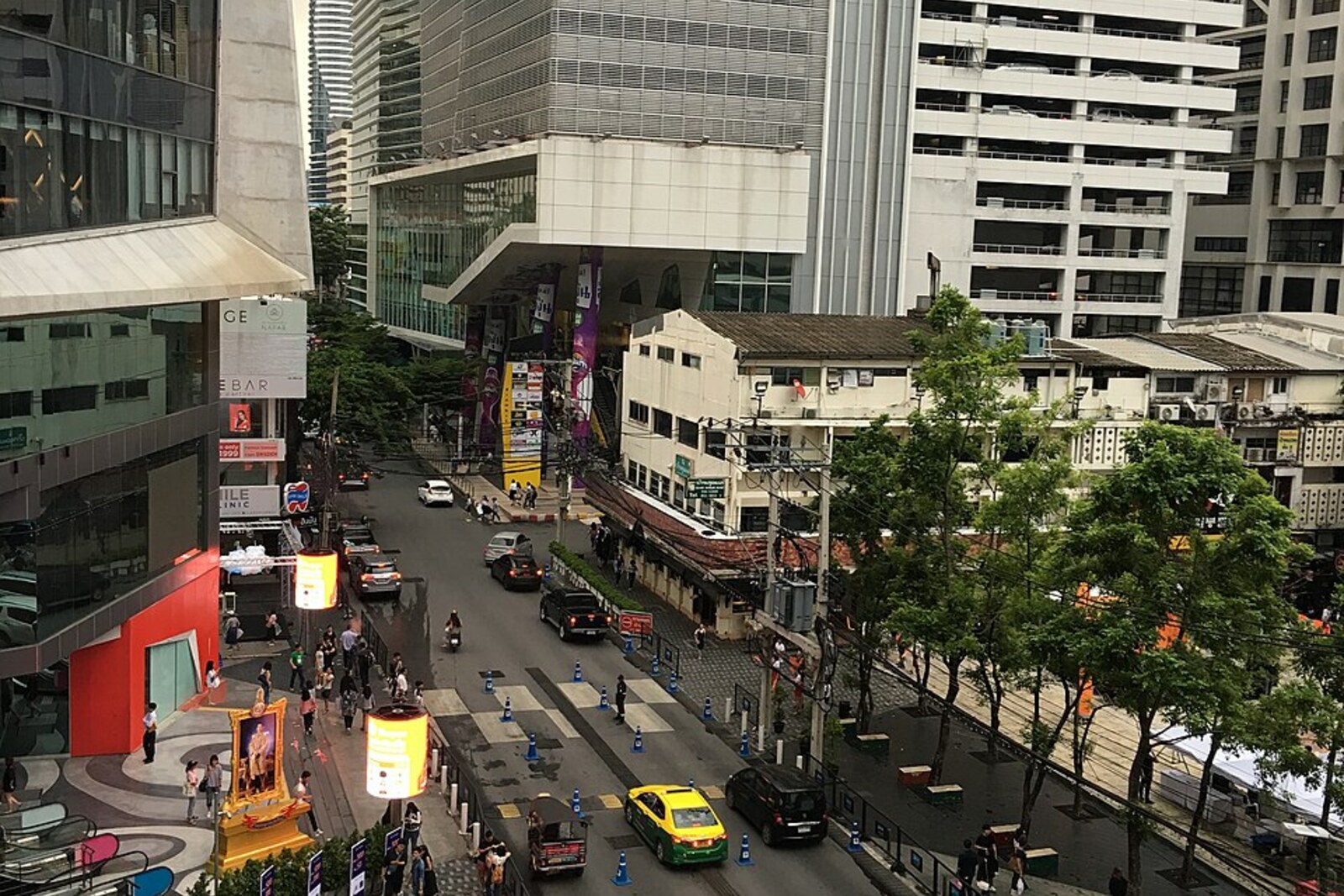
Look around first
What to notice
- Lido Connect sign
- Former cinema halls
- Commercial premises by the entrance
- Three- and four-story commercial buildings
The story of the place
Independent films are still screened in the former halls of Lido Connect, while the other venues are given over to concerts and performances. From the entrance, commercial premises lead into Siam Square, where cafés, clothing and music shops, hair salons, and courses stand side by side. Small spaces allow owners to change the goods or the sign quickly.
The word “square” here refers to the entire shopping quarter. In the early nineteen sixties, the managers of Chulalongkorn University’s land commissioned an open network of streets with three- and four-story commercial buildings. Shops occupied the ground floors, while people could live upstairs. The project was given the working name “Pathum Wan Square,” but shops alone proved insufficient: customers needed a reason to come here.
That reason was created by Pisit Tansacha, a cinema entrepreneur who made money from film distribution and exhibition. He was invited to bring the new quarter to life, and Pisit invested in three large cinemas at once. In nineteen sixty-six, Siam Theatre opened—the first Thai cinema with an escalator. Two years later, Lido Theatre began operating, and Scala Theatre followed a year after that. Each had one enormous auditorium; to fill three such halls, Pisit’s company bought films in packages at international film markets. A poor choice meant empty seats and a direct loss.
The choice worked. Audiences passed through the shopping streets on their way to the cinemas, then stayed in the cafés and shops. Clothing sellers, hair salons, and music shops followed, and later came courses aimed at Chulalongkorn University students and schoolchildren from neighboring educational institutions. Siam Square became a place where Bangkok’s young residents compared films, clothing, and music with the tastes of their peers. The quarter’s layout itself helped: a small space was more affordable than a large department in a department store, and an owner could quickly change the goods or the sign.
Even the present name took hold thanks to people who worked in these cinemas. Its origin is described in two versions. According to one, Kobchai Sosothikul, head of the construction company Seacon Development, considered the name “Pathumwan” too local and proposed “Siam Square”—a name on the scale of the whole country. According to the other, a free monthly cinema program played the decisive role. It carried a society-news column called “Siam Square,” and readers gradually transferred its name from the three halls to the entire quarter. The documents do not allow one version to be chosen with confidence: Kobchai may have proposed the name, and the cinema program may have made it commonly used.
The buildings of Siam Theatre and Scala Theatre are gone. Lido Theatre, opened by Pisit in nineteen sixty-eight, has survived. Now “Lido Connect” is written above the entrance: one former auditorium screens independent films, the other two are given over to concerts and performances, and commercial premises still begin right at the entrance. Of the three cinemas around which Siam Square gathered, this one remains on the same street and with the same name.
Useful on site
Open urban quarter; shop, cinema, and event hours vary, and individual streets may be closed for events.
Checked: June 28, 2026. Check the official source before visiting.Most of the old cinemas have already disappeared, so here it is more important to read the urban layer than to look for a fully preserved ensemble.