 Guide On Map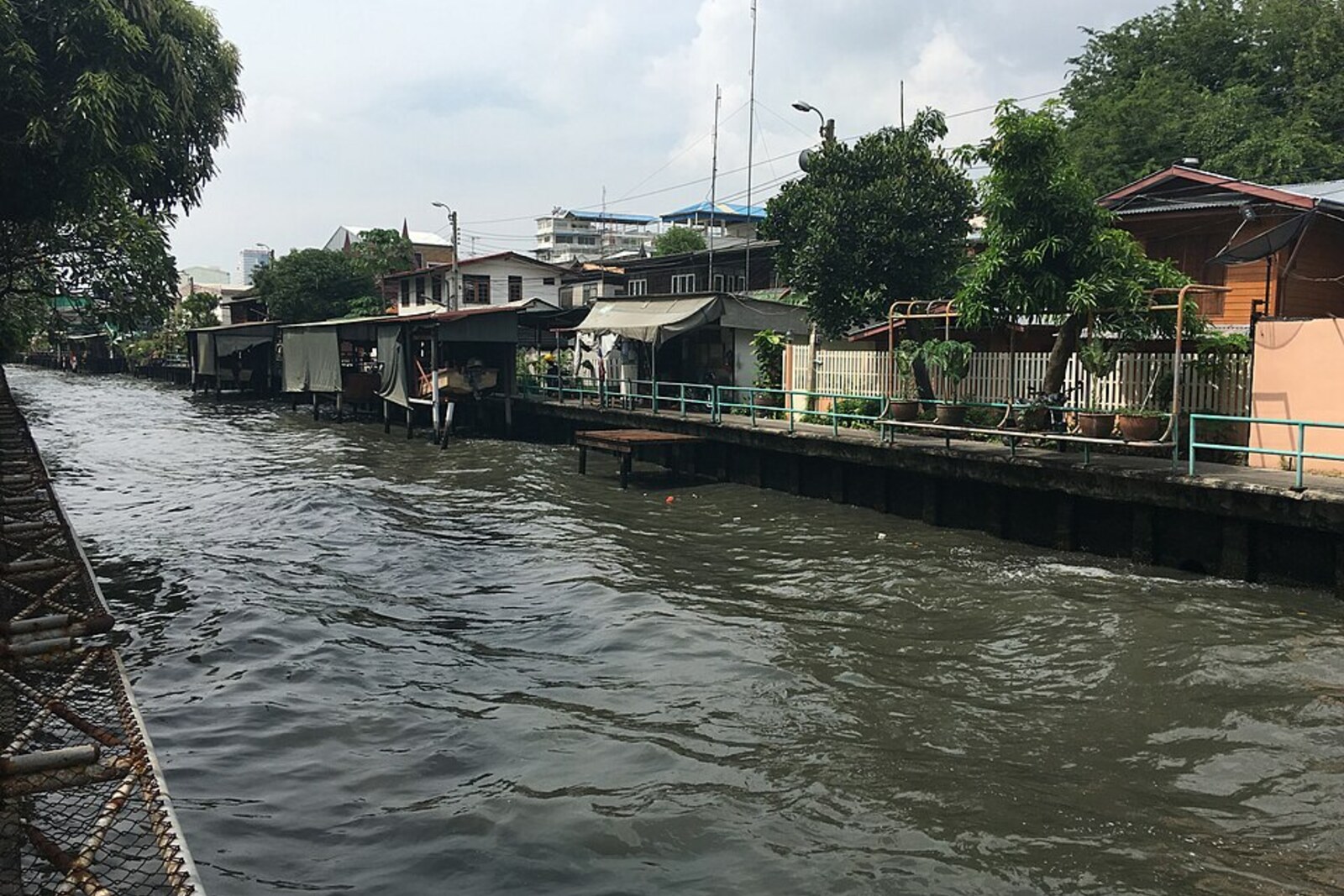
Look around first
What to notice
- Household weaving looms
- Lengths of handwoven silk
- Residential houses along the lane
The story of the place
Niphon Manuthas inherited a weaving workshop from his mother. She earned money from silk and was among the women weavers of Baan Krua to whom Jim Thompson entrusted work in the middle of the twentieth century. Niphon himself grew up among household looms, delivered finished fabrics to customers, and, according to his recollections, brought Thompson the last shipment before his disappearance. Today, Niphon's workshop is Baan Krua's last operating family weaving business.
The loom appeared in this family long before Thompson. The ancestors of local residents were Cham people—Muslims from Cambodia whose more distant roots are linked to the state of Champa in what is now Vietnam. At the end of the eighteenth century, some Cham families came to Siam—the name Thailand had at the time—as refugees; others ended up here after military campaigns, while men from families already living in the country joined Cham volunteer units.
After the Nine Armies War, King Rama I, who defended the newly founded capital against a Burmese invasion, allotted land east of the city fortifications to Cham warriors and their families. Later, new groups of Cham people, Muslims from Cambodia, were settled here. They did not receive an empty urban district: they had to clear fields, dig sections of canals, and establish a settlement with mosques and cemeteries. The men served as soldiers and boatmen and caught fish. The women wove sarongs, loincloths, and checked fabrics for the family and for sale. The loom provided an income while the men left for service.
The settlement was called Ban Khaek Krua—the village of Muslim families. The present name, Baan Krua, is an abbreviation of this name. It refers not to a single street but to several connected communities on both sides of the canal, each with its own mosque and cemetery.
By the middle of the twentieth century, factory-made fabrics were displacing handwoven silk, but Baan Krua families still kept looms at home. In nineteen forty-seven, the checked sarongs of local women weavers caught the attention of Jim Thompson, an American entrepreneur looking for fabric to sell abroad. He came to the women weavers with new colors and large orders, but did not immediately gather them under a factory roof: silk was produced in homes throughout the neighborhood.
According to Niphon, five families, including his own, became the main suppliers. Thompson distributed shares in his company among his partners according to their contributions. The orders brought weavers money for electricity and for remodeling their homes; some families became wealthy. Products that the women had previously woven for their own households and the local market were sent from these lanes to foreign buyers.
After Thompson's disappearance in nineteen sixty-seven, household orders began to decline. Niphon continued producing fabric for his company for about another ten years. In nineteen eighty-eight, the owners moved the main production to a factory in Nakhon Ratchasima Province and took some of the household looms that were being closed down there.
Niphon kept his mother's workshop in Baan Krua. Silk is still woven on its looms in the same place where orders were distributed among homes and work was measured not by factory shifts, but by each family's contribution.
Useful on site
A residential neighborhood with no ticketing system; come during the day, walk quietly, and respect residents' privacy.
Checked: June 28, 2026. Check the official source before visiting.This is a residential neighborhood: keep quiet and ask permission before photographing people.