 Guide On Map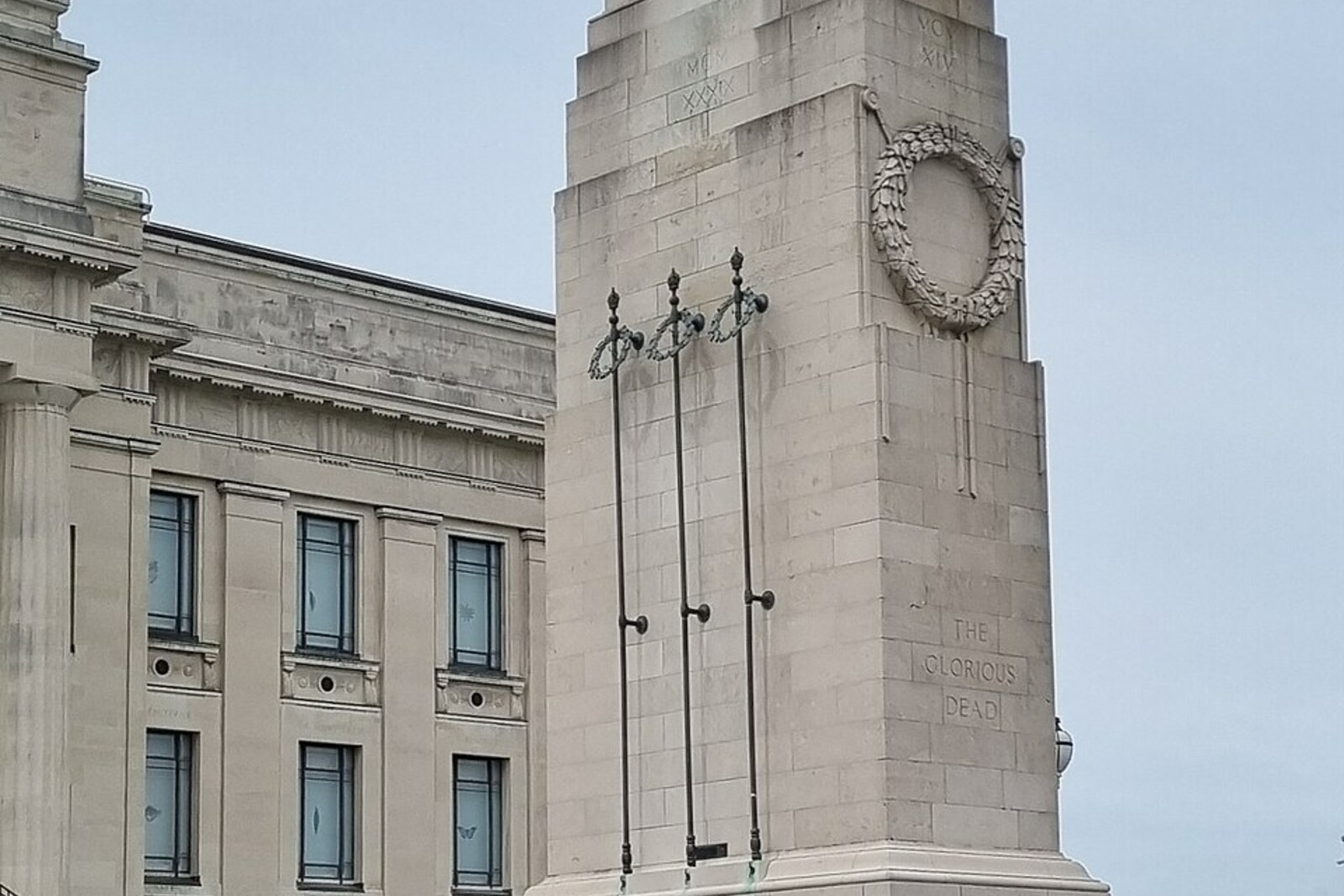
Look around first
What to notice
- Stone pylon
- Bronze wreaths
- Symbolic sarcophagus
- The broad space of the Court of Honour
The story of the place
Auckland's first Auckland Cenotaph was dismantled after every ANZAC Day and carried down to the basement of Auckland Town Hall. In nineteen twenty-two, it was made of wood and plaster—a smaller copy of The Cenotaph, Whitehall. The families of the dead left wreaths at its foot, then the white tomb disappeared until the following April.
Cenotaph means “empty tomb”: there are no remains inside. Most New Zealanders who died in the First World War were buried overseas, so such a monument gave their loved ones a place for a public farewell. The names of Aucklanders were carved in the Hall of Memory inside the museum, while outside there needed to be space where thousands of people could gather at once.
A permanent Auckland Cenotaph was included in the design for the new museum, but the museum committee decided there was not enough money for it. Thomas Henry Dawson, an Auckland lawyer and president of the Returned Soldiers' Association, opposed the decision. He had served in the South African War, landed at Gallipoli with the Auckland Battalion, and was wounded there. Dawson accused the committee of losing sight of the war memorial itself in its enthusiasm for the museum. The Association threatened to seek the cancellation of the opening until the memory of the dead received visible expression in front of the building. Dawson had already described this place as a site for future ANZAC Day ceremonies.
After his speech, Aucklanders began a separate collection and raised nearly six thousand pounds. Builders erected a ten-meter stone Auckland Cenotaph by the museum's opening. On November twenty-eighth, nineteen twenty-nine, it was consecrated before a crowd of about ten thousand people. Māori chiefs, returned service personnel, women veterans, and relatives of those who did not return stood here. Only after the consecration was the museum opened later that day.
There is no list of names on the pylon—only bronze wreaths, a symbolic sarcophagus, and an inscription that can be translated as “To the Glorious Fallen.” The broad space around it is called the Court of Honour. On April twenty-fifth, nineteen thirty, Auckland's ANZAC Day ceremony was held here for the first time.
Nine years later, Australian veterans living in Auckland held a dawn service in this court, modeled on a military funeral: the Last Post, a minute of silence, and then Reveille. They held it for the next half-century, after which Vietnam War veterans took over its organization. On April twenty-fifth, the site still fills before dawn, and wreaths are laid at the foot of the permanent Auckland Cenotaph for which Dawson once demanded that the museum's opening be postponed.
Useful on site
Open memorial site; ceremonies and museum or park events may restrict access.
Checked: June 28, 2026. Check the official source before visiting.This is an active place of remembrance: do not block the way, speak quietly, and be mindful of possible ceremonies.