 Guide On Map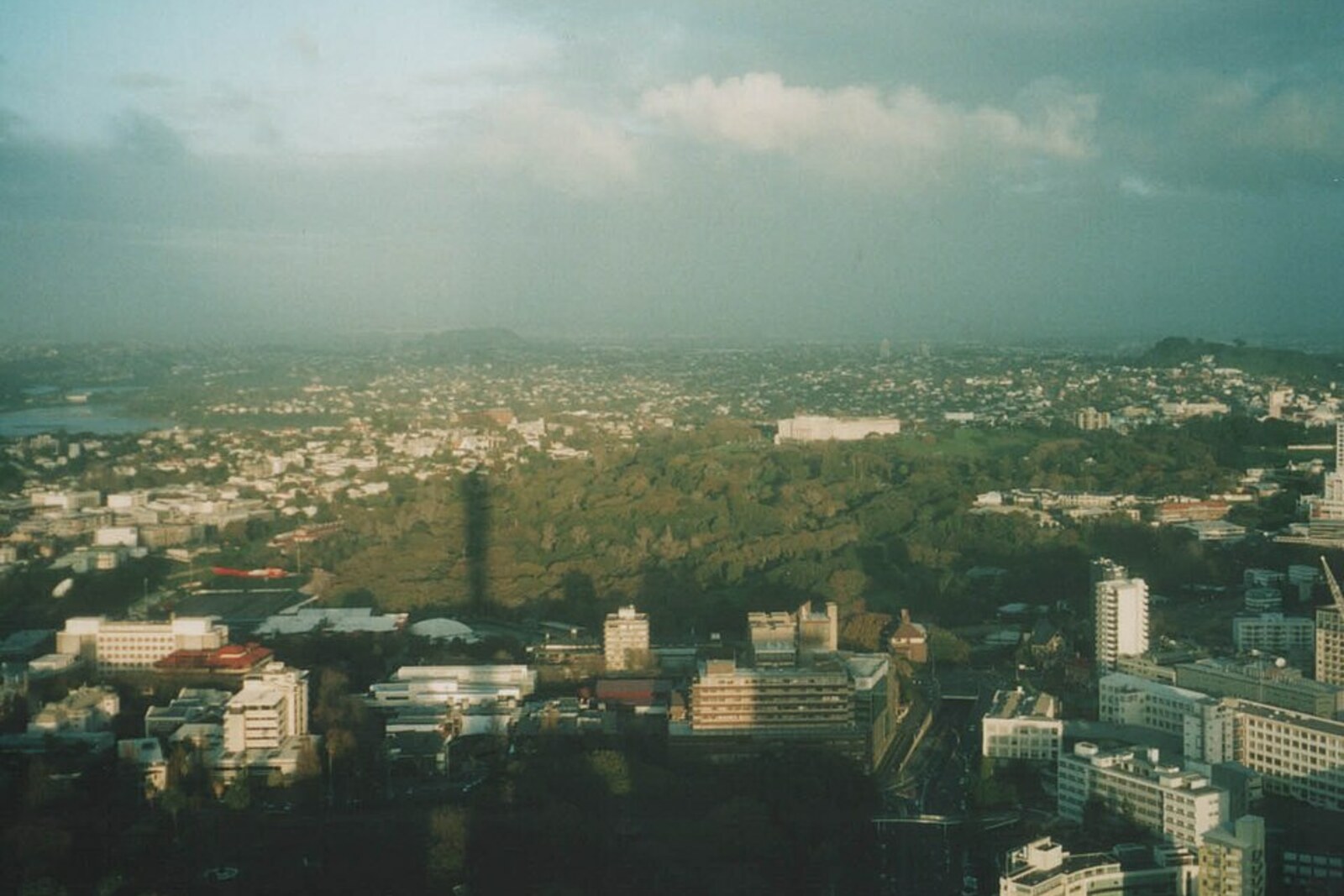
Look around first
What to notice
- Bowl-shaped crater field
- Tōtara within a carved wooden fence
- Museum façade on the ridge
The story of the place
By the museum façade, above the bowl of the field, a New Zealand tōtara grows behind a carved fence. It was planted in memory of the man for whom the wooden cottage that once stood on this slope was intended. In the cottage, chiefs from different lands were received, and the colonial authorities discussed how the Treaty of Waitangi changed the rules of land ownership. The cottage has vanished, and old maps now disagree with a fireplace found on the slope about exactly where it stood. In local tradition, the name Pukekawa also became a memorial to those killed in intertribal wars.
The broad sports fields of Auckland Domain lie in the bowl of an ancient volcanic crater. In the early eighteen forties, the colonial government set aside part of these seventy-five hectares as a public reserve. This is how Auckland's oldest park came into being. Its slopes then held pasture, a government garden, and a wooden house of which no reliably established trace now remains.
Governor Robert FitzRoy ordered the house built in eighteen forty-five. It was intended for Pōtatau Te Wherowhero, an influential Waikato chief who later became the first Māori king. War was under way in the north of the colony, and FitzRoy wanted to secure the support of a man capable of keeping Waikato from attacking the young city of Auckland. A year earlier, Te Wherowhero had held a large gathering in neighboring Remuera; afterward, the governor acknowledged that the city's security depended on friendship with Waikato.
Te Wherowhero did not sign the Treaty of Waitangi, but he agreed to discuss its consequences and the new rules for land dealings with the governors. The house was therefore built in the government Domain, beside the garden and the site chosen for a future governor's residence. Here Te Wherowhero received chiefs from different regions and negotiated with the colonial administration.
The hill's present name is also associated with his stay. An old interpretation of the word “Pukekawa” is “sour hill”: according to a local explanation, kūmara grew poorly here. The origin of the name remains disputed; it is also derived from the kawakawa plant. According to preserved tradition, Te Wherowhero gave the old word a new meaning: “hill of bitter memories.” He himself commanded Waikato people in wars against Ngāpuhi parties armed with muskets, after which whole communities left their lands. With the name Pukekawa, he commemorated those killed in the intertribal wars of the eighteen twenties and eighteen thirties.
Te Wherowhero made the most difficult decision in this house for the sake of a former opponent. In eighteen forty-six, the new governor, George Grey, ordered the capture of Te Rauparaha, the Ngāti Toa chief. Grey suspected that Te Rauparaha was helping his nephew, who was fighting settlers near present-day Wellington, and wanted to remove him from the area of fighting. Te Rauparaha was taken to Auckland and held for ten months on the military ship HMS Calliope. He was never charged, and there was no trial.
Te Wherowhero and Tāmati Waka Nene, a Ngāpuhi chief and adviser to the governor, demanded the prisoner's release and stood surety for his conduct. For Te Wherowhero, this was a personal risk: his lineage had fought Te Rauparaha even before Ngāti Toa moved south. Grey accepted the guarantee, and in eighteen forty-seven Te Rauparaha was transferred from the ship to the house on the Domain grounds.
He had not yet gained his freedom. Te Rauparaha lived here under house arrest for about eight months, while Te Wherowhero received participants in negotiations on the Treaty of Waitangi and land rules in the same house. In eighteen forty-eight, the prisoner was allowed to return to his people in Ōtaki. Grey and Te Wherowhero accompanied him. A year later, Te Rauparaha died.
The exact location of the house is now disputed: old maps and a fireplace found on the slope point to different sites. In nineteen forty, Te Wherowhero's great-granddaughter, Te Puea Hērangi, leader of the Kīngitanga, planted a tōtara, a New Zealand conifer, on Pukekaroa hill in memory of her great-grandfather. The tree survives within a carved wooden fence near the museum. The cottage has vanished; its owner is marked by the tōtara, and those he commemorated are marked by the name Pukekawa.
Useful on site
The park is open around the clock; the hours of individual sites within it vary.
Checked: June 28, 2026. Check the official source before visiting.The stop takes place outdoors; watch your footing on the slopes and stay on permitted paths.