 Guide On Map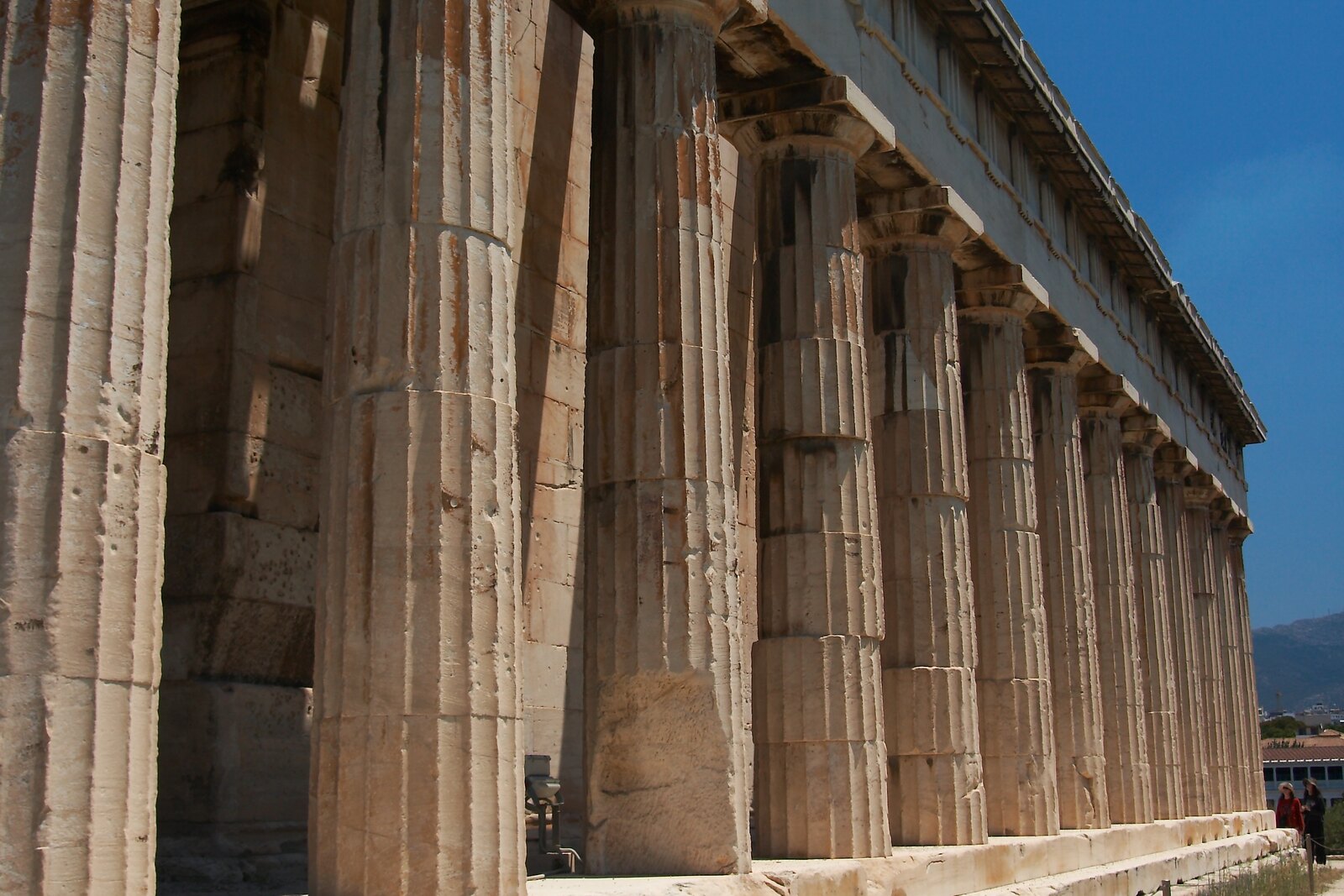
Look around first
What to notice
- Doric colonnade
- Relief slabs beneath the cornice
- Stone vault of the interior hall
The story of the place
Rows of Doric columns surround the Temple of Hephaestus by the Ancient Agora. It was built beside a workshop district: smiths worked to the north, bronze was cast on the slopes, and pottery was made nearby. Inside stood bronze images of Hephaestus, the god of smithing fire, and Athena Ergane, the patroness of craftsmanship; the statues themselves have disappeared. The remains of furnaces, casting pits, and slag around the building confirm the temple’s connection with the work of the local craftsmen.
In December eighteen thirty-four, a royal procession climbed to this building. Nineteen-year-old Otto of Greece, the first king of the new Kingdom of Greece, was moving the court and ministries from Nafplio to Athens. The city then had around twelve thousand inhabitants. There were almost no suitable buildings for government institutions, and the best residence they could find for the king had seven or eight rooms. Athens was chosen as the capital for its name and ancient monuments.
At that time, this temple served as the Church of St. George. The Christian community had made it into a church inside the ancient building as early as the Middle Ages: it moved the entrance, built an altar section, and vaulted the interior hall. Continuous use protected the walls and colonnade from being dismantled for stone.
The church was chosen for Otto of Greece’s reception because of an error. The building was thought to be the Theseion—the sanctuary of Theseus, the mythical king and founder of Athens. The relief slabs beneath the cornice do indeed depict his labors. Travelers decided that the hero’s grave and bones brought from the island of Skyros had once been inside. So the new king’s procession ended at the supposed monument to the first Athenian king.
A thanksgiving service was held here, the city elders greeted Otto of Greece, and then the king set out for the house prepared for him. The court and ministries moved to Athens; the city became the permanent capital. That same year, Otto of Greece’s government designated the former church as the Central Museum of Antiquities. Services ceased, and the space filled with statues, inscriptions, and other finds.
The name “Theseion” proved wrong. The ancient traveler Pausanias wrote that above the Ancient Agora stood a temple with bronze statues of Hephaestus and Athena. Excavations around the building revealed what cannot be learned from its marble colonnade: remains of smelting furnaces, pits for casting bronze, slag, and traces of workshops. One casting pit west of the temple is associated with the making of the cult statues themselves.
Hephaestus was the god of smithing fire and metalworking. Athena Ergane, the patroness of craftsmanship, was worshipped here with him. The place was chosen beside people who lived by the work of their hands: smiths worked to the north, bronze was cast on the slopes, and pottery was made nearby. The bronze images of both gods disappeared, but the workshop district made it possible to restore the temple’s ancient name.
The plaques now read “Temple of Hephaestus.” The neighboring district and metro station are still called Thissio—from the former Theseion, to which the first king of the new capital was led in December eighteen thirty-four.
Useful on site
Follows the seasonal schedule of the Ancient Agora; check hours and last entry on hhticket/ODAP.
Checked: June 28, 2026. Check the official source before visiting.View the temple from the paths: the interior and immediate area may be inaccessible, but the entire exterior can be seen clearly.