 Guide On Map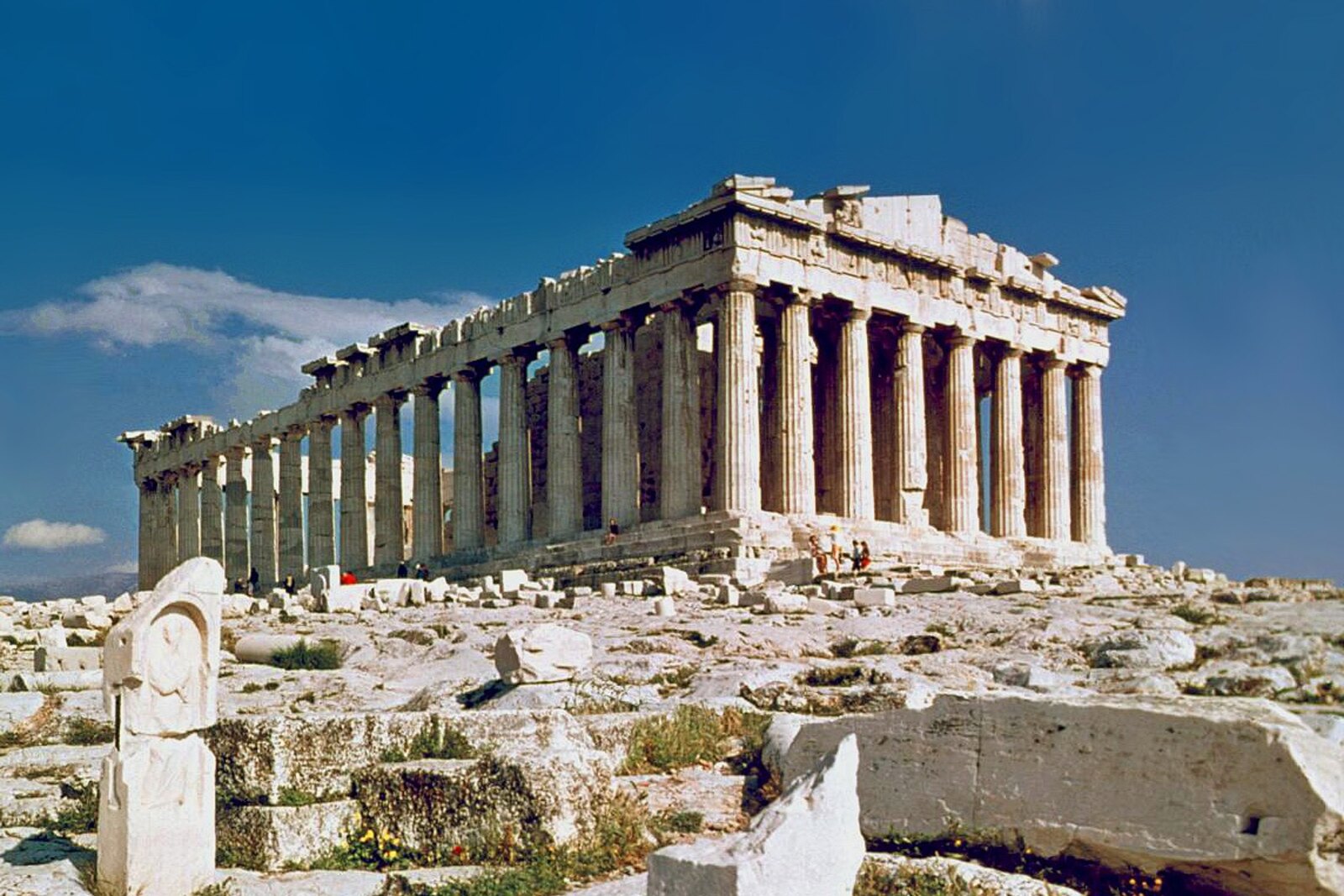
Look around first
What to notice
- Outer colonnade
- Central breach
- Western pediment
- Stone blocks of the cella
The story of the place
On the evening of September twenty-sixth, sixteen eighty-seven, the Parthenon still had a roof. Over two thousand years, the building had first been turned into a church and then into a mosque, but its main hall remained an enclosed space with marble walls.
The Athenians built it in the fifth century BCE for Athena Parthenos—Athena the Virgin, protector of the city. Her enormous statue stood in the main hall; the name Parthenon came from her name. By the seventeenth century, the statue had long since disappeared, and the Acropolis once again served as a fortress.
Francesco Morosini, commander of the Venetian fleet, came to Athens to fight the Ottoman Empire. For his earlier conquests in Morea—as the Peloponnese was called then—the Venetian Senate had already erected a bronze bust of him during his lifetime. Taking the Acropolis was meant to continue his victories.
The Ottoman garrison, which was to hold the fortress, withdrew to the summit together with its families and possessions. Valuables and gunpowder were carried into the Parthenon. The hall of the former mosque became an ammunition store and a shelter for people.
Venetian mortars fired at the fortifications for several days. Their shells sometimes fell short and sometimes flew over the rock. On the evening of September twenty-sixth, one bomb pierced the roof of the Parthenon and struck the gunpowder store.
The explosion toppled three of the four walls of the main hall. Six columns on the south side collapsed, along with eight on the north, almost the entire eastern portico, and about three fifths of the marble frieze. More than three hundred people died, including those sheltering inside. The fire continued throughout the night and the following day.
Morosini reported the successful hit to Venice. It did indeed bring the outcome he wanted closer: a few days later, the defenders surrendered the Acropolis. But the Venetians could not hold Athens. In the spring of the following year, Morosini withdrew the troops, and the Ottoman garrison returned.
Before retreating, the commander wanted to take away a trophy. On the western pediment, Athena's chariot with its marble horses still remained—a part of the scene of her contest with Poseidon for patronage over Athens. Morosini's workers secured the sculptures with ropes and began lowering them. The rigging broke, and the figures fell onto the rock and shattered. A female head, probably belonging to this group, was taken away by the commander's secretary; it was later found in Venice and is now in the Louvre.
The open gap in the middle of the Parthenon remained after the gunpowder explosion. The emptiness of the western pediment preserves the trace of Morosini's second attempt: first he breached the building with a shell, then he dropped Athena's chariot from it.
Useful on site
Follows the seasonal schedule of Acropolis and Slopes; check the time slot and last entry on hhticket/ODAP.
Checked: June 28, 2026. Check the official source before visiting.View it from the permitted perimeter: the scaffolding and barriers here are part of the ongoing restoration.