 Guide On Map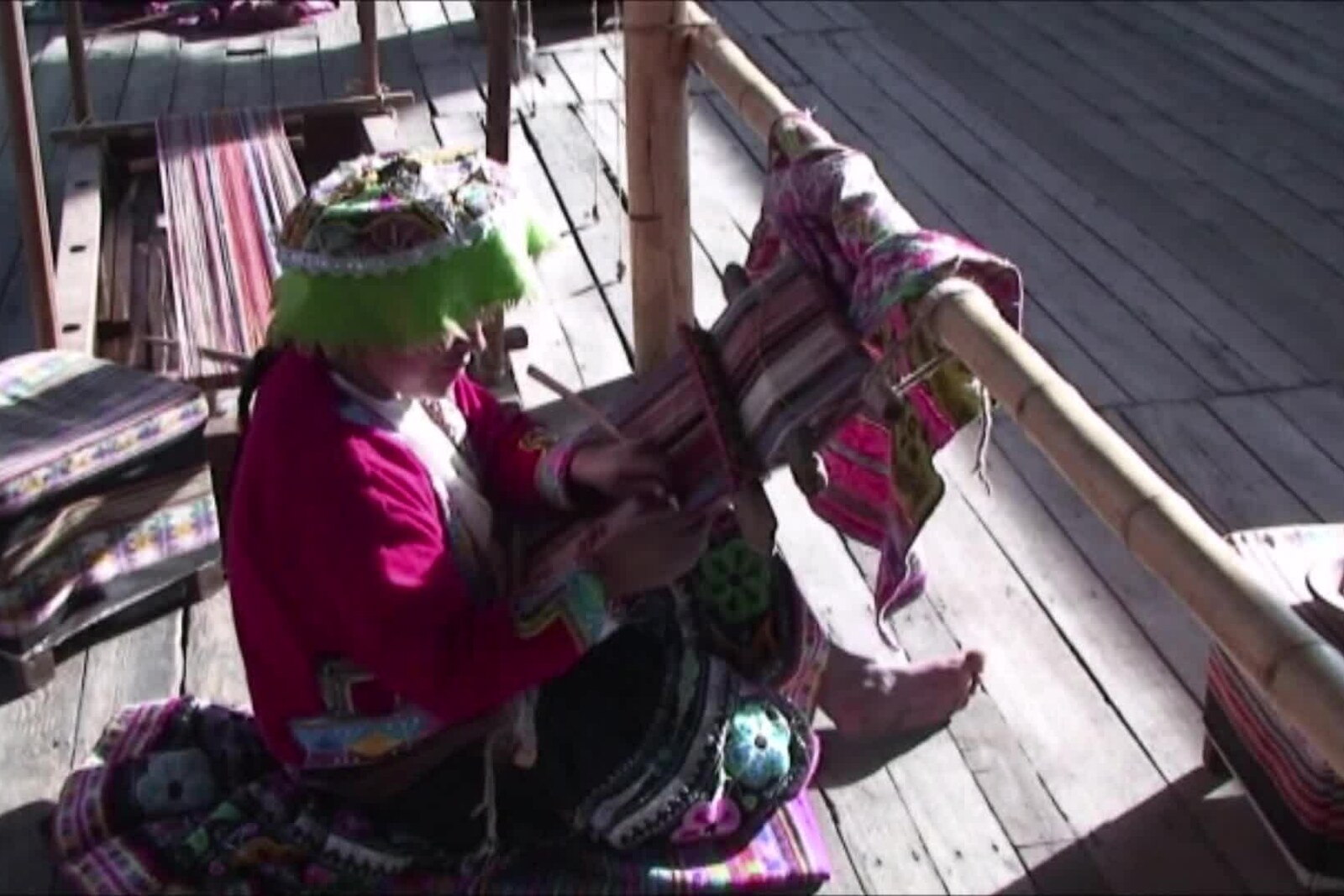
Look around first
What to notice
- Alpacas and llamas
- Hand-sorting tables
- Backstrap loom
- Old textile machines
The story of the place
In the courtyard, among live alpacas and llamas, stand tables for hand sorting, a backstrap loom, and heavy textile machines from the early twentieth century. The place grew out of the city’s trade in highland fiber: fleece was brought to Arequipa from the southern mountains, assessed, and prepared for shipment through the port of Mollendo. Weavers from Andean communities still work here, although the old machines remain as evidence of earlier technology and the operating factory lines are elsewhere. Ancient textiles from local pre-Hispanic cultures are also gathered inside.
Animals, hand sorting of fibers, a loom, old machines, and a branded store are arranged here in the order of the production chain. The owners of Michell & Company created this sequence. Mundo Alpaca belongs to a private textile company, and the free exhibition ends where its products can be bought.
This chain began with a sack of unwashed fleece. In nineteen thirty-one, the Englishman Frank Michell founded a business in Arequipa to buy, sort, and export fiber. He made money through his ability to distinguish fibers of different fineness, length, and color within one fleece. A sorter’s mistake lowered the price of the whole batch, while correct separation turned outwardly identical clumps into several grades of raw material.
Arequipa suited this trade because of its connection to both ends of the route. Fleece was brought here from the southern highlands, women sorted it by hand, and then bales were sent by train to the port of Mollendo. From there, the fiber went to factories in British Bradford and American Boston. Fewer alpacas were raised in the city than in the mountains, but it was here that the raw material was assessed and prepared for its onward journey.
The first years were difficult: foreign manufacturers were being offered a material that still had to be learned how to process on an industrial scale. Michell decided to no longer limit himself to selling unprocessed fleece. In nineteen forty-seven, his company opened Peru’s first factory where alpaca fiber was combed and spun. Customers began receiving prepared fiber and yarn, and the founder’s children and grandchildren inherited a major textile enterprise.
For its seventy-fifth anniversary, in two thousand six, the family’s third generation opened Mundo Alpaca here. The founder’s grandson, Derek Michell, saw an unresolved problem: everyone in Peru knew alpaca fiber, but abroad the name itself still had to be explained. So visitors were shown the entire journey of a product that is usually hidden between a mountain pasture and a clothing store.
The alpacas and llamas in the courtyard mark the beginning of the journey, though shearing here is replaced by photographs. Sorting, however, takes place for real. Women separate fiber by shade and quality; coarse hairs are removed by hand from vicuña wool, leaving the especially fine undercoat. Weavers from Andean communities work on a backstrap loom: one end of the warp is secured in front of them, while a strap around the body holds the other. Nearby stand machines from the early twentieth century, on which hand-prepared raw material was turned into uniform industrial yarn. They no longer take part in production—the real factory lines are elsewhere.
Another name appeared here in two thousand nineteen. Mario Amano, head of the museum of pre-Columbian textiles created by his family, wanted to show in Arequipa part of the collection assembled by his father, the Japanese collector Yoshitaro Amano. Derek Michell wanted to connect today’s alpaca industry with textiles made before it had factories and export contracts. After four years of preparation, descendants of the two families opened the Amano–Michell Museum within the complex.
The double surname on its sign does not belong to two founders of a single company. The Amanos collected and preserved ancient textiles from Paracas, Nazca, Wari, Chancay, and the local Siguas culture; the Michells provided them with a place within their production history. Behind the museum display cases lie textiles up to two and a half thousand years old, weavers continue to use the backstrap loom in the neighboring room, and the final part of the same chain is displayed on the racks of the branded store.
Useful on site
Daily 09:00–17:30; free entry. Individual live demonstrations depend on the presence of the craftswomen.
Checked: date not specified. Check the official source before visiting.The availability of working demonstrations may change, so do not count on a demonstration as a guaranteed part of the visit. The store is only the end of the production chain, not the entire stop.