 Guide On Map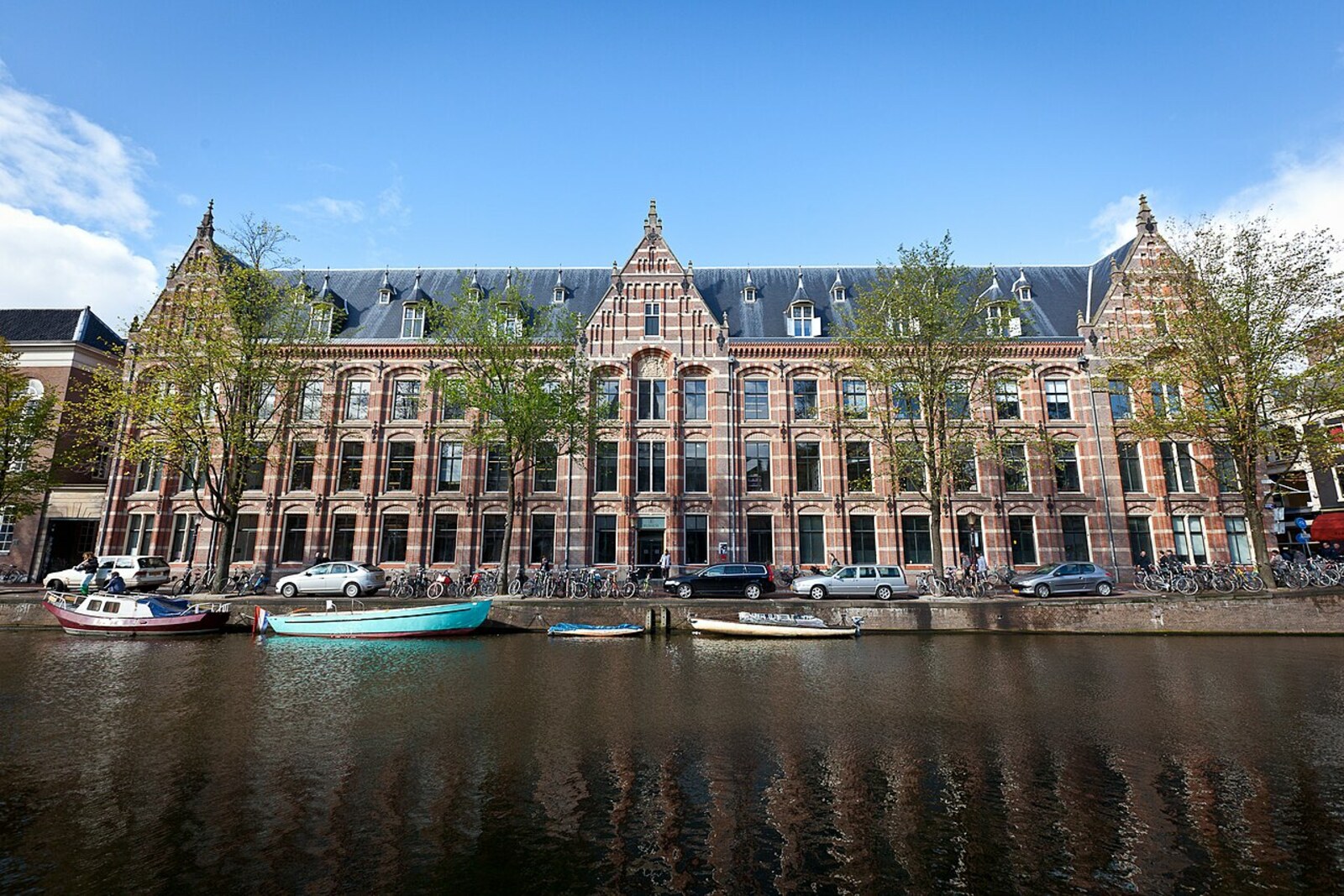
Look around first
What to notice
- Southern wing
- Courtyard
- Former company offices
The story of the place
The southern wing, embracing the courtyard, survives from the house built for the Amsterdam branch of the Dutch East India Company. Its directors and the central board with representatives from six cities met here; the offices held navigational maps and logs, managed accounts, hired crews, and assigned ships to voyages to Asia. The city courtyard served as the heart of the office that managed trade from India to the islands of Southeast Asia. Today, employees and students of the University of Amsterdam study within these walls.
On January eighth, sixteen oh nine, the English navigator Henry Hudson signed a contract in this house with the Amsterdam directors of the Dutch East India Company. Hudson was looking for an employer for a new expedition, and the merchants were eager to secure an experienced polar navigator before their French rivals did. Twice already, he had tried to reach Asia through the Arctic seas, and twice he had returned because of the ice.
The company traded in lands that Europeans grouped together under the name East Indies: from India to the islands of Southeast Asia. That is where the name "Oost-Indisch Huis" comes from—the house of the East Indies. The directors of the Amsterdam branch and the central board, made up of representatives from six cities, met inside. Here they kept maps and ships' logs, managed accounts, hired sailors, and decided which ships to send to Asia. The building was erected for this purpose in sixteen oh six.
Under the contract, Hudson was to sail north around Novaya Zemlya and find a route to China. The directors provided him with the small three-masted yacht Half Moon and promised eight hundred guilders for the expedition. They also turned the risk to his family into a contractual provision: if the captain did not return within a year, his wife would receive two hundred guilders, after which the company's obligations to her would end. Hudson, for his part, was required to hand over all logs, maps, and information to his employers, concealing nothing.
In April, Half Moon left Amsterdam. In the north, Hudson encountered ice and resistance from the crew, but he did not turn back home. He led the ship across the Atlantic Ocean and sailed up a large North American river, until fresh water and the shallowing channel showed that there was no passage to Asia here.
The return voyage ended in the English town of Dartmouth. Officials detained Hudson and forbade him to serve foreign employers again; he never returned to Amsterdam. Yet information about the river reached Dutch merchants. Trading expeditions followed Hudson, and then the colony of New Netherland and New Amsterdam appeared—a settlement in the south of present-day Manhattan.
The southern wing around the courtyard was already standing when Hudson came to the directors, and it has survived to this day. Now employees and students of the University of Amsterdam work and study in the company's former offices. The river explored under the contract concluded here still bears Hudson's name.
Useful on site
The building belongs to the University of Amsterdam. The courtyard is open Mon–Thu 08:00–20:00, Fri 08:00–19:30; closed on weekends. Access to the historic rooms is limited.
Checked: June 28, 2026. Check the official source before visiting.This is a university building, not an ordinary museum. Visit the courtyard only when access is open, do not enter staff-only rooms, and do not expect access without checking in advance.