 Guide On Map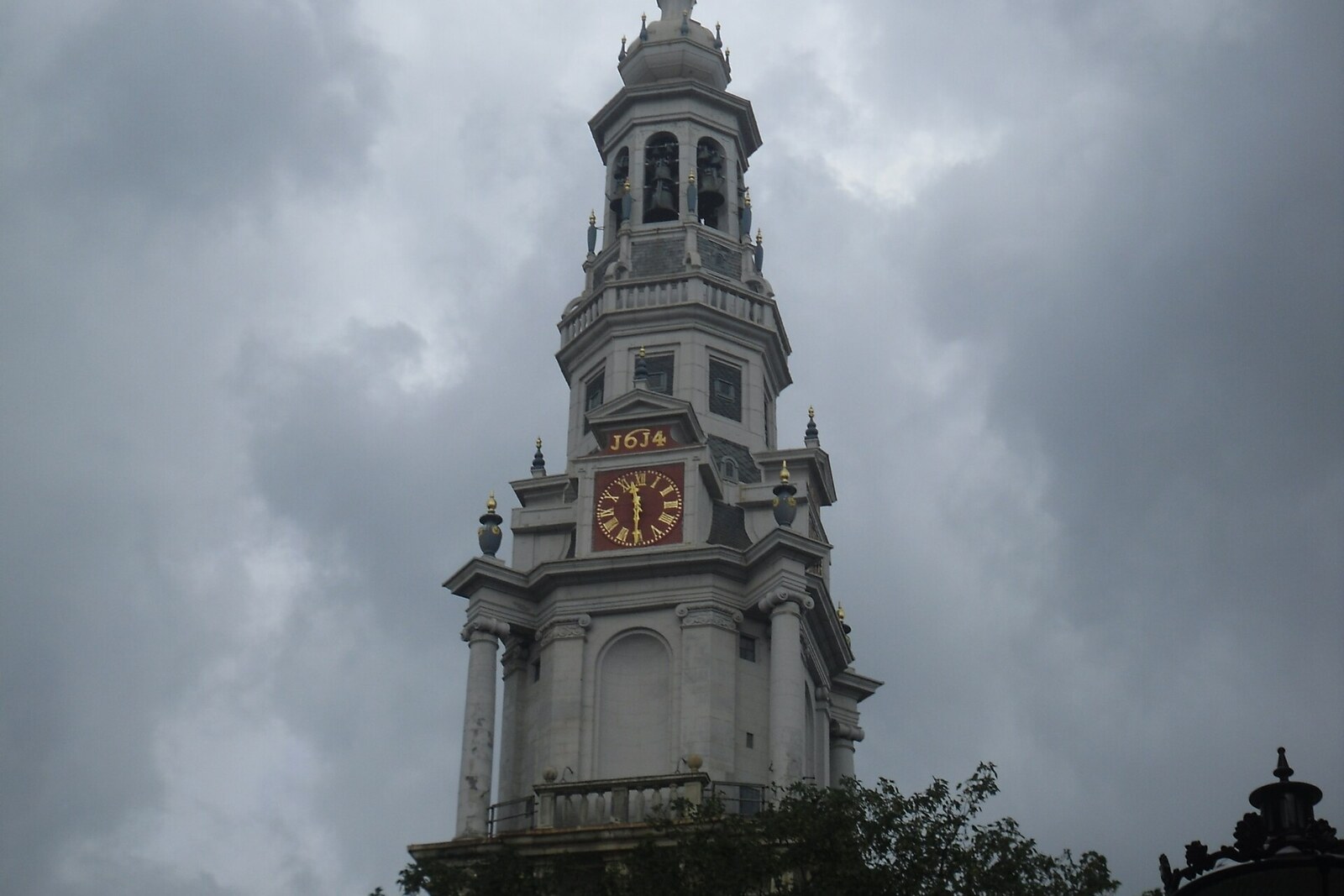
Look around first
What to notice
- The nave
- Hendrick de Keyser's grave
- The plaque on the outer wall
The story of the place
Zuiderkerk means “South Church.” In the early seventeenth century, Amsterdam's magistrates were building Reformed churches for the rapidly growing city and giving them names based on the compass points. The city architect Hendrick de Keyser designed this church as the first in Amsterdam specifically for Protestant worship. Parishioners entered it in sixteen eleven. De Keyser himself was later buried inside.
By the twentieth century, there were fewer parishioners in the old center. On September twelfth, nineteen twenty-nine, the Reformed congregation held its last rite here—a wedding. The Netherlands Bible Society then stored paper for printing Bibles in the empty hall.
In the winter of nineteen forty-four to nineteen forty-five, the cold building was needed for something else. In occupied Amsterdam, food, fuel, and medicine were scarce. The occupiers requisitioned cars and horses, gravediggers were exhausted or taken away during raids, and almost no wood remained for coffins. The legally prescribed five-day burial deadline was not being met; some families kept the dead at home for three weeks.
On January thirtieth, nineteen forty-five, the municipality established the Municipal Burial Office. It was headed by the architect Constant Feltkamp, who had to clear the backlog of bodies with transport barely operating. He chose Zuiderkerk as a central morgue: the large unheated hall remained cold, and the ventilation, as long as electricity was supplied, refreshed the air three times an hour.
Feltkamp's staff divided the nave into compartments made of wooden slats and hard fiberboard panels. Each held from ten to twenty dead people, and identification tags were attached to the bodies. Twenty officials kept records, while five messengers carried messages around the city because the telephones were not working. Trucks left the church on schedule for seven cemeteries.
The Office ordered one hundred reusable coffins with opening bottoms. Over a grave, the two panels were opened apart, the body was lowered down, and the coffin was taken for the next dead person. To keep relatives from seeing this, the cemeteries were closed during such burials. Farewells were to take place at home, after which staff collected the body wrapped in a sheet.
Private funeral directors resisted Feltkamp's orders. They lived on burial fees and feared that the municipal office would take their customers even after the war. Some secretly ordered prohibited solid coffins and transported the dead in handcarts or on bicycles. The Office nevertheless organized about two thousand eight hundred burials; up to one hundred thirty-five bodies were in Zuiderkerk at the same time.
On August twenty-seventh, nineteen forty-five, the morgue was closed. The partitions and burial equipment are no longer inside: concerts, lectures, weddings, and business meetings are held here now. A plaque remains on the outer wall with the exact months—from February to August nineteen forty-five, this was the city's mortuary.
Useful on site
Zuiderkerk now operates as an event venue and rental space; regular free admission or access to climb the tower is not confirmed by the official I amsterdam page. Check current events and individual tours before visiting.
Checked: June 28, 2026. Check the official source before visiting.The church is used for events, so admission and access to climb the tower are not guaranteed. Do not wait for the doors to open: viewing it from outside fully completes the account.