 Guide On Map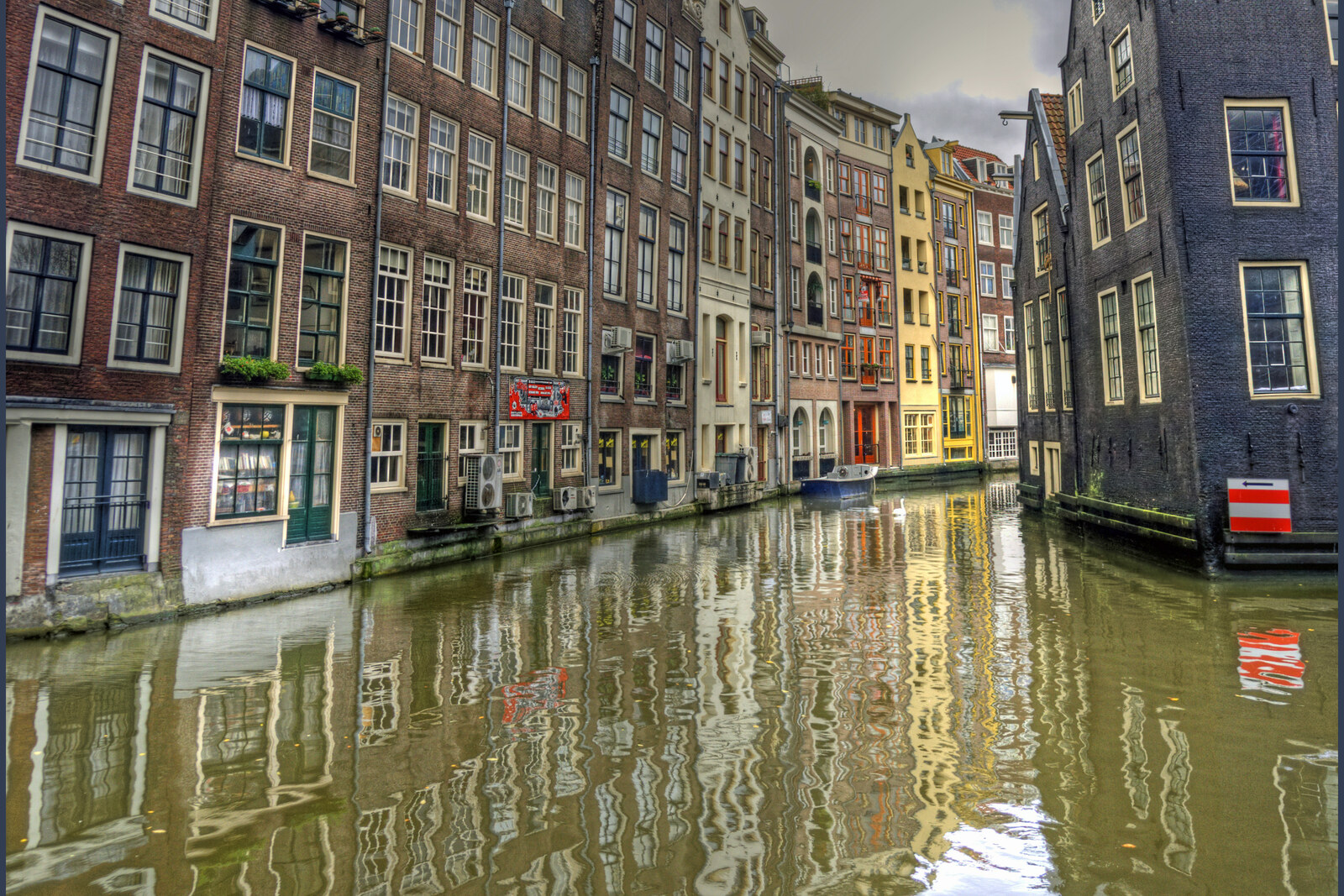
Look around first
What to notice
- Facade of house number 40
- Altar of the attic church
- Galleries of the church hall
- Folding pulpit
The story of the place
On the canal by the old harbor, sailors’ lodging, drinking establishments, cheap rooms, and brothels stood side by side for a long time. In the seventeenth century, however, wealthy, often Catholic merchants settled here; because of their expensive clothing, the bank was nicknamed Fluwelen Burgwal. From the street, house number forty looks residential, although above it the three attics form a church hall for one hundred fifty people. Stairs from a cramped alley led to the altar, and the galleries and folding pulpit have survived upstairs.
Oudezijds Voorburgwal means “the front defensive embankment of the old side.” The old side was the half of medieval Amsterdam around the Old Church. In thirteen eighty-five, the townspeople dug another defensive canal farther east and raised a new embankment. The former line became the front one—Voorburgwal—while the new one was named Oudezijds Achterburgwal, the rear embankment. The De Wallen district, “the embankments,” still bears the name of these fortifications.
The northern part of the canal lay near the old harbor. Sailors needed inns and taverns; women selling sexual services settled near them. When wealthy families began moving to the new canal belt from sixteen thirteen onward, this area acquired more cheap rooms, drinking establishments, and brothels. After World War Two, city officials effectively concentrated prostitution in this quarter. That is how the old port way of life became established precisely by the former embankments.
But in the seventeenth century, this bank looked different. Wealthy, often Catholic merchants lived here, and the canal was nicknamed Fluwelen Burgwal: velvet clothing was a conspicuous sign of prosperity. On May tenth, sixteen sixty-one, Jan Hartman bought a house by the canal and two buildings in the alley behind it. He began as a baker’s apprentice, then traded in stockings and linen, and became a wine-excise tax farmer—he took on tax collection and was liable with his own property for the sum promised to the city. The three houses cost him sixteen thousand guilders. Hartman wanted to show what he had achieved: he decorated the reception room with marble and placed the family coat of arms above the fireplace.
At the same time, Hartman, a Catholic, needed a place for Mass. From fifteen seventy-eight onward, Catholic services could not be held publicly in Amsterdam. City officials knew about house churches and tolerated them as long as nothing visible from the street revealed a church.
Hartman joined the upper floors of the three houses he had bought and had the floors between the attics removed. The result was a church hall for one hundred fifty people. Parishioners entered not from the embankment, but through a door in the narrow Heintje Hoekssteeg alley and climbed the stairs. Petrus Parmentier, an Augustinian priest gathering a Catholic community in the Protestant city, moved into one of the rear houses and began conducting services here. In sixteen sixty-seven alone, seventy children were baptized and fourteen couples were married in the attic church.
Hartman paid for this church with almost everything he had managed to earn. In April sixteen sixty-eight, he died, leaving his family heavily in debt. Two years later, Parmentier had to leave for another house church. One more year later, Hartman’s heirs could not pay the wine-excise amount due to the treasury. The houses, which served as security for the debt, were sold at a forced auction.
The new owners preserved the church hall, and services later resumed. On March thirtieth, eighteen eighty-seven, the parish priest moved the Blessed Sacrament from here to a newly opened church in an uncovered carriage. A year later, the Catholic Historical Society bought back the houses, saved the church from demolition, and opened a museum.
Behind the facade of house number forty, the attics of three buildings are still joined together, and the altar, galleries, and folding pulpit have survived. The sign “Our Lord in the Attic” literally says what is upstairs.
Useful on site
The canal is open around the clock, with free access along the embankment.
Checked: June 28, 2026. Check the official source before visiting.This is a residential and busy district: do not look into windows or photograph people without their consent. The house church can be seen only by visiting the museum separately.