 Guide On Map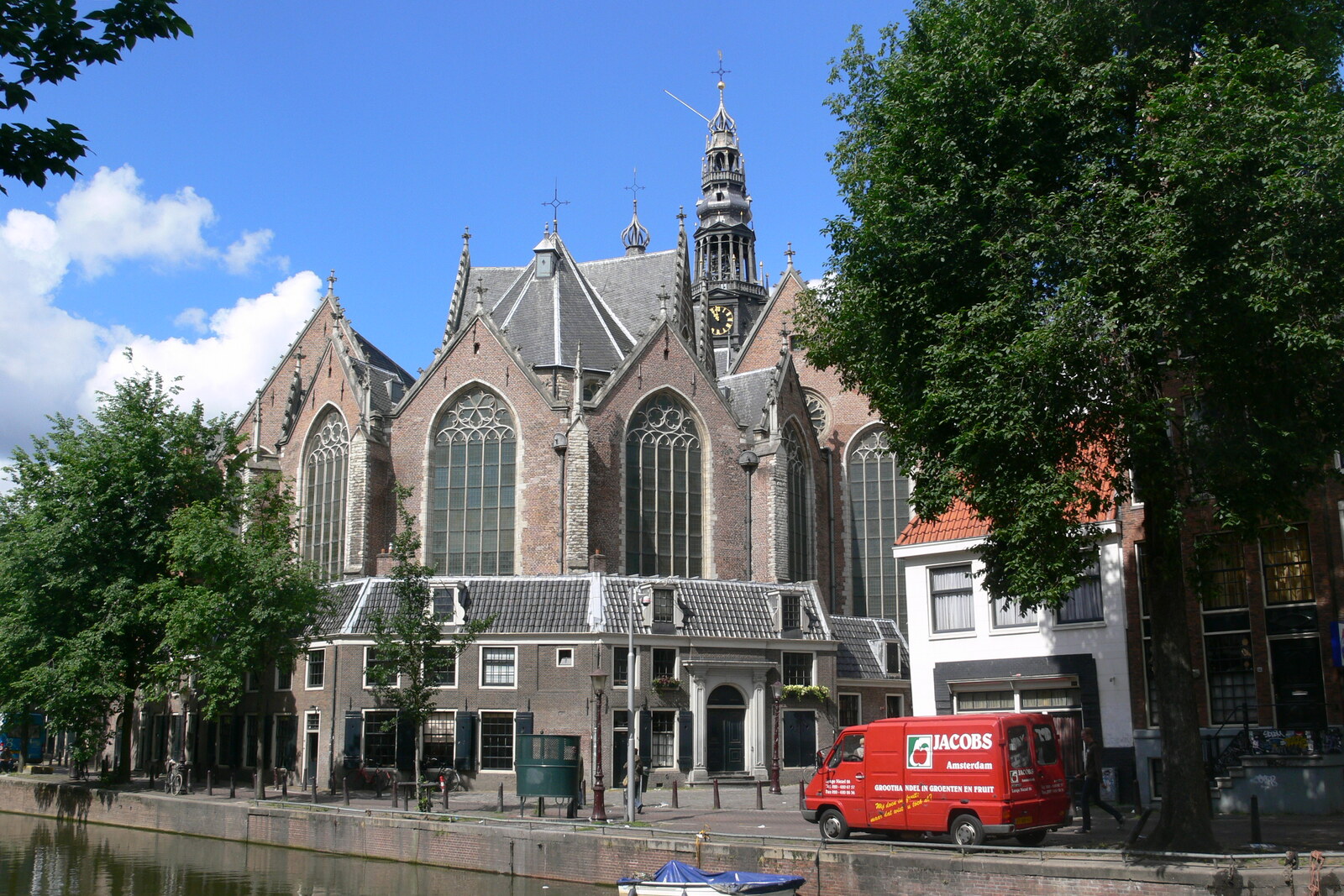
Look around first
What to notice
- The large organ
- The eastern choir ambulatory
- Gravestone number 99
The story of the place
The present church stands where a chapel and a cemetery once stood on raised ground where the Amstel flows into the IJ. It was dedicated to Saint Nicholas, the heavenly protector of sailors, and the church became the parish church of the old city. It was called Oude Kerk only after the Nieuwe Kerk at Dam Square was consecrated. A huge organ hangs beneath the vaults, and the stone numbered ninety-nine in the passage behind the choir recalls that the church floor holds graves.
In fifteen seventy-seven, sixteen-year-old Jan Pieterszoon Sweelinck took the position here of city organist—a musician whom the municipality paid to play church instruments. His father, the previous organist, had died four years earlier and left the family in poverty. Jan continued studying in order to obtain this position and support his loved ones.
He came to the main parish church of old Amsterdam. The first townspeople erected a chapel on raised ground where the Amstel flows into the IJ; the dead were buried around it. In thirteen oh six, the bishop of Utrecht dedicated it to Saint Nicholas, the patron saint of sailors. The church was called Oude Kerk only after fourteen oh nine, when the Nieuwe Kerk was consecrated at Dam Square.
Sweelinck was preparing to accompany Catholic masses, choirs, and solemn services. But a year after his appointment, the Catholic Amsterdam City Council was removed. Amsterdam's new leaders handed the church over to the Calvinist community. The Calvinists removed the altars, smashed the statues, painted over the murals, and banned instrumental music during worship: the congregation was to sing psalms in one voice, without the organ.
For Sweelinck, the very job he had studied for disappeared. It is not even known whether he embraced the faith of the new community. Yet the organs belonged to the city, and the municipality continued paying the musician his salary. He was silent during services, but before and after them, and on weekdays, he played for the townspeople. Thus, the religious ban separated organ music from the ritual and turned it into an open public performance in the city.
Merchants, foreign guests, and students came to Oude Kerk. Sweelinck spent forty-four years in this place. After he married, his annual salary was raised to three hundred guilders, and his family was given a free three-story house nearby. Lessons brought additional income: musicians from North German cities lived with him for two or three years, copied his works, and took them home. A considerable part of Sweelinck's keyboard music survived precisely in these students' copies; in the Netherlands themselves, almost none of his manuscripts remain.
In sixteen twenty-one, Sweelinck was buried where his entire career had taken place. His gravestone, number ninety-nine, lies in the eastern choir ambulatory. The large organ now in the church was built more than a century after his death. On Sundays, a Protestant congregation still holds services here; on other days, exhibitions and concerts take place. Sweelinck's instrument disappeared, but the musician who was once removed from worship and left to play for the city remains beneath the floor of this concert hall.
Useful on site
Oude Kerk is open Mon–Sat 10:00–18:00, Sun 13:00–17:30; closures for exhibition installation are possible. In 2026, Oudekerkstoren tours run 25 April–31 October, Wed–Sun, on schedule; tickets are available only together with church admission, and payment is cashless.
Checked: June 28, 2026. Check the official source before visiting.An admission ticket is required for the graves, interior, and memorials. Visits to the tower are organized separately and are not always available; check the conditions in advance.