 Guide On Map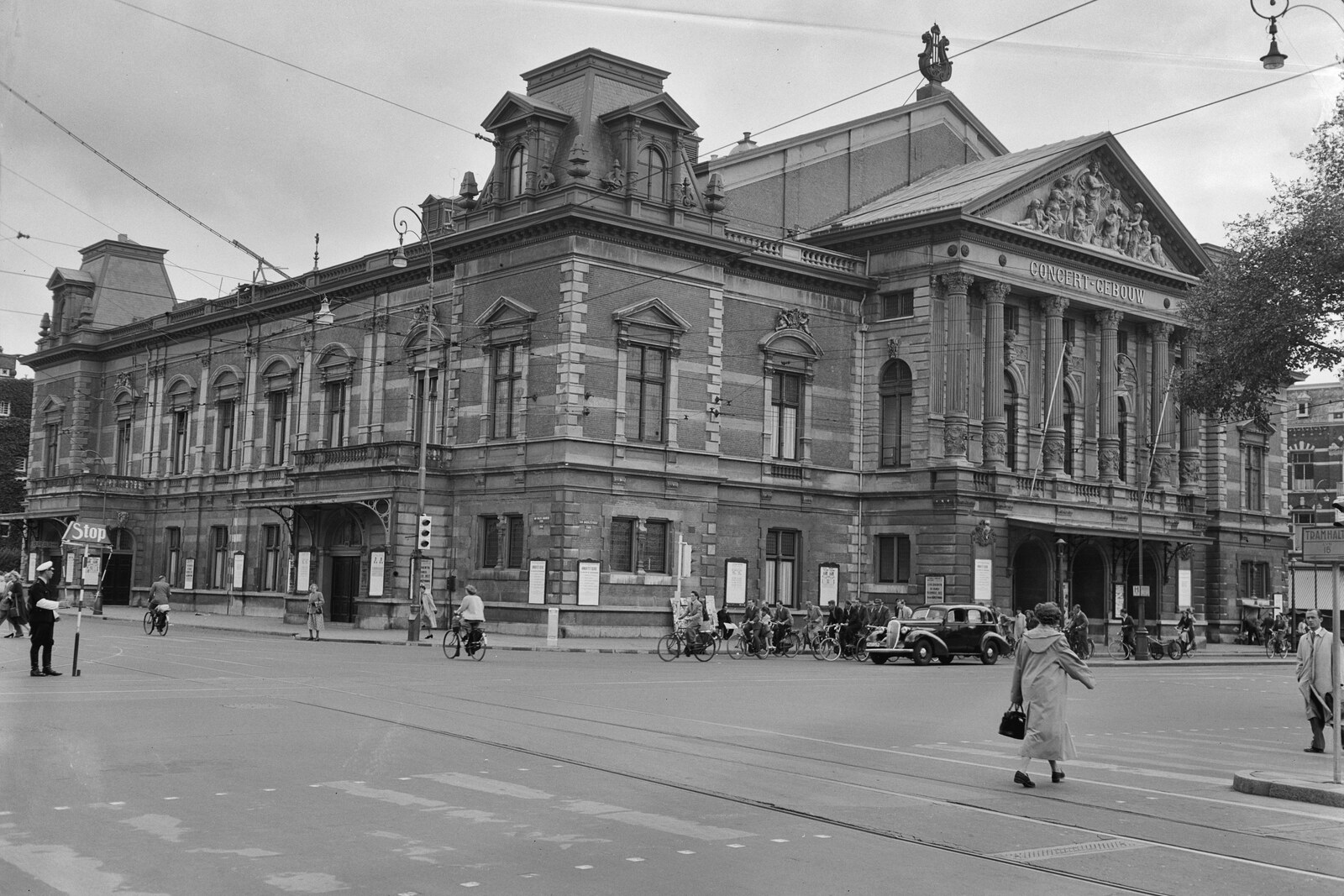
Look around first
What to notice
- The inscription on the façade
- The doors of the Main Hall
- Rows of seats
- The foyer
The story of the place
The Concertgebouw’s Main Hall operates under a clear division: music remains behind closed doors, while coffee and drinks are served in the foyer and the Mirror Hall, the former coffee room. Inside, the seats stand in even rows; latecomers wait for an appropriate pause in the program. The Royal Concertgebouw Orchestra still plays here, alongside visiting orchestras and soloists.
The inscription on the façade translates literally from Dutch as “concert building.” At first, this was the name of the hall; the permanent orchestra created here later was named after its workplace.
When the Concertgebouw opened on April eleventh, eighteen eighty-eight, the Main Hall looked different. Tables stood among freely arranged chairs. The audience talked, ordered food and drinks, and smoked. Music accompanied a social evening, and the building itself included an apartment for the buffet operator.
A few months later, the hall’s owners decided to assemble their own permanent orchestra. They hired Willem Kes, a violinist and conductor who was to turn musicians from different ensembles into a well-rehearsed group. Kes demanded total commitment: he fined those late to rehearsal and kept poorly prepared musicians behind to work through their parts after everyone else.
He imposed the same rules on the audience. Kes would not raise his baton until the hall fell silent. Before the music began, he would turn toward the tables and wait; with a single look, he would send away buffet staff who had lingered among the listeners.
Visitors resisted. The Concertgebouw was built with shareholders’ money, and one share cost one thousand guilders. An anonymous shareholder wrote to a city newspaper demanding the return of the old ways: lift the smoking ban, allow talking and walking around the hall, and give the waiters noiseless shoes so they could take orders during performances. The writer asked the conductor at least to stop glaring angrily at people who had come to socialize.
The board kept the ban. From eighteen ninety onward, the doors of the Main Hall began to be closed for the duration of concerts. Within a few years, the tables and waiters disappeared, and the seats were arranged in rows. Kes worked here for seven years, received an invitation to lead an orchestra in Glasgow, and left. His successor, Willem Mengelberg, inherited an already disciplined ensemble, ready for international tours.
That ensemble is now called the Royal Concertgebouw Orchestra. It still performs in the Main Hall, where visiting orchestras and soloists also play. Coffee and other drinks are kept for the foyer and the Mirror Hall, the former coffee room. Even today, latecomers are admitted only at an appropriate point in the program.
Useful on site
Entry is available through a concert, tour, or separate program; check the calendar and ticket rules on the official website.
Checked: June 28, 2026. Check the official source before visiting.For this stop, viewing from the street is enough. Plan a concert or a tour inside separately, according to the hall’s current program.