 Guide On Map
From Museumplein to De Pijp: Culture and City Life
From the museum square through the Rijksmuseum arch to the market and Sarphatipark
Guide On Map on your phone
Open the walk like a regular app
It takes about 10 seconds to install. No app store needed.
The whole path
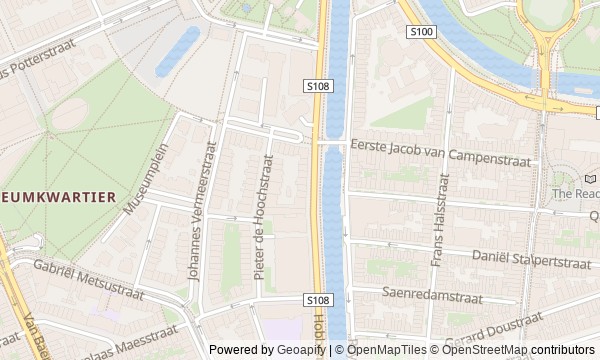
Route map
About the walk
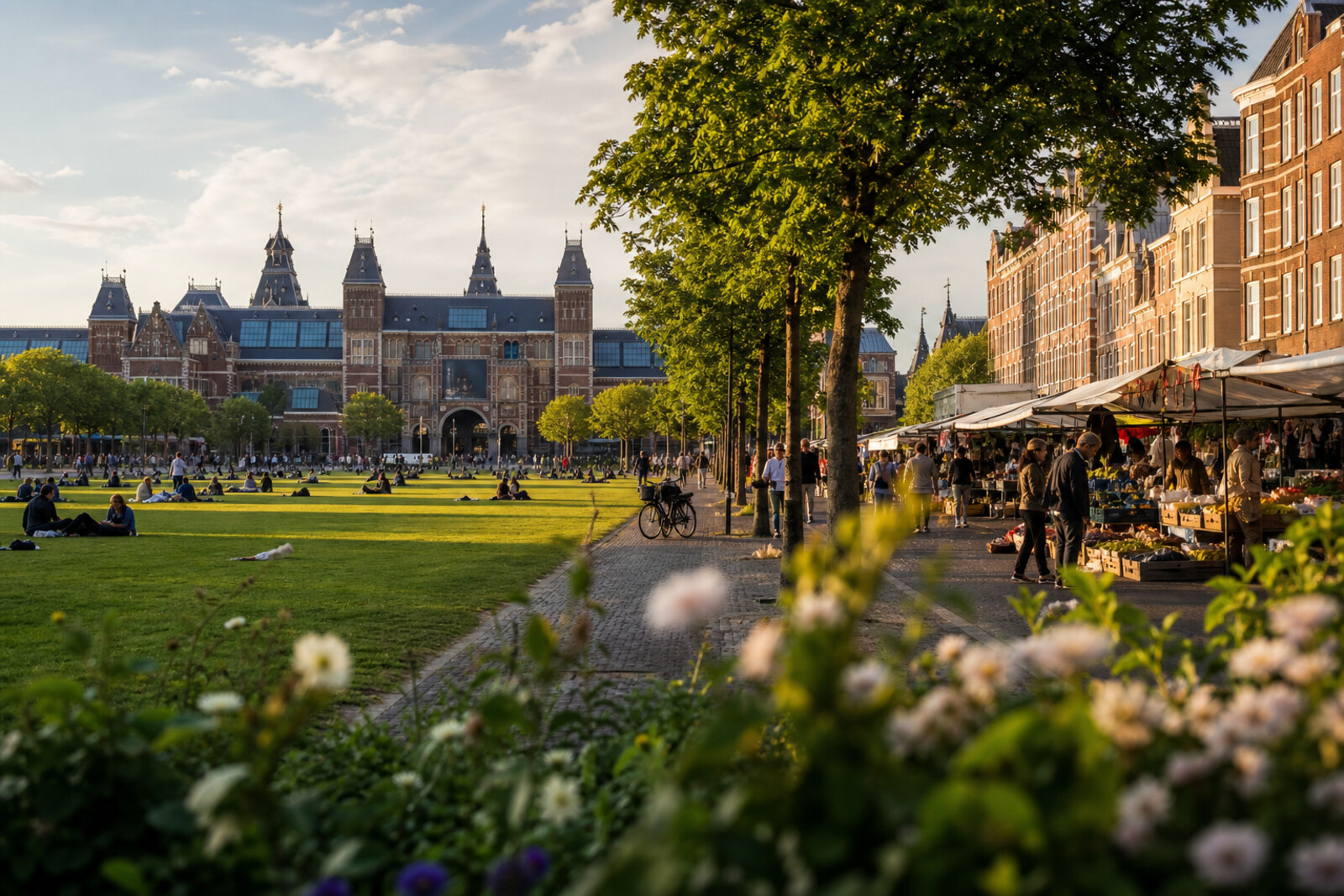
You will begin on open Museumplein, among the museums and the concert hall, and finish in De Pijp, by the market stalls and a park monument. The route first circles the square's major cultural buildings, then passes beneath the Rijksmuseum arch and trades the museum district for residential streets.
On the square, you will look for the trace of a vanished fence and find out why people agreed to be enclosed by it. At Concertgebouw, a question will arise: how did waiters and tables get in the way of the concert as we know it? Then come a canvas painted in a week, a family collection that nearly ended up in other hands, a hatch above a bicycle route, a child's performance by a market stall, and a bust given a second unveiling.
The story rests on individual decisions and the fates of objects, without museum grandeur. After the walk, Museumplein will stay with you as a place of arguments over whom to show, how to listen, and what to preserve; De Pijp as a neighborhood where the city's memory stands between commerce and park greenery.
Why this order
Museumplein sets up the theme of public display, while Concertgebouw on its southern side continues it with the story of how audiences learned to behave in a new cultural institution. From the order of the concert hall, the route returns along the square to the Stedelijk Museum, where the museum instead allowed young artists to disrupt audience expectations. The neighboring Van Gogh Museum offers another way of working with new art: not a scandalous exhibition, but the long-term preservation of a family collection. The route then crosses Museumplein to the Rijksmuseum arch and shifts the conversation from preserving a collection to physically saving a single painting. The passage itself takes you out of the museum district and onto the streets of De Pijp. Here, the market replaces the story of institutions with the story of a first chance received among shoppers. A final short walk leads from commerce to Sarphatipark, where you can see how residents invested in improving a new neighborhood and preserving the memory of its creator.
Those who want to connect the major museums with the streets of De Pijp Those interested in human decisions behind museum facades Those who enjoy stories about the fates of paintings, buildings, and monuments
Those looking for a room-by-room overview of museum collections Those wanting a walk only along the canals of the old center Those who prefer a route without difficult colonial and wartime subjects
Before you go
The main route stays outdoors, so visiting museum galleries or attending a concert is not required. If you want to enter Rijksmuseum, Van Gogh Museum, Stedelijk Museum, or Concertgebouw, check visiting conditions and book separately. There is active bicycle traffic beneath the Rijksmuseum arch: stay in the pedestrian section and do not stop in the middle of the passage. Check Albert Cuypmarkt hours against official information in advance; even without the market stalls, Albert Cuypstraat and the monument to André Hazes remain available to explore. Wear ordinary city shoes for the park and keep the weather in mind.
When to go
Start during daylight and check which day the market operates: the museum facades and details of Concertgebouw will be easy to see, while the shift from the square to the market street will keep its intended contrast.
Backup plan
In rain, shorten the stops in open Museumplein and choose one museum in advance for a separate visit. If tickets are unavailable, you can still follow the route past the facades, the arch, and public spaces, taking short breaks beneath available canopies. When the market is closed, treat Albert Cuypstraat as a historic street: notice its width, the narrow houses around it, and the monument to André Hazes, then continue to Sarphatipark. In severe weather, leave the park for another day—the story of the monument is best heard without rushing.
Route conditions
Surface. Paved — 2.9 km; unpaved — 80 m
Stairs. Flights: 1, 1 m in total
Access. Wheelchair — no; stroller — limited (stairs)
Facilities. Toilets — 5; drinking water — 12
Elevation. Ascent — 15 m; descent — 15 m
OpenStreetMap extract of August 12, 2026: database data, not a check on the ground. Data © OpenStreetMap contributors, ODbL licence
Walk plan
Open in maps ↗- 1
Museumplein
This is where the theme of public display begins: from a temporary colonial rotunda to a modern urban square. - 2
Concertgebouw
This stop shows how the owners and a conductor turned a social evening with service into disciplined listening. - 3
Stedelijk Museum
Here it will become clear what risk a city museum took by giving its galleries to artists who had not yet been recognized. - 4
Van Gogh Museum
This stop traces how one family’s decision preserved the core of the collection for a separate museum. - 5
Rijksmuseum Arch
The passage through the building links a city street with the wartime evacuation of the museum’s principal painting. - 6
Albert Cuypmarkt
The market gives the story a human scale: a childhood performance became an opportunity that would pay off many years later. - 7
Sarphatipark
The finale will show how a monument paid for by the citizens' crafts survived the park's forced renaming.
Route features
Everything you need stays in the browser
Progress, saves and your trip plan are stored on this device.
Add Guide On Map to your home screen so the walk opens outside the browser.
How we handle sources, maps and corrections: our editorial standards