 Guide On Map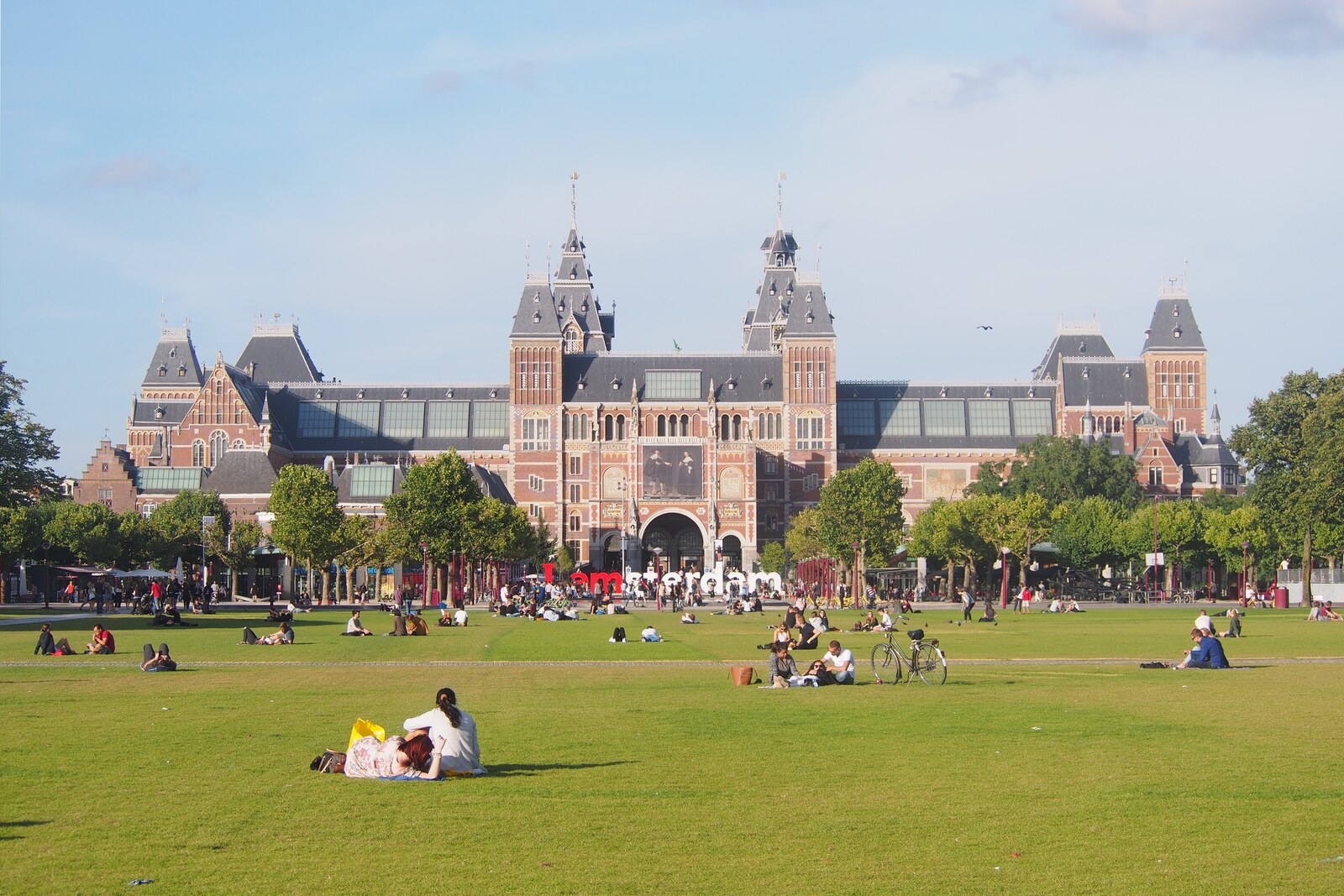
Look around first
What to notice
- Lawn
- Elongated pool
- Facade of the Rijksmuseum
The story of the place
Behind the facade of the Rijksmuseum stretches a level, open square: a broad lawn is cut through by a long pool, with plenty of empty space around it. Temporary exhibition buildings once stood crowded here—the main structure, pavilions, restaurants, and paid attractions; after they were dismantled, city services cleared the land for a large square. The square acquired its present appearance during a later redesign, and nothing remains of those structures.
The lawn and elongated pool occupy a place Amsterdam has been setting aside for large crowds for a century and a half. City celebrations, exhibitions, and mass gatherings are held here. The first such event took place even before the square itself appeared.
French entrepreneur Édouard Agostini wanted to hold an international exhibition in Amsterdam that would help merchants find buyers for colonial goods. They chose vacant land on the outskirts of the city, behind the Rijksmuseum, then under construction. The site had room for a main building, pavilions, restaurants, and separate paid attractions. On May first, eighteen eighty-three, King William III opened the exhibition.
Surinamese entrepreneur Julius Muller sought to interest visitors in Suriname. After negotiations with local chiefs, twenty-eight residents of the colony agreed to cross the Atlantic. The personal motives of most of them were not recorded. It is known that they included speakers of different languages, people from different communities, and people with different occupations. The organizers brought them together in a single setting and called it a Surinamese village.
A circular circus structure was erected on what is now Museumplein. Its walls were painted with views of the river and Paramaribo, transported huts were set up inside, and a fence separated the participants from visitors. Admission here cost an additional twenty-five cents on top of the main ticket. Some participants wove baskets and hammocks; others made vessels, sewed, or sold goods. In the evening, they moved to a wooden barrack behind the exhibition; they slept in numbered rooms or in their own hammocks. At first, the tent was not even heated.
By October first, the participants could already leave. They were offered something else: to stay for another two weeks and receive the entrance revenue after expenses were deducted. They stayed. Despite the bad weather, by the time the rotunda closed, around two thousand guilders had accumulated, and this sum was divided among them. In November, most of the participants returned to Suriname.
A family tradition links the meeting of two participants, Amalia Freymersum and Richard Mazer, to this rotunda. Documents do not say what either of them expected from the journey. After returning, they became a family, and in eighteen eighty-four their son Samuel Frans was born. What happened behind the exhibition fence as a commercial display of people entered the family's history as the place where its ancestors met.
More than a million people visited the exhibition. The temporary buildings were then dismantled, and city services laid out a large square on the cleared land. The Rijksmuseum opened in eighteen eighty-five; in nineteen oh three, the name Museumplein—"Museum Square"—was officially assigned to the square. The present lawn and pool appeared after the nineteen ninety-nine redesign. Nothing remains here of the Surinamese rotunda, the wooden barrack, or the fence.
Useful on site
Open public space; events and temporary infrastructure change with the seasons.
Checked: June 28, 2026. Check the official source before visiting.Stop where you can clearly take in the full scale of the square. Almost nothing remains of the temporary pavilions and military fortifications, so the story relies on the open space you see today.